Book Review | What It Takes to be Queen of India’s Underworld

Narrated in a readable style and set in re-imagined scenarios complete with conversations and other details, the book evokes pity, fear and admiration in equal parts
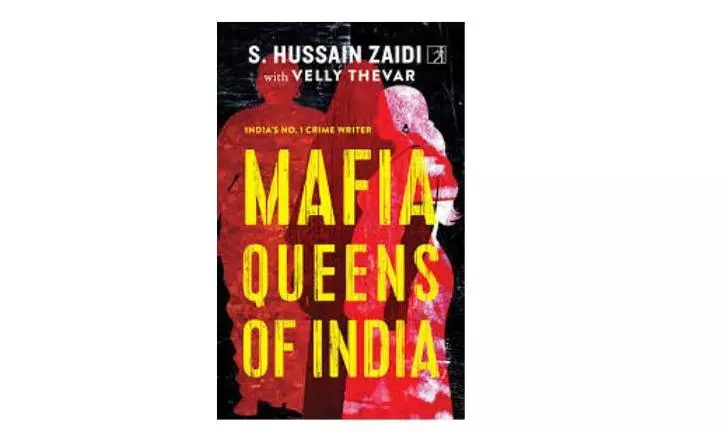
This is a book which, when one leafs through, feels heavy with the smell of human aspirations. The stench of greed which hangs potently over the account is twined inextricably and irrevocably with the reek of desperation and the scent of trust. The women that the authors speak about come from different circumstances and beliefs but their destinations seem to be the same — power and wealth, and ultimately, downfall, prison, death. Their ambition and rise to dizzy heights within the shadowy world of crime does not come easily, of course. Whether it is the exquisite “Cleopatra” alias Akka, uncrowned queen of the Mumbai underworld, whose presence moves through the book in tangible and intangible ways; Sivakasi Jayalakshmi the ruthless housewife who plots her husband’s death (and succeeds) to gain control over his business empire; Bholi Punjaban the human trafficker, or any of the others, the one thing common to them all is their cold, calculating approach to life, relationships and business dealings. They enforce their rules with brutality and an attitude that does not shrink from betrayal and violence. Some, like Kusuma Bai (of the Chambal ravines and a contemporary of Phoolan Devi) or Saira Begum (from Delhi’s G.B. Road) begin their journey into the crime world as victims themselves. But their sheer tenacity lifts them from their sordid situations and casts them into moulds that they may never have imagined. And of course, the reason that they are successful lies in human nature itself, rooted as it is in the instinct to survive and insatiability. But hasn’t it also famously been said that conmen only succeed when their “marks” are greedy?
Narrated in a readable style and set in re-imagined scenarios complete with conversations and other details, the book evokes pity, fear and admiration in equal parts. One marvels at the intelligence and wily ways of Nowhera Sheikh for instance, who capitalises on people’s religious beliefs to embark upon a Ponzi scheme. Playing on men’s passions, these women carved out formidable empires in an underworld dominated by men. Their encounters with patriarchy, rebellion and indomitable will — all conspire to create haunting personas whispered about with awe in the nether regions of lawless existence.
Zaidi confesses that “Cleopatra” fascinated him not only with her acumen, her exploits, the great love she shared with “Irfani”, but also her ineffable elegance and charisma. She displays surprising knowledge of little-known figures from scripture and from across the world. Her reference to Anaq, daughter of Adam who is considered the first witch in Islamic tradition for instance, or her mention of Draupadi, Helen of Troy, Aspasia of the Greek philosophical tradition and Socrates’ unknown, unnamed wife, speak of a woman who is sophisticated and well read, rendering the author’s enthrallment by a dubious figure quite understandable.
The women we meet in the pages of this book were often shattered by the rules of a patriarchal society. Compelled into suffocating silence, they dared to rise from the ruins of their former selves to rewrite the conventions and refashion their own destiny and that of others. The book is thus not just a chronicle of queens of the underworld but also offers lessons and pointers in social engineering and human psychology.
The reviewer is a poet and translator; was director, IGNOU, New Delhi, and a Fellow at IIAS, Shimla
Mafia Queens of India
By S. Hussain Zaidi with Velly Thevar
Simon and Schuster
pp. 214; Rs 499/-
