Book Review | The Underdog Also Walks In Space

While India did all that for a fraction of the money other countries poured into their ventures, mere finances isn’t the spine of this book. It is woven around the unsung efforts of our homeboys and homegirls that have made India into the space power it is today
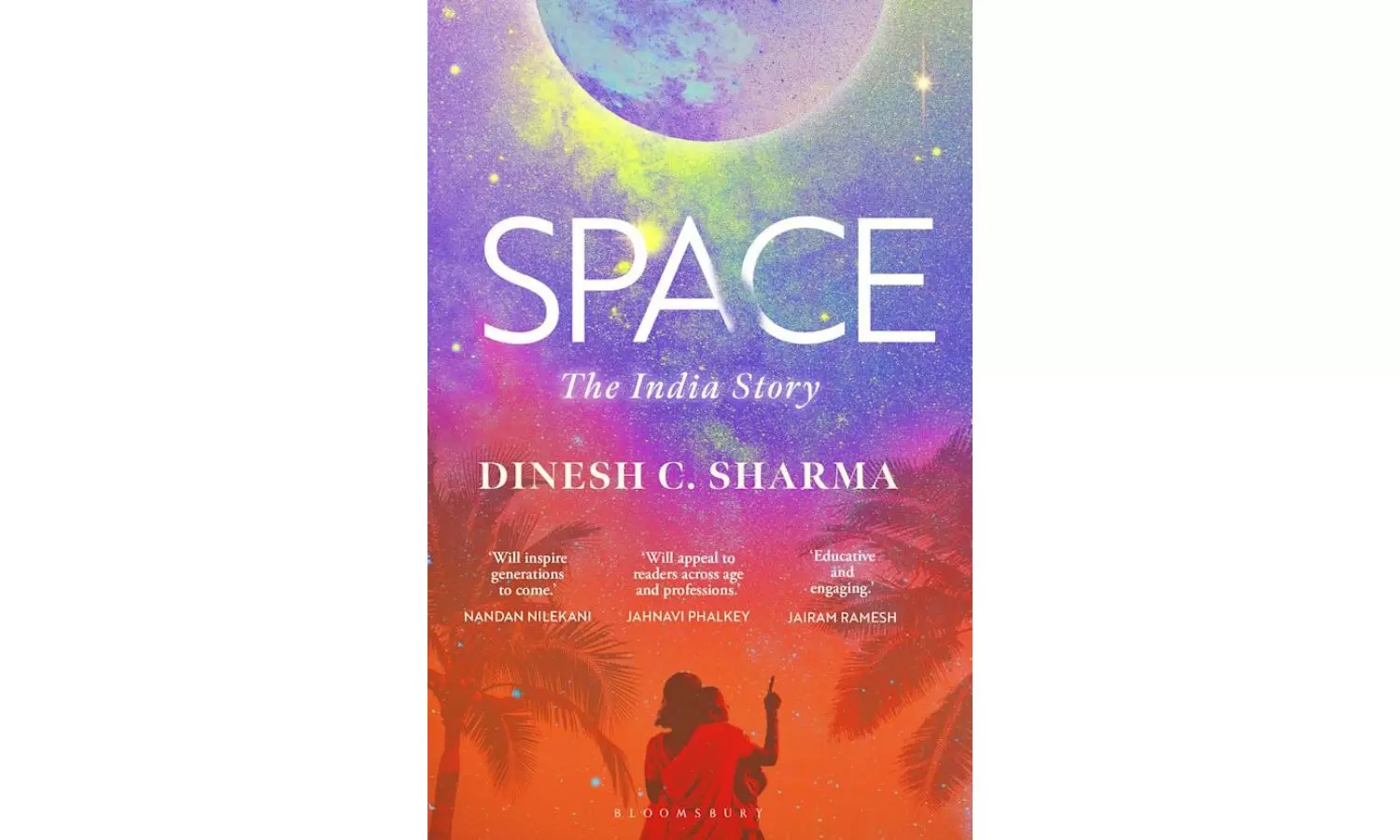
With India’s first manned space flight likely to launch sometime in 2026 (the schedule as of now), it is worthwhile to review how a country steeped in poverty and slowly recovering from the economically disastrous British Raj has come so far, pushing its way into the adult club of space adventure. While India did all that for a fraction of the money other countries poured into their ventures, mere finances isn’t the spine of this book. It is woven around the unsung efforts of our homeboys and homegirls that have made India into the space power it is today.
Soviet Russia-leaning Indians have grown up basking in the romance of the Sputnik, of Yuri Gagarin and Valentina Tereshkova, and even Laika, the dog. Those were heady days for India’s scientific fraternity, inspired by a forward-looking Prime Minister, Jawaharlal Nehru. Nehru made sure that the many brilliant scientific minds of the era had the opportunity to showcase their talents.
Interestingly, as the author, a seasoned science journalist, points out, during the time of Sputnik and what followed, Indian scientists participated in a major international project, called the International Geophysical Year. That landmark project ultimately led to the space race of the superpowers, but also sowed the seeds of space ambitions in Indian minds.
The first part of this meticulously researched chronicle spanning six decades traces the evolution of India’s space programme, highlighting critical events, such as the establishment of Isro, the Insat series of satellites, the development of launch vehicles and landmark missions like Chandrayaan and Mangalyaan. The frugality has been stark, as the author shows, with the cost of India’s Chandrayaan-3 mission being half of what Hollywood spent on the film Oppenheimer.
The second section is more about individuals, such as Rakesh Sharma, the first Indian in space; Kalpana Chawla and Sunita Williams, astronauts of Indian origin who made significant contributions to space exploration; and the current generation of astronauts preparing for the Gaganyaan mission.
The most engaging part is the author’s ability to boil complex scientific events down to an essay palatable to the lay reader. He infuses his narrative with interesting anecdotes, such as the naming of a street in a Ukrainian village after Rakesh Sharma.
The author mentions a scene from when Rakesh Sharma’s mission took off. He writes: “In Baikonur, it was a freezing spring morning. Just before the launch, Sharma’s wife, Madhu, called on the wives of other cosmonauts in the Star City... She then settled down in her flat to watch the launch on television... A small Indian delegation was in Baikonur to witness the launch: Nurul Hassan, the Indian ambassador in Moscow; V.S. Arunachalam, the scientific adviser to the defence minister; U.R. Rao, the director of Isro Satellite Centre; and A.P.J. Abdul Kalam, then the director of Defence Research and Development Laboratory.” After liftoff “Abdul Kalam was visibly excited at the launch, and he whispered in Arunachalam’s ears, ‘We should do this again but from India’.”
Pivotal moments such as these have slowly metamorphosed space research in India.
Space: The India Story
By Dinesh C. Sharma
Bloomsbury
pp. 242; Rs 599
