Book Review | The Geometry Of Double Grief

Three sentences in particular mark the various stages of Li’s radical acceptance. “There’s no good way to say this” is the first one. That’s what the police said when they came to her home to tell her James was dead and it becomes a leitmotif as Li tries to define what she feels. The word ‘grief’ cannot accurately describe her condition. What precisely does she feel?
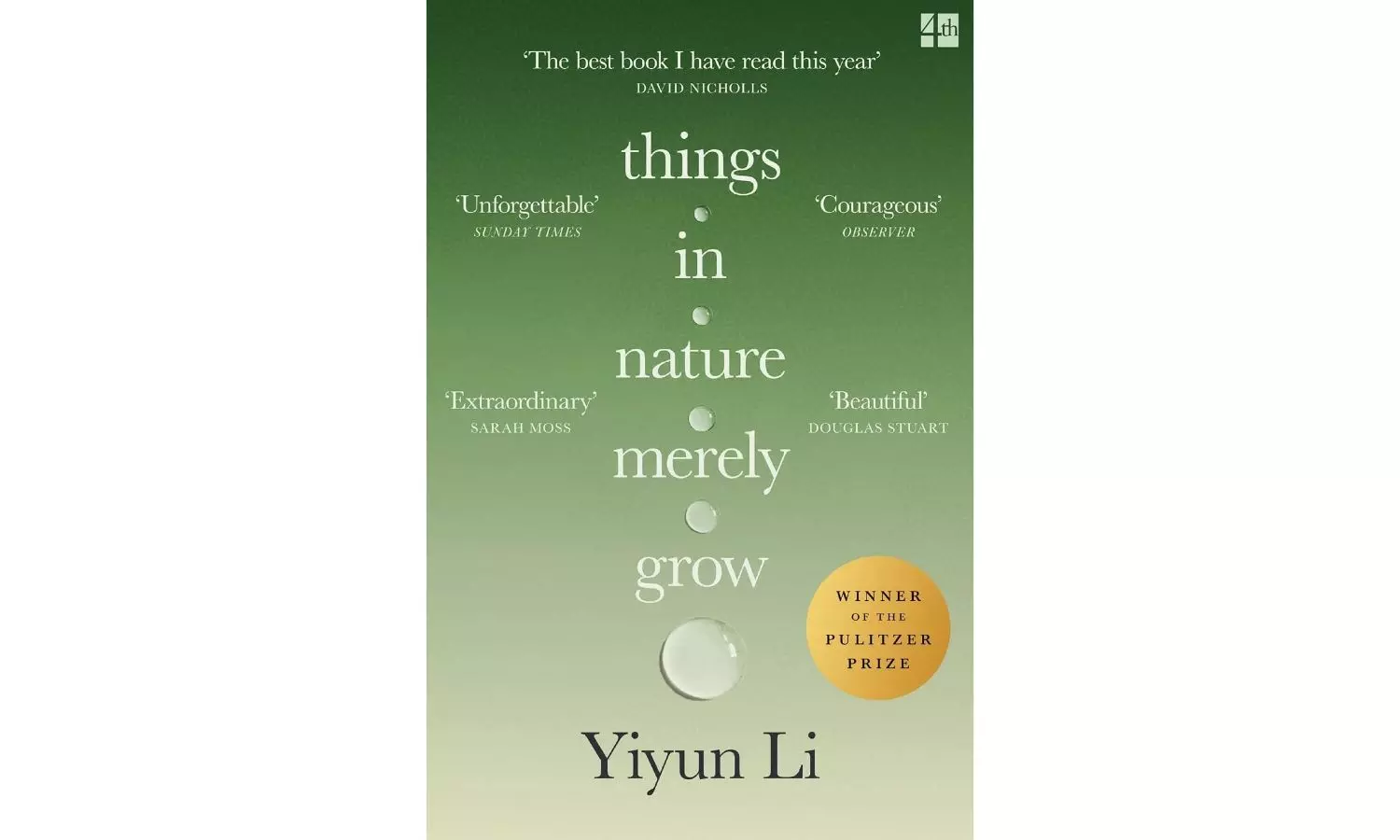
Logic and reason mark every page of Things in Nature Merely Grow, a memoir by Chinese American writer Yiyun Li about how she parsed the aftermath of her son James’s death by suicide, six years after the suicide of her older son, Vincent.
Li took an intellectual approach to this deeply emotional situation for two reasons. First, James himself was analytical by nature. Since Li wanted to write this book for James, as she had written one for Vincent earlier, it had to be done in a manner James would appreciate. Second, having been in this very plight before, Li knew she needed to hold on to something sturdy to keep herself together. She chose radical acceptance, which advocates accepting facts as they are rather than escaping into denial or raising if-onlys and what-ifs. The fact of Li’s life is that she lost both her children to suicide. How is she to live now?
Three sentences in particular mark the various stages of Li’s radical acceptance. “There’s no good way to say this” is the first one. That’s what the police said when they came to her home to tell her James was dead and it becomes a leitmotif as Li tries to define what she feels. The word ‘grief’ cannot accurately describe her condition. What precisely does she feel?
Once she understands the specific place she is in — she calls it an abyss — Li remembers Vincent. She remembers James. She remembers how close they were to each other. She thinks about life without them. “Children die and parents go on living” she repeats across chapters, keeping herself grounded in her reality. She breaks down her ideas of parenting, the way she saw each child as an individual. This leads her to their suicides. Vincent “felt too much”. His therapist had warned her he could make an irrevocable decision at any time. There was no such warning with logical, rational James. James who seemed complete in himself but maybe was lost without Vincent? “Things in nature merely grow” Li writes again and again, acknowledging that, ultimately, each person’s life is unknowable to other people, even within loving families.
Li’s intellectual analysis of the aftermath of her son’s death does not hide her love for and delight in her children, or her protectiveness as a parent. There’s even a chatty chapter where she talks of the many ways people offered condolences, some of them beyond insensitive. You can picture her as you read that chapter, telling James about it, James smiling perhaps at her vehemence. This is a book for him, after all. It’s also a book for each of us because all of us live, or will live, with loss.
Things in Nature Merely Grow
By Yiyun Li
HarperCollins India
pp. 172; Rs 499
