Book Review | The Cold Truth About Kashmir

His protagonist Ranjit Soni, head of intelligence in Srinagar, is both successful and in love with the land and its people. His initial successes give him accolades from his bosses in Delhi, but he notices how every time he creates a stage for possible peace, he is undone through deaths and tragedy. His personal life in tatters, he finds love in the valley, then loses it; a failure in the books of the agency
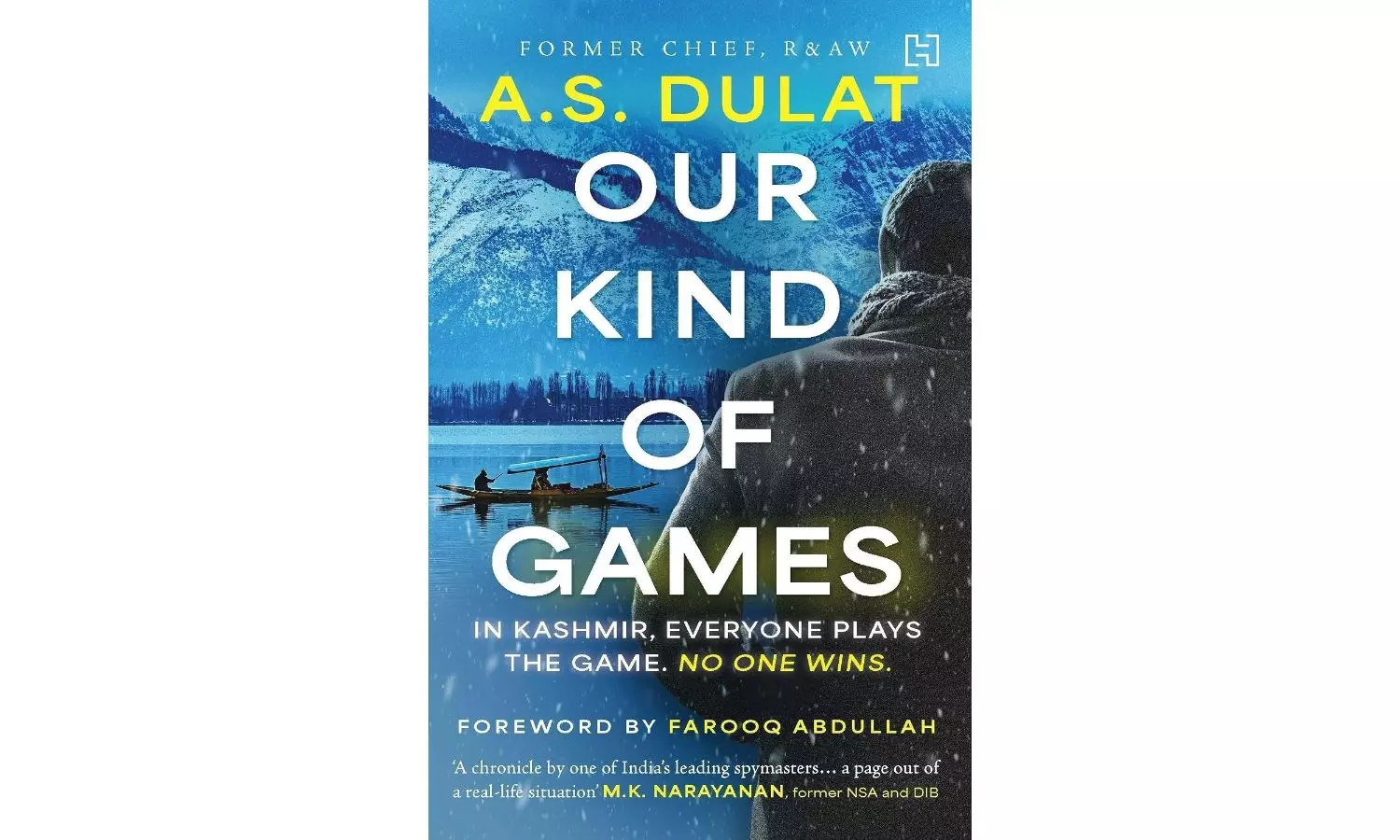
Looking back at the Kashmir of the late 1980s and the bloody 1990s isn’t easy. Constructing a fiction atop this shaky foundation is tougher still. Yet, A.S. Dulat, former chief of Research & Analysis Wing, has drawn on his vast experience to present to us a period drama — more period than drama — that takes us through a Kashmir that is as beautiful in its transience as it is dangerous and heartbreaking in its finality.
His protagonist Ranjit Soni, head of intelligence in Srinagar, is both successful and in love with the land and its people. His initial successes give him accolades from his bosses in Delhi, but he notices how every time he creates a stage for possible peace, he is undone through deaths and tragedy. His personal life in tatters, he finds love in the valley, then loses it; a failure in the books of the agency.
The book is less a spy story and more of an essay of small human aspirations pitted against towering political ambitions and endless violence. Observes the author: “He thought about Kashmir as he walked. About whether the future could ever be better than the past or whether they were all trapped in cycles that repeat themselves endlessly, violence begetting violence until no one could remember what they were fighting about.”
The book tells us more about Kashmir and Kashmiris than any political analysis ever did. Dulat, even as head of the country’s powerful R&AW, shows his sensitive side. He manages to get under the skin of the locals, the “boys” as they are called, swaying in the fierce crosswinds of two political powers, one from across the border. “Azadi”, remains a chant, yet its real meaning has become irrelevant. Here’s a people whose future isn’t in their hands anymore, whose vision is blurred in the violence all around.
As Soni notices: “With time, there appeared an incompleteness about Kashmir...” That remains the truth today, of how humanity fights back, only to be beaten into submission. The “boys” were the pawns, and so they remain. The observations are coldly frank: “The boys were growing bolder and the state was growing weaker. Security forces responded with a brutality that created more militants than it eliminated.”
Ranjt Soni fails, because “everyone who tried to change things became complicit in violence they had intended to prevent”. If you read between the lines, you see good officers, through time, having tried to make a difference; you might even find a few good politicians. Yet, there seems to be diffidence in the soil itself. The more it changes, the more it remains the same.
This is a must-read for those who want to know more than the tourist spots of Kashmir, more than what the orchards grow, more than what governments have claimed through the decades.
Our Kind of Games
By A.S. Dulat
Hachette India
pp. 224; Rs 599/-