Book Review | Stories Behind the Stories
From anecdotes about Narendra Modi, prior to his rise as a national leader, to the experiences of a journalist standing as a witness in the 1993 Bombay blasts case, the book presents intriguing and engaging personal accounts that do not find space in news feeds
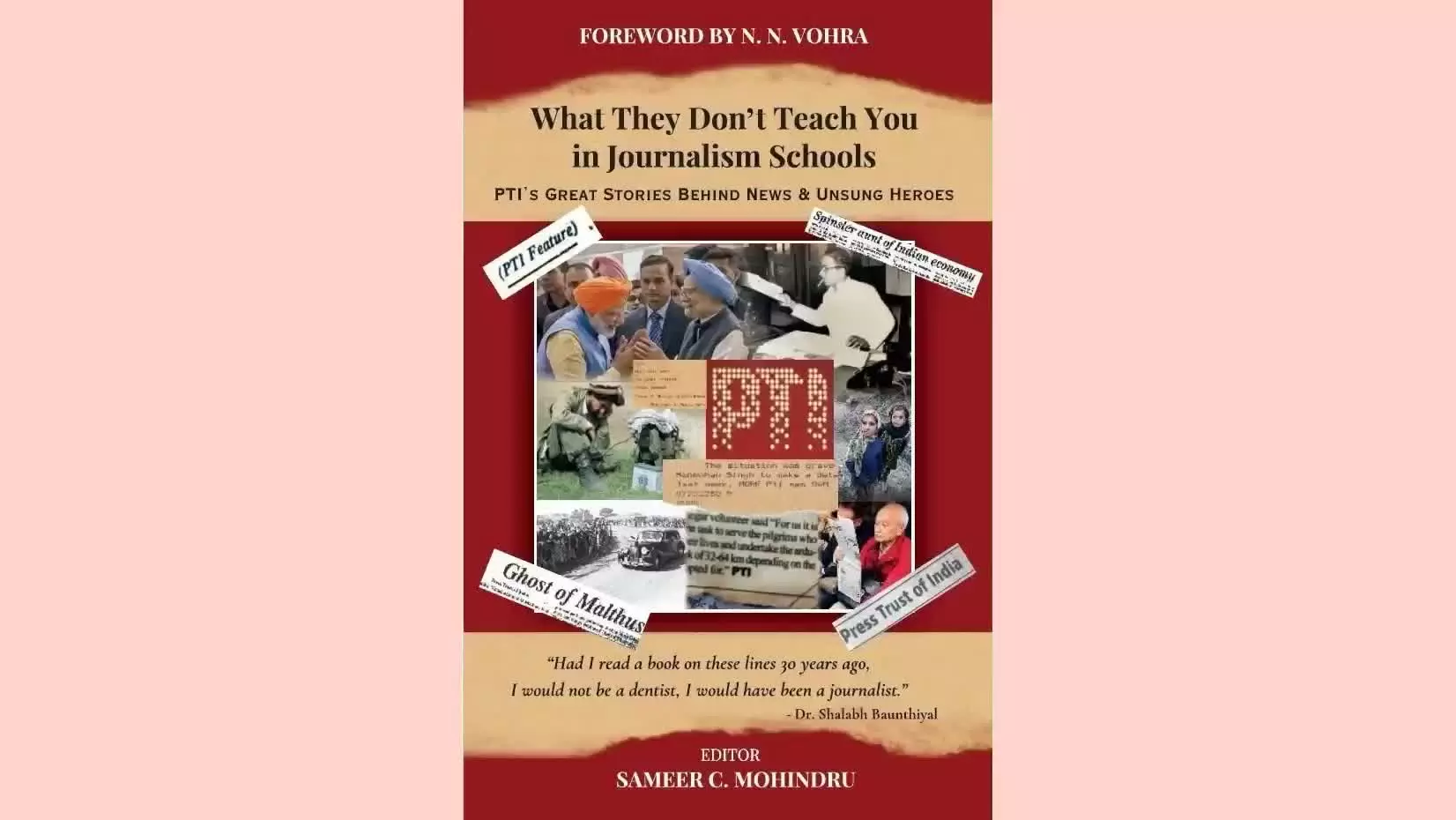
The Book ‘What They Don’t Teach You in Journalism Schools’ is a compilation of first-person accounts by the journalists of the country’s premier news agency, Press Trust of India. They tell the stories behind the news stories that turned out to be the key milestones of Independent India.
Edited and compiled by a former PTI journalist, Sameer C Mohindru, the book carries personal accounts of 30 writers – both journalists and non-journalists associated with PTI – as they saw the important events in the history of the country unfurl in front of their eyes. It also talks about the excitement and the deadline pressures inside the PTI office as the journalists hurried to tell the stories to the world.
From anecdotes about Narendra Modi, prior to his rise as a national leader, to the experiences of a journalist standing as a witness in the 1993 Bombay blasts case, the book presents intriguing and engaging personal accounts that do not find space in news feeds.
“While Ajmal Kasab’s trial was going on, I was asked to step into the witness box over a story carried on the case,” PTI journalist Sunil Shivadasani writes.
K R Sudhaman, a veteran business journalist, writes that Manmohan Singh first outlined the planned reform measures to revive the economy to PTI even before the formal announcement of his appointment as the Union Finance Minister.
PTI Correspondent Walter Alfred was imprisoned in Pakistan for being a non-diplomat civilian from India staying in that country when hostilities broke out in 1965. He spent around a month in prison on “baseless and laughable” charges of espionage. At the age of 102, Alfred shares his experiences of covering the aftermath of Mahatma Gandhi's assassination, the 1965 Indo-Pak war, and the funeral of Ho Chi Minh in Vietnam.
Subimal Choudhary narrates the story of a young boy in Colombo hunted by the government-backed militia and how he disappeared after visiting him at his residence and having what may have been his last meal.
Bal Krishna tells the intriguing story of how two Sikh youth walked up to him at his desk in the PTI office in Delhi at 9.30 am on October 31, 1984, moments after Indira Gandhi was assassinated, and informed him about the firing, even before the world knew about it. “Till today, I often wonder who those two men were?” he writes.
During a casual tea with journalists in August 1990, Pakistan President Ghulam Ishaq Khan announced that Prime Minister Benazir Bhutto was sacked. “Many of the journalists were not even carrying a notebook to jot down”, as they were not expecting such an announcement, Mohan Narayan, former PTI correspondent in Pakistan, reminisces.
K J M Varma remembers the incidents that occurred in the newsroom before and after PTI broke the story of Rajiv Gandhi’s assassination in 1991.
Sitting in Bombay in 1974, N V R Swami broke the news of a nuclear test in China's Xinjiang and did not reveal the source even when his career was at stake.
The book does not talk much about the stories behind the stories in the past decade. Probably, the editor seems to be planning a sequel to the book. It is a must-read for wannabe journalists, who can learn about the pressures in the newsroom and the efforts of editors, reporters, and technicians to bring credible news to readers. In the present times, when the media has become a laughingstock for its sensationalized rhetoric in the studios and highly biased reportage, this book takes us back to the good old days of credible journalism.
The 626-page book is priced at Rs 870 on Amazon.
