Book Review | Real-world Horror In The Search For Shelter

The characters of Khair’s metafictional narrative are on a near-constant hunt for ‘shelter’, a shelter intimately tied to the physical, yet extending beyond those bounds. The narrator-protagonist’s late lover Abdul flees anticommunism in Afghanistan, and is also a gay man “fleeing from the tyrannical nation-state of compulsory heterosexuality”
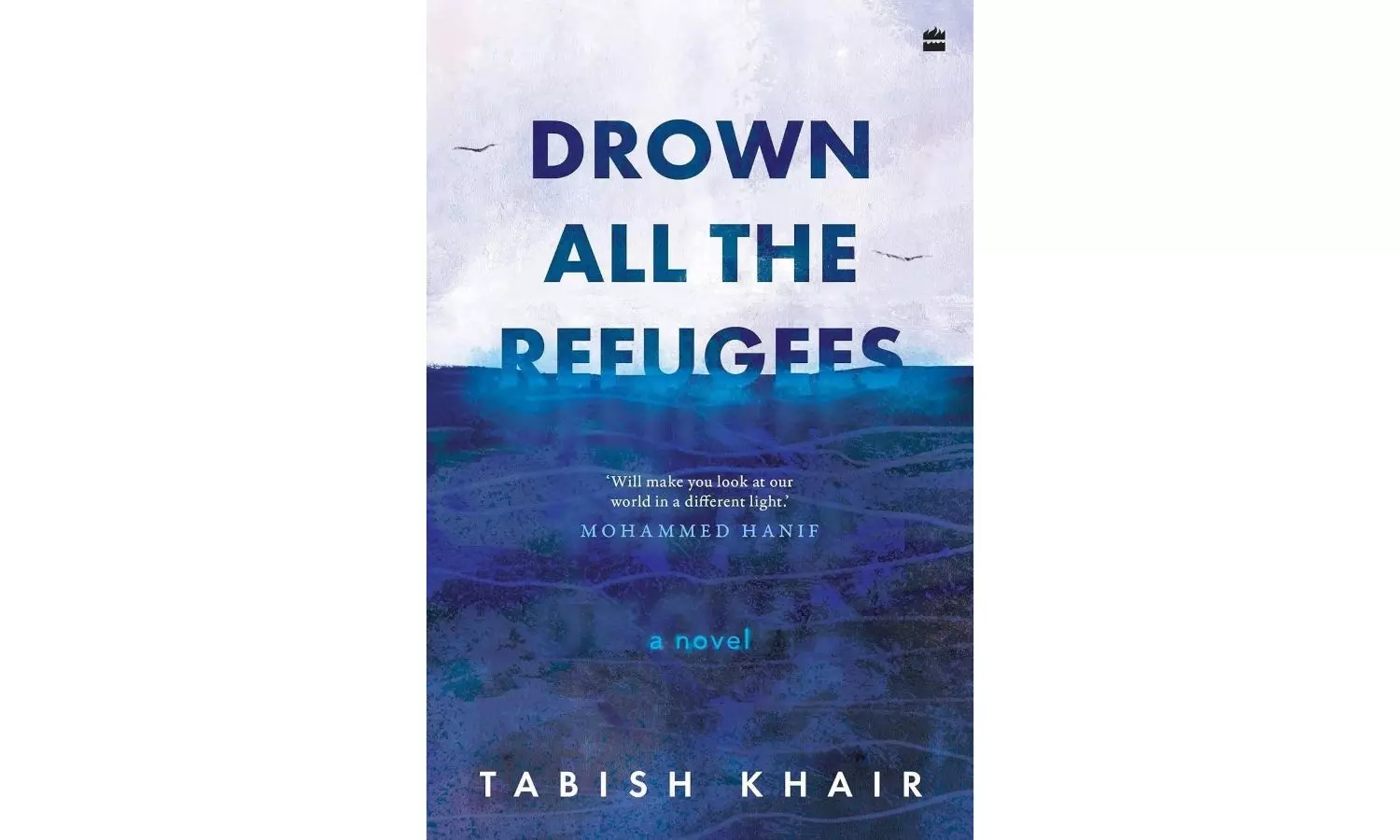
Aptly for the times we find ourselves in, the pages of Tabish Khair’s Drown All the Refugees are suffused with immense dread. The Indian Gothic of it all — old, isolated plantation houses, dense forests where something lurks, ghosts of the past abounding, all given form in lush prose — produces a sublimely eerie atmosphere. These environments are also beautifully illustrated by Vikram Nayak in dark, moody images. But more than creaky manors or occult rituals, the most dreadful thing in this tale is one that mundanely pummels millions every moment of every day: the search for refuge.
The characters of Khair’s metafictional narrative are on a near-constant hunt for ‘shelter’, a shelter intimately tied to the physical, yet extending beyond those bounds. The narrator-protagonist’s late lover Abdul flees anticommunism in Afghanistan, and is also a gay man “fleeing from the tyrannical nation-state of compulsory heterosexuality”. Some refugees, as the novel astutely points out, are ‘pushed’ out of their homes, while others feel a ‘pull’ from elsewhere. Pedro, the narrator’s childhood best friend, leaves India in an attempt to pursue the American dream outside the confines of American law. His mother Maria turns to the occult to bring him back, but finds only what the novel terms a ‘shadow’, kicking off the action. The narrator himself is haunted, by the loss of Abdul, by Pedro’s disappearance, by the memory of his homophobic father, and by the genocide in Gaza, a continuation of the interminable Nakba, the 1967 iteration of which displaced Abdul’s family, and over 300,000 very real Palestinians.
The novel is a polemic castigation of the (primarily Western) non-understanding and corporate profiteering off of the suffering of the most marginalised. Though the dialogue has a clunky moment or two (a minor complaint), Khair is at his best when he is philosophising with an intense anger. Much of Khair’s ire is directed at the oft-hollow empathy of Western liberals. Khair’s criticism is that such people are not wrong to condemn the vile treatment Western governments mete out to those guilty of attempted survival, but they simultaneously disregard the lived urgencies of those alien to themselves. Our narrator, in contrast, learns to give space to their perspectives over the course of the story, primarily via the character of the Midwife, and those connected to the land.
In the end, Khair manages to discuss an impressively wide gamut of ideas, from queerness to nationalism to belonging, all with extensive care. It’s also perhaps extra-worth the read, seeing how our own governments are increasingly choosing to ape Western xenophobia and rhetoric. Oozing atmosphere all the way, Khair presents a slew of timely, empathetic arguments that are more than worth thinking about.
Drown All the Refugees
By Tabish Khair
HarperCollins
pp. 235; Rs 599