Book Review | Power Plays for a New Global Age

A large part of the book is about the challenges the United States poses to India, despite a certain congruence in strategic interests
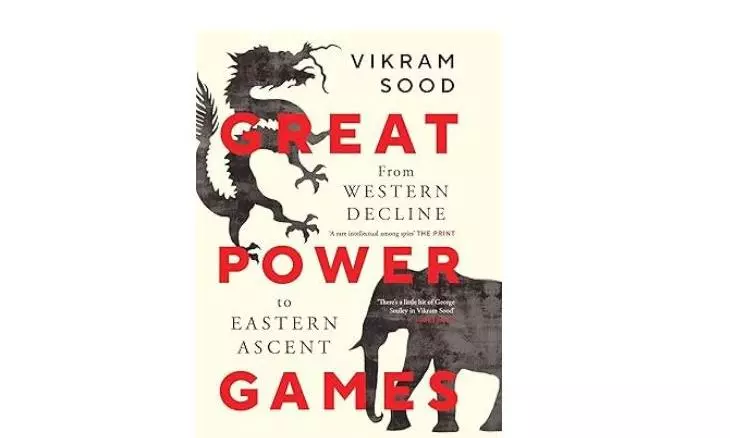
Anyone studying international politics knows that great powers are natural hegemons, intolerant of any disagreement or challenge. Thus, India, seeking an independent course in world affairs since its inception in 1947, has had to fend off great power pressures and even outright hostility. These pressures have intensified in recent times as India's heft has grown and its potential as a key player in global affairs become manifest.
Former R&AW chief Vikram Sood, in his new book traces the history and manner in which the great powers, mainly the West, have consistently imposed policies that suit their interests often at the cost of India's strategic objectives. “A superpower has no friends, yet every country wants to be its friend. A superpower has only its interests in sight; no one else’s interests’ matter. No wonder Henry Kissinger had remarked, ‘It may be dangerous to be America’s enemy, but to be America’s friend is fatal.’ India will be no exception to this rule,” he writes.
Noam Chomsky had pointed out some years ago that the “current ‘world order’ is one that has been created by the United States and its allies, and is upheld by Western narratives, economic levers and raw military power. All US foreign policy aims are geared towards maintaining this ‘world order’ or system. Problem is real US global power peaked some time ago and has been steadily declining since then.”
Sood concurs: “The dollar, for long the symbol of American power, is losing ground as countries switch to dealing bilaterally with other countries in their own currencies. Quite clearly the US has entered, as all empires eventually do, a period of imperial overstretch. Decline sets in when its abilities to have its way do not match its self-described goal and total domination becomes near impossible.”
The book discusses the diverse pressures, challenges and threats India has and continues to face in its ascent to greatness: “As India becomes stronger economically and militarily, it will automatically become more than a swing state — it will become another pole in a multipolar world.”
A large part of the book is about the challenges the United States poses to India, despite a certain congruence in strategic interests. “Undoubtedly, India needs a partner in the US and to simultaneously manage its relations with China," he writes. "This entire exercise is going to be a complicated and stressful diplomatic and strategic manoeuvre, but that is the state of the world today.” A particularly difficult issue between the two countries, he feels, is the continued US support for Pakistan, which uses terrorism as an instrument of state policy. "President Trump’s intervention during Operation Sindoor exhibited the age-old American slant towards Pakistan and an inability to be fair," he writes.
Sood is clearly an optimist and a believer in India's destiny as a great power. Yet, he warns of pitfalls: “India is at the cusp of history. We can attain greatness, if we get our act right. This opportunity will probably not come our way for several decades because the country’s youth dividend will disappear. If we fail now, the danger is that we will be confined to a lowly life and possibly be colonised again.”
Great Power Games: From Western Decline to Eastern Ascent
By Vikram Sood
Juggernaut
pp. 336; Rs 899
