Book Review | Officers in Kerala’s Service

This book talks about the role of public policy and administration in Kerala while suggesting changes and the agency that civil servants had to transform little pieces of the jig saw puzzle and still fit it all together.
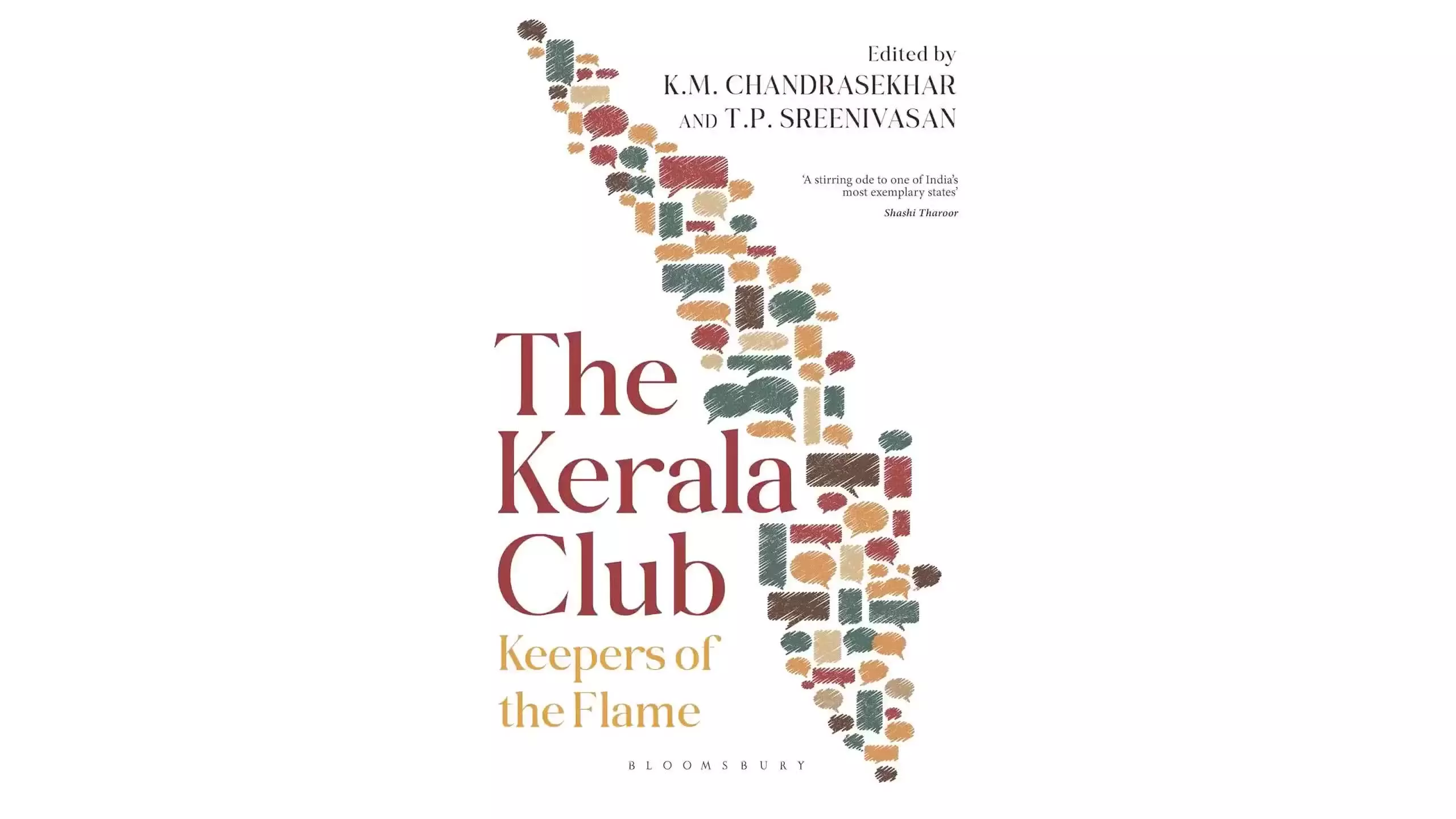
“When God made Sicily, God made absolute paradise, and then to balance it out, he made Sicilians.” This is applicable to Keralam too. Many proud ‘Mallus’ would claim their land to be very unlike the rest of India. It is true and false. Public awareness and the power of people are, as Amitabh Kant writes, highly influential. Unless you live here for a prolonged period unlike a tourist, you don’t get to know this small southern state in India. In that context, The Kerala Club — Keepers of the Flame edited by K.M. Chandrasekhar and T.P. Sreenivasan is a timely intervention. It doesn’t show just the beautiful Kerala that the tourism dept dishes out. But it talks about the ‘new’ Kerala of contradictions which may still have high social indices but lags behind on many other counts.
Guest workers welfare and safety in Kerala during Covid times is a heartwarming story different from what was happening in other parts of India. However reverse migration of educated Malayalees to other countries taking up labour work shows the lack of job opportunities in the state.
Kanji, coconuts, jackfruits, fish, the boat race, and even the months according to the local calendars are similar. Like Malayalees, they are Khmers, not Keralites or Cambodians. However, the most common but a big differentiator is communism. The gory details of a communist take-over in Cambodia is common knowledge.
The Kerala story is different. In 1957, it became one of the states to be led by a communist government which introduced land reforms and later many forward-looking policies which could show the way forward to the rest of the country.
A poor housewife, who became the president of a local panchayat body went to New York in 1995 to receive an award from the UN Foundation. Panchayati Raj bill was implemented and administered with functionality as the prime motive. Kudumbashree — a state-initiated project was an outcome of this democratic decentralisation process. In a slightly academic but passionately written chapter on this, Valsala Kumari talks about how it has been an enabler in engendering the public sphere. Arguing against mere spectator-women-politicians and for the ‘differential experience’ of men and women in governance, she makes a case for more participatory democracy. However, the glass ceiling does exist for women in spite of the fact that 50% of local bodies comprise of women.
In 29 chapters, this book talks about the role of public policy and administration in Kerala while suggesting changes and the agency that civil servants had to transform little pieces of the jig saw puzzle and still fit it all together.
Divided into four parts, all written by bureaucrats who have worked in Kerala.
There is nothing accidental about God’s Own Country. What it is today, is the work of the people — politicians, bureaucrats, and the citizens of the state — which brought together constitutional, political and intellectual factors.
In spite of the various reforms, total literacy, and a highly skilled Malayalee diaspora, the state has a contradictory PCI and HDI. Course corrections are required as these authors talk about the Kerala they loved working in and for.
In a dark and real-world combat mode essay Bharat Bhushan talks about his various encounters with the trade unions. Any reforms, be it in the health sector, education, or transport, couldn’t be seen through without the approval of the respective unions.
Is that a negative score? Building up the social standard and dignity of the labour force contributes to a more equitable society. Pariah comes from a Malayalam caste name ‘paraya’ — a Scheduled Caste. In a fascinating narrative, Madanmohan Rameshkumar writes about the social injustices and ‘slave-owning society’ prevalent in the 18th-19th century, to a gradual yet radical change in social relations and abolition of trafficking and eradication of slavery.
A police officer and compassion usually are not seen as compatible. During the Kerala floods and the pandemic “God appeared before us in uniform”, said a 70-year-old lady. An IPS officer talks in detail about the various state level interventions which helped change the police attitude to social issues and enabled them to be facilitators of social change.
Kerala got it right — some by design and others by serendipity. The oil-boom in the Arabian Gulf countries led to remittances which trickled in and then became a flood, leading to local business’ setting up shop even in remote areas. Rapid social and economic changes led to urbanisation. The rural-urban divide is not as stark as in other places.
Which state can boast of a molecular lab for schools in a district consisting of indigenous people? Not to mention the establishment of South Asia’s first ‘Coffee Park’ in Wayanad while there are cafes mushrooming and competing with each other elsewhere.
As with any edited volume, this one too has some inconsistencies. Some editing could have made it more Kerala focused instead of contributors’ professional lives. But when poets, academics, women, non-Malayalees etc lend themselves to the service of a state, there is much of the personal in the professional which can’t be avoided.
Ending on a sweet note — the ‘Happiness Index’ maybe higher in Kerala than perceived by many. Figures speak but not always completely. The last section of this book — Personal reflections — had me hooked. It resonated with me as I moved to Kerala three years back and am enamoured not just by the sheer beauty but the peaceful coexistence of communities with different perspectives and needs. The sunset on the coastline here by the Arabian Sea, the clear blue sky, the greenery around, clean roads and public spaces, lit fests with the highest footfall and some as intimate ones, are therapy.
With her training in academic publishing and passion for food/cuisines, Rekha Natarajan lives in Kollam now blending these two professions and consults on F&B and publishing.
The Kerala Club
Ed. by K.M. Chandrasekhar & T.P. Sreenivasan
Bloomsbury
pp. 320; Rs 559