Book Review | Kargil Doctor’s Memoir Is Gritty And Entertaining

It is the winter of 1998, and while his fellow graduates are in the bigger cities with large, well-established hospitals and infrastructure where they would have the opportunities to refine their surgical skills, he fears that in his place of posting (which did not even have a functional operation theatre) his career as a surgeon would end before it even began
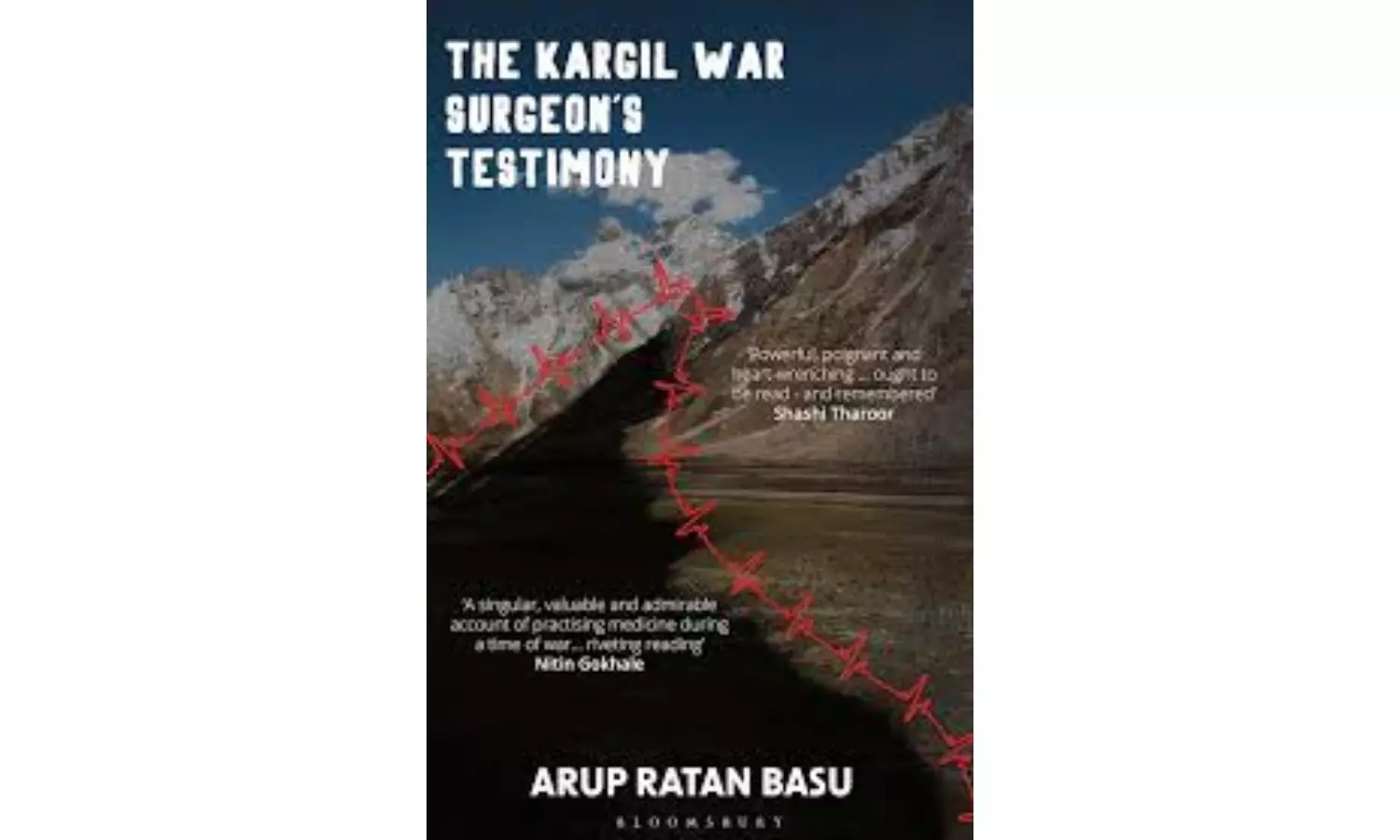
The narrative begins with a beautiful description of the River Saru, the geographical features around it, the culture, civilisation, and activities that flow alongside — and have done so for centuries. The author, having just qualified as a surgeon in the Indian Army Medical Corps, is initially despondent at being posted to a field hospital in the Kashmir Valley — a remote backwater, and a hotspot of militant activity. It is the winter of 1998, and while his fellow graduates are in the bigger cities with large, well-established hospitals and infrastructure where they would have the opportunities to refine their surgical skills, he fears that in his place of posting (which did not even have a functional operation theatre) his career as a surgeon would end before it even began. But what follows is unexpected and would not only test his skill but also compel him to adapt and rethink aspects of life and existence several times over the next couple of months.
The author is then sent to Kargil in the summer of 1999 to relieve the surgeon there who is moving out on leave for two months. As he prepares to leave for Kargil, there is uncertainty hanging in the air of ‘something’ happening in the mountains. The peace, ebb and flow of water and humanity, his hitherto uneventful tenure are soon ripped apart by the roar of guns and the spilling of blood in a full-blown conflict with our neighbour. In a “careful what you wish for” moment, he is soon to be in the thick of saving lives amidst the travails of war in often makeshift conditions, and finds himself acquiring and honing the surgical skills that he thought he would be missing out on! He lists a number of cases where he needs to take quick decisions and also risk, not knowing whether or not his ministrations will save the injured soldiers. It is only later, after the patient has been moved to the larger hospitals for follow up and recovery, that he can finally know whether or not he has been successful in saving lives and limbs.
The author makes it very clear that his observations are not driven by political or ideological considerations. However, there are facts that emerge from the descriptions which do give us a strong idea of the political climate of that time — New Delhi’s apathy and bureaucratic lethargy, for instance. The author learns of an ammunition dump destroyed in Pakistani shelling, sees that it was situated on the side of the hill exposed to the enemy and asks why it had not been shifted. He is told that a case report had been sent to the authorities in Delhi but nothing had come of it, with the result that precious ammunition had been lost at the time when it was most needed. Or the inexplicable reluctance to take up in international forums, the issue of the capture, torture and murder of Captain Saurav Kalia and his team, in complete violation of the Geneva Convention. Or the matter of soldiers hurriedly sent to the front, unacclimatised to the high altitudes, with either no jackets and boots or with damaged, rat-eaten boots, no plans for replenishment of essentials such as food and communication equipment. It was as though the commanders were disconnected from the ground reality of the region. Climbing up the exposed hillsides with only three days ration (a couple of chapatis, dried nuts, sugar candies), the soldiers often had to eat snow and ice to stave off hunger pangs. And as one of them who returned puts it wryly, also a steady diet of bullets. Of the hilly terrain that the authorities had expected to conquer in three days, only half the required distance could be covered by the soldiers in seven days. The images of the incredible bravery of our men in uniform, their tenacity, and will to serve the country with irrepressible humour and energy despite the seemingly insurmountable odds stacked against them fill us with both admiration and grief.
Philosophising, introspection, an acute awareness of the human ego and its failings courses through the narrative — perhaps not surprisingly, given its setting. And above it all are the small follies, harmless vanities and touches of humour that relieve even the bleakest of situations and spray it with a lightness of being. As when celebrities and newshounds visit Kargil and even the injured seem ready to hop off their beds to get a handshake or a picture taken! And like the River Saru that meanders through the countryside and brackets the narrative in its opening and final musing, life goes on long after the mighty Bofors guns have fallen silent, the whistle of shells whizzing overhead has died away and the redness of the blood has soaked into the ground and washed down into the sea…
The reviewer was director, School of Humanities, IGNOU, New Delhi. She is an award-winning translator and a Fellow at the Indian Institute of Advanced Study, Shimla.
The Kargil War Surgeon’s Testimony
By Arup Ratan Basu
Bloomsbury
pp. 182; Rs 399
