Book Review | J&J’s Baby-Faced Evil Exposed

What Harris presents before the reader is a company whose reality is far removed from the immense trust that American mothers and women and children the world over placed in it
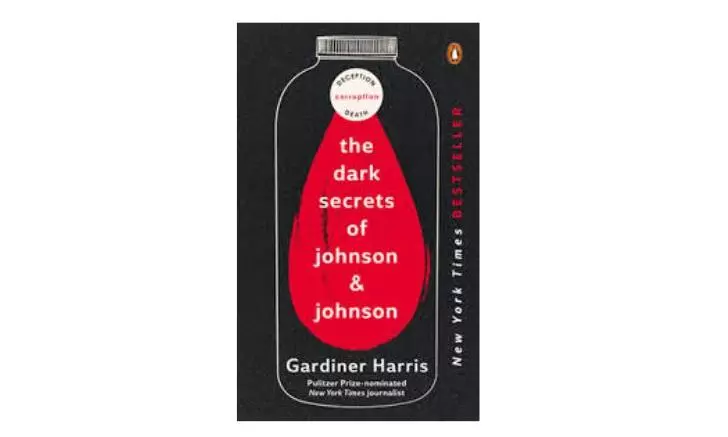
Gardiner Harris’ path-breaking book started from a small spark that he saw in a casual chat with a Johnson & Johnson (J&J) drug sales rep, as they waited for their respective flights at an airport. Her startling story about unethical sales practices at the company and the devastating impact of such practices on her family turned on its head the way Harris had studied J&J, a company that he covered during his reportage of the pharmaceutical industry for The New York Times.
That spark resulted in this book, a deeply-researched, scorching work that exposes the other side of the gentle, tender and trusting image that Johnson & Johnson, one of America’s oldest pharmaceutical companies, has always presented to its customers. Sometimes, when something seems too good to be true, that’s exactly what it is. This award-winning investigative journalist prises open the seemingly soft, baby powder façade, laying bare the dark profit motives of the company and its sinister plots that were sometimes hatched with the FDA watching.
What Harris presents before the reader is a company whose reality is far removed from the immense trust that American mothers and women and children the world over placed in it.
This is a deeply disturbing story at many levels. First, of course, is the baby powder story. When women who regularly dusted their crotch areas with talcum powder also made their babies comfortable in the supposed silky touch of talcum, the softest mineral on the planet (it has a Mohs hardness of 1), what the mother did not realise was that she was also giving herself and her baby daily deadly doses of asbestos, a known carcinogen. It was common knowledge that talcum and asbestos are mostly found in adjacent, often intertwined, veins in mines and separating them is next to impossible. And asbestos has been found to be the cause of at least four fatal illnesses: asbestosis, lung cancer, ovarian cancer and mesothelioma.
By the time J&J was forced to announce global discontinuation of talc-based baby powder (2022), shifting to cornstarch-based products, thousands upon thousands had lost their lives through painful cancer. The trust had been replaced by scepticism.
Yet, it wasn’t just the baby powder, which received massive press. J&J’s massive and evil empire spread across Tylenol and then even to prescription drugs, such as Procrit, Risperdal, and Ortho Evra birth control patches, each leaving in its wake immense woe and broken dreams, victims of the company’s unending greed for stakeholder satisfaction and profit. As of date, says the author, there have been as many as two million people dead, and counting.
As if that wasn’t enough, the company graduated to medical devices, such as Pinnacle metal-on-metal hip implants and Prolift vaginal meshes, each spewing its own version of venom that humanity never really needed. And that this came from a company that had made surgery easy, had invented the Band-Aid and ruled the world pharmacy for a long, long time, was inconceivable.
J&J remains intact, like any quintessential American giant too big to fail, but Harris’ expose has, at least, given us a perspective removed from the illusory, saintly image of a corporate entity that could have done no wrong.
The extent of Harris’ research is mind-boggling. The interviews, the extensive reading and follow-ups is what has kept journalism’s head above the filth of today. Even with a pliant, paid for press that created J&J’s angelic aura, the company has had to pay billions of dollars in damages and settlements, including a notable $4.7 billion award to 22 women.
The book is a shining example of fearless reportage and courage, one worth reading.
The Dark Secrets of Johnson & Johnson
By Gardiner Harris
Penguin
pp. 464; Rs 899
