Book Review | How Literature Frames a Changing Planet

This book is more descriptive and reflective, and, while it doesn’t race to judgement, not even in matters such as the exploitation of indigenous peoples, it doesn’t hold off either
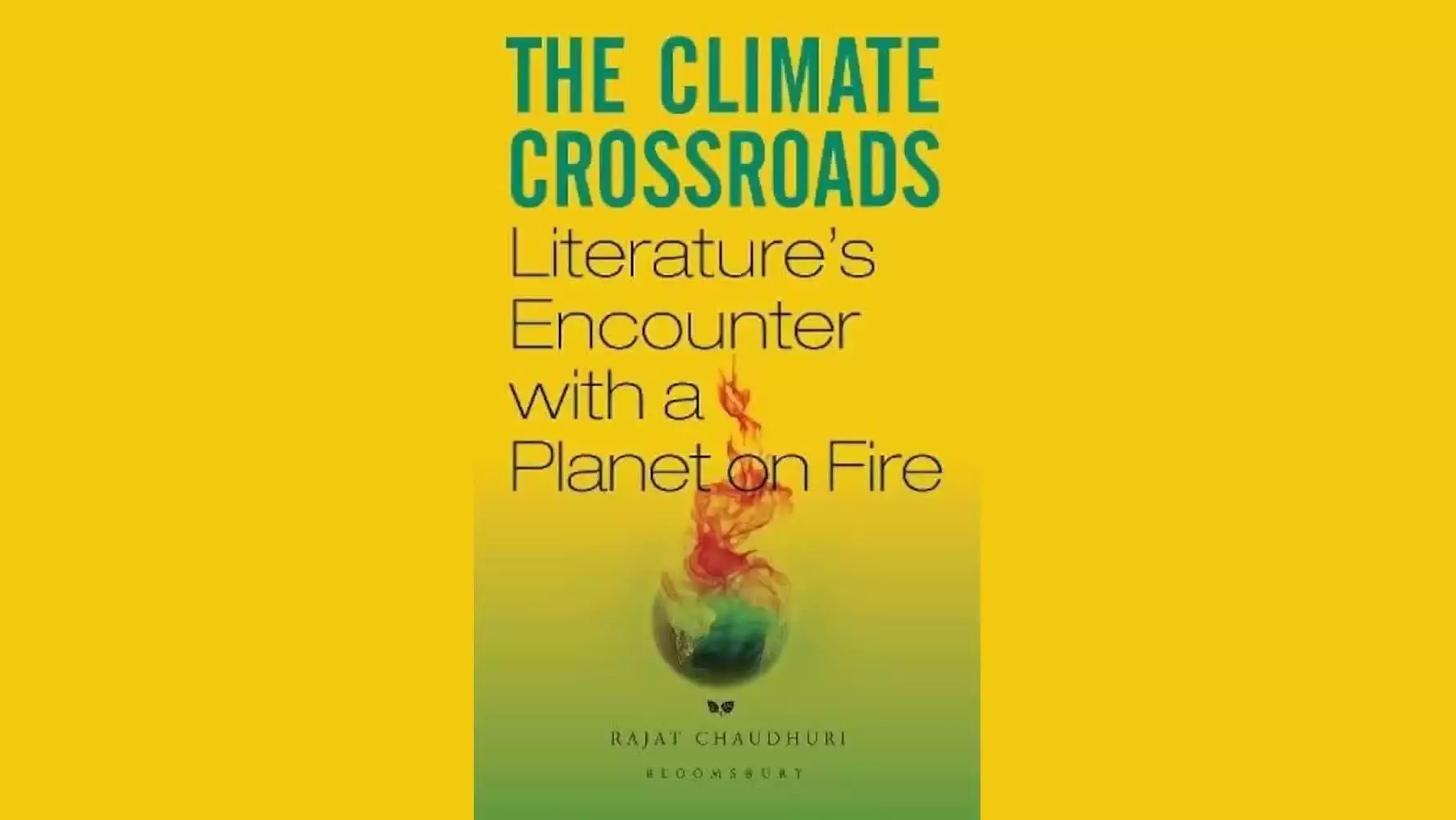
The book title is misleading, and the subtitle tries to set it right, but it doesn’t quite succeed. This is not the story of a planet on fire. It’s the story of how stories about the fire on the planet have evolved over the last eight centuries or so, a sort of literature review. The author is particularly well-placed to do this review: he is himself a well-known climate fiction (now cli-fi) writer and climate activist, and was a book reviewer before he took to writing.
And so, this review is in three parts. First, what questions is the author is trying to answer?
They seem to be: How has literature served as a way of knowing a changing planet, how has that literature itself changed in the years it’s existed, and where is it likely to go from here?
Second, how does he try to answer these questions, and how does this work compare with other works on similar subjects? Those of, say Amitav Ghosh?
He starts with descriptions of ice forming in a canal in 14th-century China, well before the earth was formally defined as a planet. He offers instances of notings on climate change well before any such notion entered the minds of people anywhere.
He looks at a range of cli-fi such Michael Crichton’s State of Fear to a very detailed look at Emmi Iteranta’s Memory of Water. He looks across disciplines ranging, of course, climate science, to economics and psychology and history, besides a bit of philosophy to look at the underlying meanings of actions — the mutilation of a Van Gogh painting, for example — that, on the surface, seem to be pure vandalism. He describes how cli-fi stories are constructed. And, of course, he talks of the interventions meant to fend off some of the nastier effects of the changes that the human race is inflicting upon its home planet.
The immediate comparison is with Amitav Ghosh’s works on the subject: The Great Derangement and The Nutmeg’s Curse. But Ghosh’s books point in The Great Derangement is that humanity suffers from a failure of the imagination in viewing the scale and violence of the change, besides focusing on capitalism as the driver and missing imperialism in the process. This book is more descriptive and reflective, and, while it doesn’t race to judgement, not even in matters such as the exploitation of indigenous peoples, it doesn’t hold off either.
And third, how well does he do the job?
The answer to this one perhaps lies in a chapter entitled A Difficult Marriage: Climate and Aesthetics. Here he describes the conflicting pulls of writing substantial, meaningful cli-fi without drowning the reader in data and other nitty-gritty. Here, more than elsewhere, instead of treating literature as subsidiary to climate science, he presents it as another way of knowing – one that reveals relationships among imagination, ethics, politics, literature, and lived experience. That is a philosophical rather than just a literary claim, and it lifts the book above the level of mere eco-criticism. And, to back it up, he looks at books ranging from Kant’s Groundwork of the Metaphysics of Morals to Aldous Huxley’s Brave New World and Island.
Rajat Chaudhuri’s writing is competent. There’s no doubt that scholars of the environment, writers trying to understand how stories can address environmental issues and readers interested in the meeting point of literature, philosophy and the environment will find this book engaging and useful.
The Climate Crossroads: Literature’s Encounter with a Planet on Fire
By Rajat Chaudhuri
Bloomsbury
pp. 364; Rs 1,699/-
