Book Review | Hazrat Mahal, Unlikely Achiever

Prince Wajid Ali Shah of Awadh meets Hazrat Mahal through two singers in 1843. She joins the paris in his Pari Khana, a dance school in the new part of Lucknow, getting the name Mehak Pari. She was renamed twice, with Hazrat Mahal becoming her final name
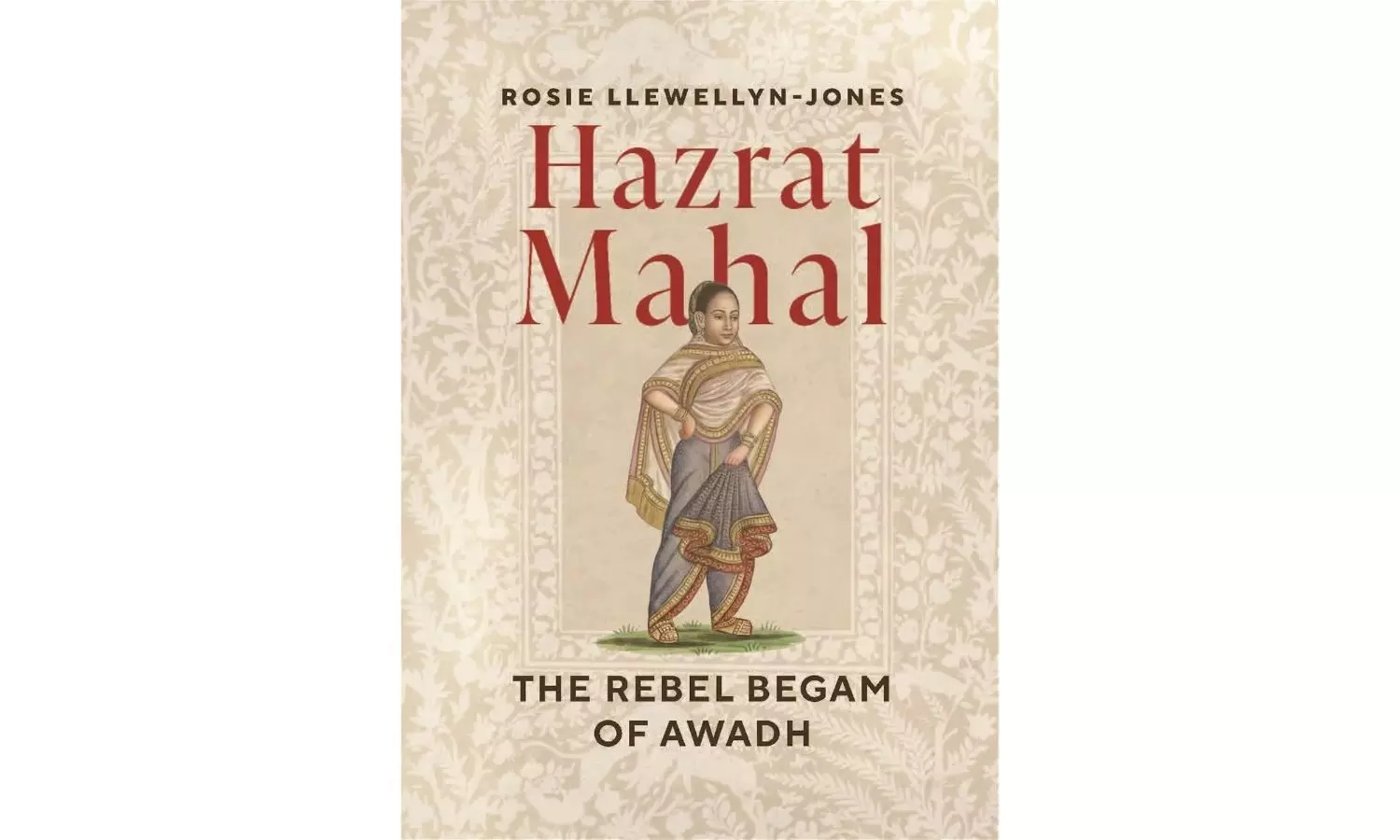
Hazrat Mahal — The Rebel Begam of Awadh by Rosie Llewellyn-Jones gives readers a brief peek into the life of Hazrat Mahal, an elusive figure in Indian history. Her life is veiled in mystery and ambiguity, though the little that is known is quite intriguing.
No one knows where she was born, her original name or those of her parents. She is said to have been the daughter of a slave of African ancestry, who was a domestic servant.
Prince Wajid Ali Shah of Awadh meets Hazrat Mahal through two singers in 1843. She joins the paris in his Pari Khana, a dance school in the new part of Lucknow, getting the name Mehak Pari. She was renamed twice, with Hazrat Mahal becoming her final name. She trained with the paris in music and dance. Wajid Ali Shah had undertaken 375 marriages; there were the nikah (permanent marriages lasting for a lifetime) and the mut’ah (temporary marriages for a limited period of time). The latter ended by mutual consent with the payment of a certain sum agreed upon.
By the start of next year, Hazrat was pregnant with Wajid Ali Shah’s child. Mut’ah wives went into seclusion for the nine months of pregnancy. Hazrat Mahal gave birth to a son in September-October 1844. The child was named Mirza Muhammad Ramzan Ali. The child’s grandfather King Amzad Ali Shah gave the baby the title of Mirza Birjis Qadr, and he was the fourth son born to the 21-year-old Wajid Ali Shah. As Birjis Qadr was the first son born to a mut’ah wife, Hazrat Mahal enjoyed an elevated status and an important position in the royal household.
In 1856 when Awadh was annexed by the East India Company and Wajid Ali Shah, who was then king, was deposed and in British custody in Calcutta, it was 13-year-old Birjis Qadr who became the figurehead of Awadh’s rebel opposition as the nominal head of their former kingdom and his mother Hazrat Mahal came into the spotlight.
Hazrat Mahal turned out to be sharp, diplomatic and astute when planning military strategies and negotiations with the powerful East India Company, keeping them at bay for a year. Circumstances forced her to rebel against the British regiments during the 1857 Uprising. She had the tough task of bringing together everyone: powerful landowners, the headstrong religious leaders, nawabi elite, angry soldiers, the wary citizens and the apprehensive begams and their offsprings. Though from a lower stratum of society, Hazrat Mahal rose to power to enjoy leadership, albeit briefly. Divorced from Wajid Ali Shah, she received a settlement from him. The last years of her life were spent in a self-imposed exile in Nepal.
Kudos to Llewellyn-Jones for her immaculate research. Biographies aren’t easy, as there are always contrarian facts to verify and sort through. My only grouse is that I had to wade through long chapters and sift through piles of information to get a few short paragraphs about Hazrat Mahal. That was a big letdown. Wish there were more details about this unlikely achiever.
Rachna Chhabria is a Bengaluru based children’s author and a freelance writer.
Hazrat Mahal — The Rebel Begam of Awadh
By Rosie Llewellyn-Jones
Pan Macmillan India
pp. 304; Rs 799
