Book Review | Flavours From a Distant Mountain

In twenty-eight chapters, Saxena records twenty-eight Kargili dishes and their recipes
Nestled along the Suru river lies Kargil, a city that is often referred to in the context of conflict and not food. My first and last visit to the place was in 2014; I was driving back from Leh into Srinagar with a bunch of friends, and we had decided to halt for the night in a nondescript two-star hotel in Kargil. During dinner, the tension in the atmosphere was palpable. I can’t quite put a finger to what it was but I do remember feeling ill at ease. The calmness of the Suru river juxtaposed with the unsettling air of suspicious looks from the locals remains with me till today.
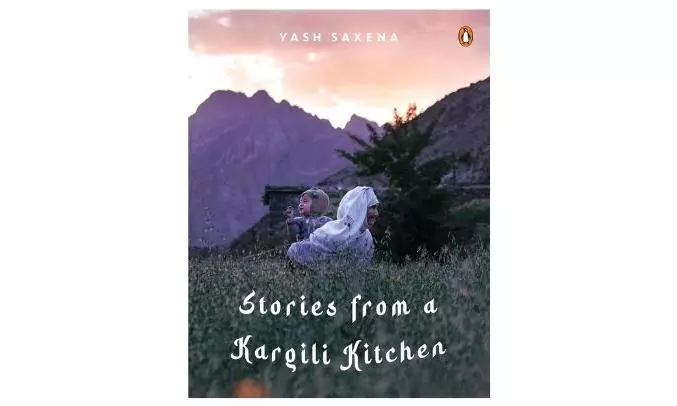
Cut to February 2026. I sit in New Delhi with author Yash Saxena’s book, Stories from a Kargili Kitchen, a book that attempts, quite beautifully, to turn the lens on Kargil through its food, people, history and stories. As I reminisce my first sip of the Salted Butter Tea (Gur Gur Cha) more than a decade ago, I discover through anecdotal accounts of the residents, unknown and fascinating recipes, ingredients and dishes of the distant land.
In twenty-eight chapters, Saxena records twenty-eight Kargili dishes and their recipes. Recipes influenced by the lay of the land, its terrain, climate, and the political unrest that engulfs every crevice. The ultimate Kargili fast food, Khulaq, a quick travel snack made with sattu which tastes “better than Snickers”; Popot, a power-packed stew essential for the long winter months; Shanang, the festive lamb sausage treat made during Lhosar/Tibetan New Year; the twelve pairs of ear-shaped azoq (baked sweet from Baltistan) sent to a girl’s household to lock in the marriage proposition; Chhang beer brewed during the annual harvest festival of the Aryan community; and Phating, the ubiquitously nutritious breakfast made from apricot trees in full bloom during midsummer.
Saxena also chronicles in glimpses the historical lineages of people and their communities that have lived in the valley for eons. The village of Latoo, for example, which lies near the Line of Control and whose residents have only witnessed turmoil and displacement ever since the first war over Kashmir in 1947. Then there’s Kharbu, a lush green sanctuary under the Drass tehsil which first succumbed to the 1978 avalanche, and later faced the fury of the Kargil War artillery fire; it is now a barren land with few inhabitants who bothered to return after the evacuation.
At a time when urban spaces such as mine operate on the haughty ease of instant home deliveries of food and other things, Kargil relishes in its slow resource procurement and turnaround. Stories from a Kargili Kitchen is an important documentation of how one moves between battles and borders to preserve the ancient sanctity of age-old food cooked with age-old methods.
Stories from a Kargili Kitchen
By Yash Saxena
Penguin Random House India
pp. 237, Rs 999
