Book Review | Eighteen Flavours Of Bombay

21 Dec 2025 1:05 AM IST21 Dec 2025 1:05 AM IST
Her parents, with the family due to shift to Goa, lie about why she’s shifting from her present school.
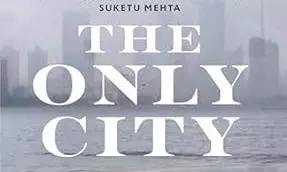
Cover page of The Only City: Bombay in Eighteen Stories
The Only City’s eighteen short stories bring the metropolis alive: it’s an organism that gets to eat you, but most inhabitants end up loving it, if reluctantly. Anindita Ghose’s novel The Illuminated shows that she knows the city well, and she’s brought together a group of strong writers: Jeet Thayil, Lindsay Pereira, Manu Joseph, Prayaag Akbar, Tejaswini Apte Rahm, and over a dozen others, some of whom have never written fiction before. Ghose says in her preface, “A short story… frames a moment of change”, and the stories take it from there.
A few striking examples: in Prayaag Akbar’s Hoodbhoy House, a young girl is an uninvited guest at a party for grown-ups at an industrialist’s house. She sees her father’s campaign to use her school friends to get business unravel. Her parents,
with the family due to shift to Goa, lie about why she’s shifting from her present school.
with the family due to shift to Goa, lie about why she’s shifting from her present school.
Over on the seamy side, Lindsay Pereira’s Strays tells of an orphan boy living on the city’s streets and finding a girl who gives him the joy of having someone to come back to. He loses her, and, with her, much of his humanity. Jeet Thayil’s dystopian Your Meat in My Hands tells of a city where meat-eating is banned, punishable by public hanging. A woman watches her brother tried, found guilty, and executed by a jury headed by a woman she knows is a meat- eater, and has a satisfying revenge.
In Manu Joseph’s Sufficient Magic, a journalist in search of a reality underlying the visible world, speared by a pretty girl, picks up a bit of paper she’s dropped. He meets her at a lecture about determinism at Tata Institute of Fundamental
Research. Then, on a movie date, at the entrance, he hands her both tickets and walks away.
In Tejaswini Apte Rahm’s Nurse Shanti, a nurse develops a fondness for her patient, a retired Colonel in his eighties asks about a pistol he’s mislaid. The nurse, with time to spare, desperate for money to go to Dubai, gets involved with
a criminal group. That ends in the Colonel finding the pistol and shooting a man she’s smuggled into the flat.
And, in Ghose’s own Normal Neighbours, a couple, both from small steel towns, live comfortably together in in no-frills two-bedroom flat. They move, when they can afford it, to a bigger flat in a wealthier neighbourhood and find their
relationship beginning to fall apart.
Absent are the Mumbai cliches. There are no praises sung of the city’s “spirit”, no facile references to dabbawalas or Ganpati processions. Shown instead are the city’s inner workings: cash changing hands in the dark, trouble evolving in a
commuter train, how the sea sustains and destroys.
There are gaps in the perspective. There’s not enough of the grit of the street. The perpetually urban view leaves out the network of faraway towns and villages that keeps the city going. But these are minor lapses. The stories are
contemporary, and there are no old fogies drowning in nostalgia: only the name in the subtitle, “Bombay”, harks back to old times. What you get is eighteen fresh flavours of modern Mumbai.
The Only City: Bombay in Eighteen Stories
By Anindita Ghose
Fourth Estate
pp. 352; Rs 699/-
( Source : Deccan Chronicle )

Next Story