Book Review | Can AI Change the Course of Evolution?

This is not a book for the reader with a short attention span: It is full of technicalities but Woolfson provides a way out via his comprehensive Glossary at the end which I found myself referring to time and again
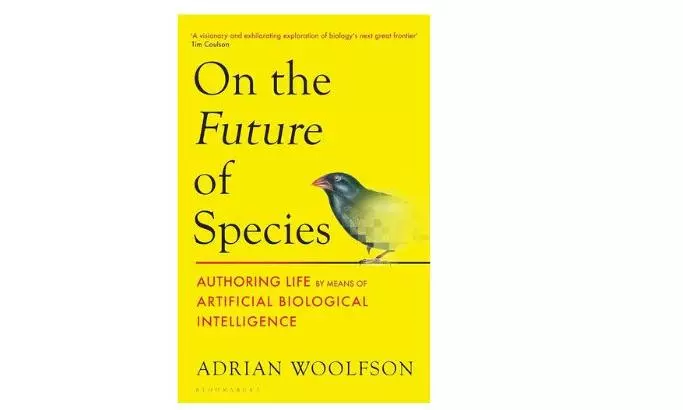
This a remarkable and fascinating read, taking us from the ‘discovery’ of evolution by Charles Darwn and Alfred Russel Wallace in 1859 to the future likelihood of human beings turbocharging the evolutionary process and rectifying some of its ‘errors’ with the help of what Woolfson has termed Artificial Biological Intelligence (ABI), enabling us perhaps to eradicate disease and prolong life. Alongside this narrative Woolfson continually reminds us of our responsibilities to ensure that all such ‘tinkering’ with natural biological processes is done with the best and noblest of intentions, with the world coming together in this endeavour — something alas, which is difficult to see happening considering the current deranged state of things.
First, Woolfson takes evolution to the cleaners: In fact, Darwin and Wallace themselves acknowledged that evolution was just the work of a ‘stupid mechanic’, that bumbled its way along with no end plan in mind save survival by natural selection. It was what I would like to call biological jugaad; if it works run with it if not, it falls by the wayside. The human spine for example, is a ‘design disaster’ — and our retinas are designed back to front, which is why we have a blind spot, where the optical nerve comes in its way. All through its 400-million-year existence, it has muddled its way along in a way no engineer would.
As biologists and scientists around the world began probing into, and unravelling, what makes us up and keeps us going — DNA, RNA, proteins, amino-acids, etc., it became obvious that the vast amount of data generated would be impossible to sort and sift through (reading and writing and ’rithmetic!) to make sense of, without the capabilities of AI which has a prodigious appetite to digest and make sense of such information. The work of a galaxy of (often Nobel Prize winning) scientists has been referred to, as step by step they unraveled genetic codes and genomes, learnt to read them and now are trying to write and rewrite them… with the help of ABI.
And herein lies the danger: this can be used for good (like for curing cancer and other diseases) and evil: producing amoral, conscienceless monsters (as if we don’t have enough of them already!) that could do untold harm to humankind and all life.
This is not a book for the reader with a short attention span: It is full of technicalities but Woolfson provides a way out via his comprehensive Glossary at the end which I found myself referring to time and again. And lest we get above ourselves, Woolfson reminds us that one of our closest cousins may be sea urchins and sea anemones, not to mention that the genes used to build our brains are very similar to those of worms, jellyfish, and flies! In fact, the brain’s neurons are slow, leaky and unreliable, and prone to distortion and dysfunction. And yet capable of “remarkable feats including love, memory and contemplation”. Which is what we must cling on to…
This book is a must read for anyone interested in life!
On the Future of Species
By Adrian Woolfson
Bloomsbury
pp. 453; Rs 699/-
