Book Review | An Exquisite Train of Discoveries as India Grows Up

It’s a journey of discovery, for the country, the railways and, of course, for Charu Chitol. Readers who experienced the 1960s and ’70s — famines, wars, the Railways strike, the Emergency — will relate with it
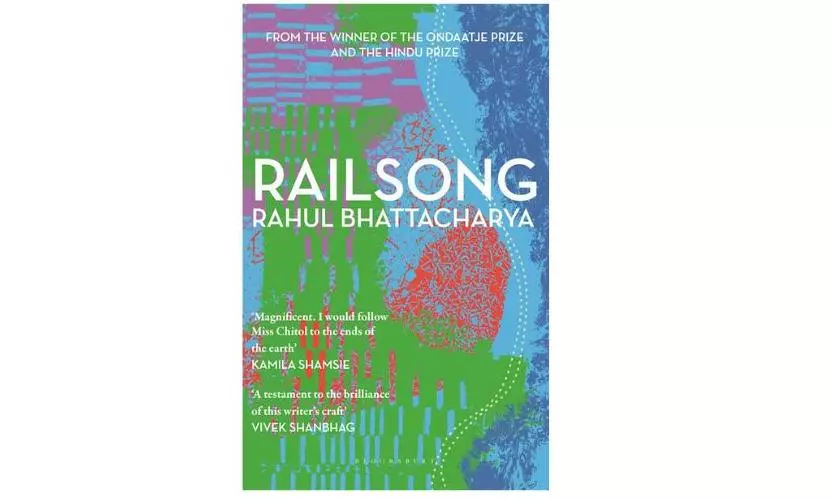
To begin with, first, the review copy is a proof, not the finished product, so there might be small differences between the two. Second, this book is unlike either of this author’s earlier ones, the first of which was non-fiction on cricket and the second, a novel, a first-person narrative set in Guyana.
Charulata, aka Charu, is the only daughter of one Animesh Chitol, railwayman, younger sister to Dhrubo and elder to Anando. As the story opens, the Chitol family, including Charu’s mother and paternal grandmother, move into a new home: C-type railway quarters in a railway township in Bhombalpur, to which Chitol has just become eligible. Charu’s mother Jigyasa dies soon after, of illness. The neighbourhood children, unfortunately, have the impression that Jigyasa was a witch, a dayin, with predictable consequences.
Animesh’s mother, Nistarini Debi, takes over the household. Lacking a daughter-in-law to direct, she fails to complete the chores required of a housewife. The first casualty is the lunch that Jigyasa gave Animesh every working day. Later, when it’s clear that she needs help, Animesh arranges for a maid.
It’s a time of change in the railways, and, indeed, the country. Diesel-electric engines are taking over from steam. Railway unions are becoming more vocal. A famine strikes, part of a cycle, but Charu and her family are in a sense protected, at least from the extremes.
Charu’s life is bound by small laws. One of the worst: She must not go to the toilet to urinate, because, for a person working in the kitchen, a visit to the toilet must be followed by a bath. She has to urinate over the drain. The family acquire a dining table. From eating sitting cross-legged on the floor they graduate to this plastic-wrapped bit of sophistication, and Charu takes pleasure in extending little holes that have developed in the plastic wrapping.
And then there are the disarming touches. Animesh keeps a strip of yellow cloth from Jigyasa’s sari tied to the handlebars of his bicycle, helping him identify his steed while it’s parked in a sea of similar cycles in the parking lot at work. It serves, besides, as a duster when needed.
The feeling of being “cribbed, cabined and confined” extends to school — to all of Charu’s world. After the Railways strike of 1974 and the Emergency that followed, Charu makes her way to Bombay (as Mumbai was in those days) where she finds work of sorts in a shop, living first with an uncle and then on her own. Back in Bhombalpur, however, Animesh dies alone. His belongings are split three ways, a third for each of the children. One of the children is entitled to a railways job on compassionate grounds since Animesh died “in harness”. Dhrubo already has a reasonable job and Charu, next in line, decides to take it.
That’s easier said than done: What follows is a long stretch of applications, showing up at various offices and meeting many officials, until finally she fills a vacancy, and becomes a railwaywoman, where she finds that she prefers meeting people to talking to them on the phone…
It’s a journey of discovery, for the country, the railways and, of course, for Charu Chitol. Readers who experienced the 1960s and ’70s — famines, wars, the Railways strike, the Emergency — will relate with it. It’s well-written, but the author falters perhaps when trying to extend the language: for example, “Dhrubo chubbied along vulnerably”, or, about the maid, “...her mouth battered by paan”! A good product, marred perhaps by undue experimentation with the language and careless editing.
Railsong
By Rahul Bhattacharya
Published by Bloomsbury
pp. 416; Rs 799
