Book Review | An Elephant Fable Asks Us To Be Human

We’re barely into the third para of Gajraj, still you don’t need a thesaurus to understand that “the barely clothed people” are the tribes residing in the deep forest of the land, and the Road Gang represents the Development Brigade which plans to build airports and townships, ports and power plants inside one of the last island rainforests
“And the barely clothed people of the soil argued passionately — ‘Once you lose the trees, you lose everything...’
“Some of the Road Gang had come earlier. They cut down a few road-facing broadleaf trees. The trees weren’t many monsoons old, yet they fell with a thunderous buddum...”
We’re barely into the third para of Gajraj, still you don’t need a thesaurus to understand that “the barely clothed people” are the tribes residing in the deep forest of the land, and the Road Gang represents the Development Brigade which plans to build airports and townships, ports and power plants inside one of the last island rainforests.
So what’s wrong with development? The fact that it’s not planned on an empty land but in a rainforest. Having walked seven miles in and seven miles out over fossilised roots and trunks of trees not messed about with since they sprouted deep inside Brunei, I’ve learnt that these forests evolve over thousands of years. Nearer home, the rainforests of Nicobar Islands house diminishing numbers of Homo sapiens. The waters around are nesting grounds to endangered species of leatherback sea turtles. And the branches of the trees marked for felling house feathered species that exist perhaps nowhere in the world.
Avijit Dutt brings us alive to much of these by establishing an effortless kinship with them. And he does this by looking at the trees, the waters, the mines and the men through the eyes of Gajraj. It is easier to describe — if only like the Six Blind Men of Hindoostan — an elephant than to THINK like one. This I say, though I’ve been raised on the anthropomorphic fables of Aesop and Panchatantra. studied George Orwell’s Animal Farm and translated Nabendu Ghosh’s Aranya. All of these train the lens on bipeds whose activities are scrutinised by quadrupeds. Each of these literary works underscore that “their” world is as vulnerable, as fragile, as in need of protection as “ours”.
Additionally, the author of Gajraj hints at the epithet, “the memory of an elephant”. If a pachyderm remembers the decades of life on the island that houses rainforests, should we, God's most intelligent creation, destroy the planet that’s our only home in the universe? Development, yes; but not through irreversible ecological decimation. Avijit Dutt scores by structuring his narrative as the exploits of a grand mammoth and a frolicking mammal who has strayed away from his mamma. Despite this, the lesson at the end of the slim novella is worth meditating on.
Post Script: Just the other day a newspaper reported: “For the third time this month a leopard entered a housing complex near Borivili National Park, raising fresh safety concerns among residents.”
Should I invert the lens to read, “For the nth time humans entered the jungle island, raising fresh alarm among cheetahs, cobras, macaques, dugongs, hornbills...?”
Bless you Gajraj for lending me your glasses.
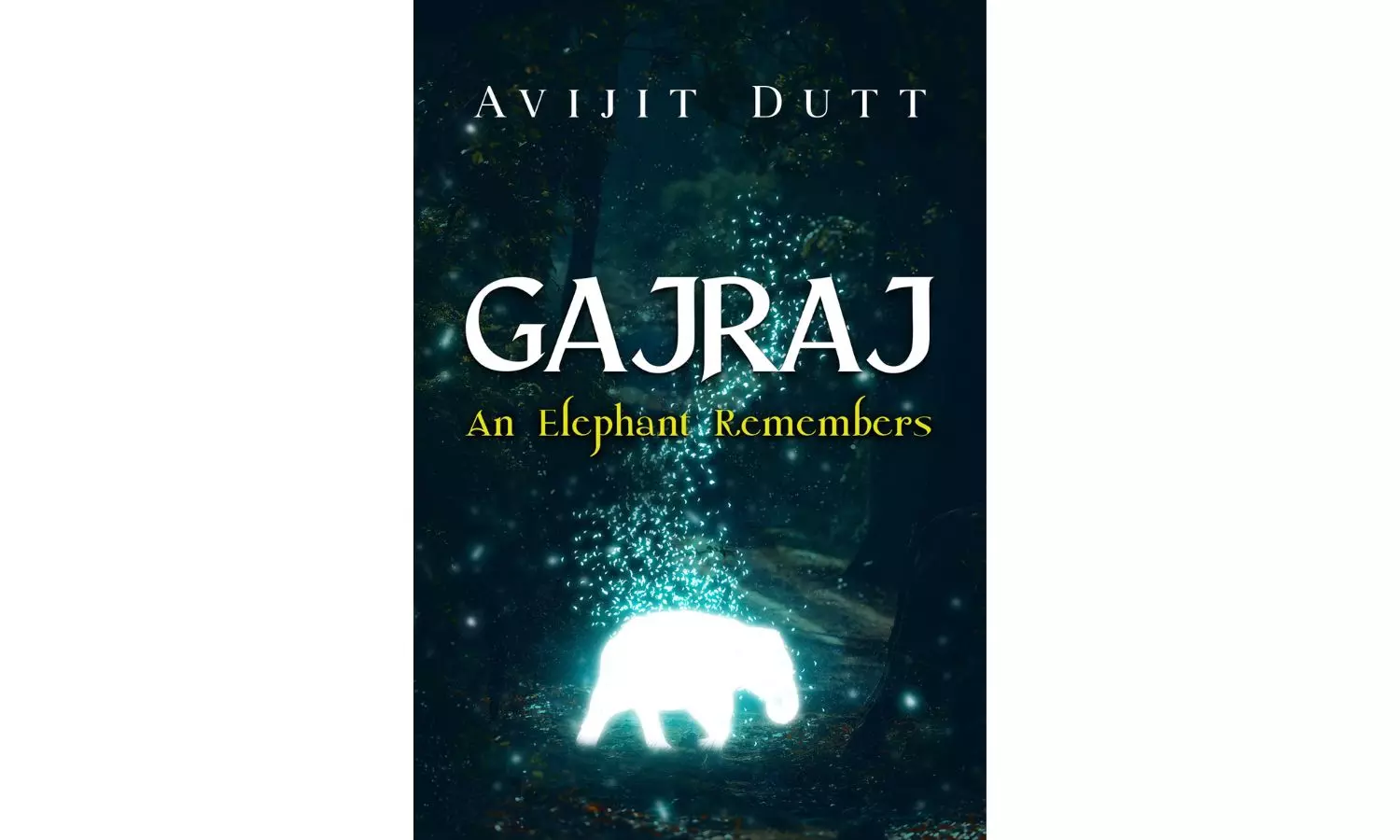
Gajraj: An Elephant Remembers
By Avijit Dutt
Olympia Publishers, London
pp. 49; Rs 450/-
