Book Review | An Anatomy of Fascist Hindutva

The author does step back from the personalised space of pain and unhappiness, and looks at the phenomenon of Hindutva in the cultural sphere
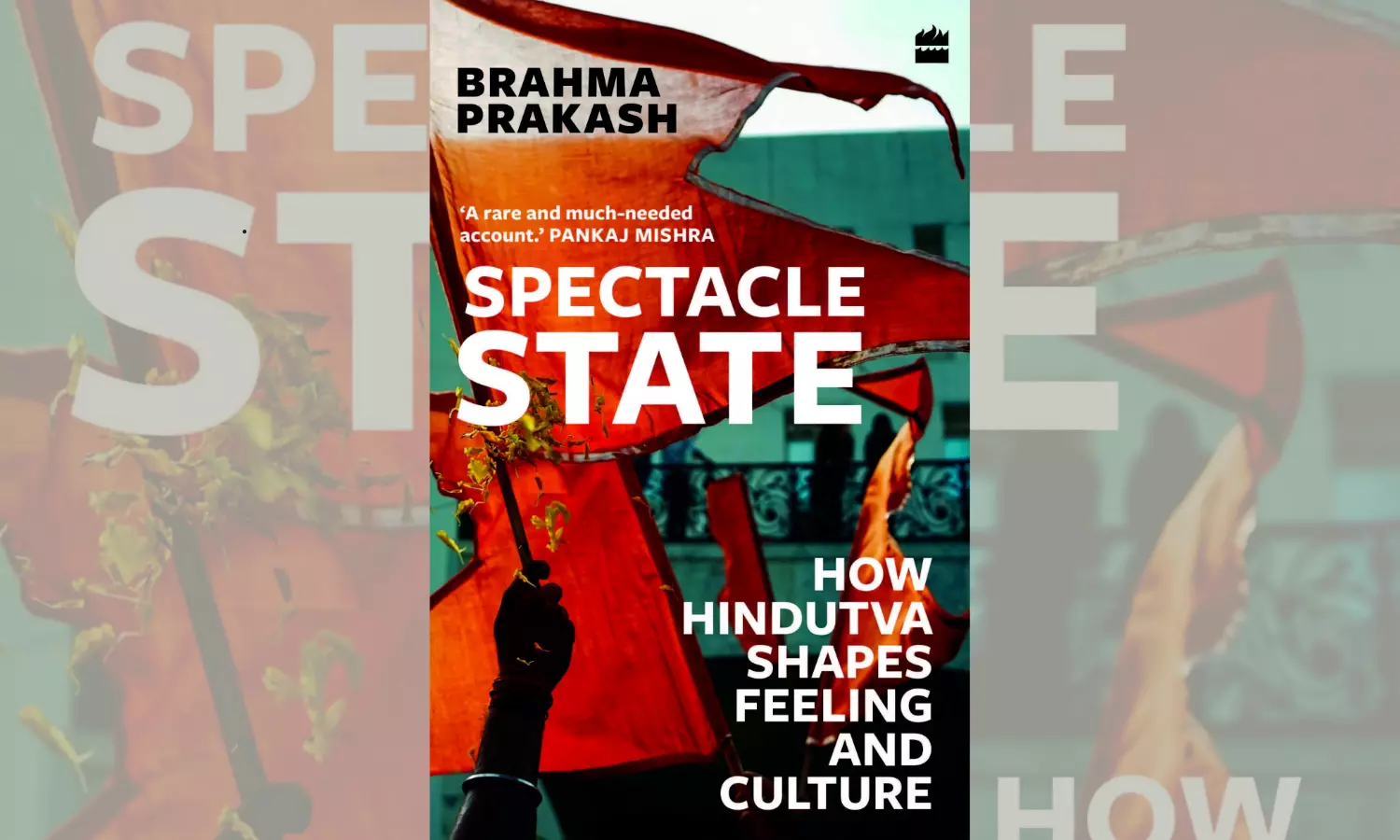
Anglo-American poet of the first half of the 20th century, T.S. Eliot, used to speak of the fusion of thought and feeling as poetry, which he found in 17th-century metaphysical poets like John Donne and he thought this was the element missing in the 19th-century British Romantic poets like William Wordsworth. Brahma Prakash, who teaches theatre and performance studies at the much-reviled Jawaharlal Nehru University (JNU) in New Delhi, brings with him the rare fusion of intellect and passion, analysis and agony while looking at how Hindutva appropriates cultural forms, and how things like bulldozer, sword and the act of lynching are transformed into symbols of violence and assertion. Aggression is the leitmotif of cultural expressions like dance and music in the hands of the believers of Hindutva. He pauses to ponder whether people participating in rites and ceremonies associated with Hindu festivals are even aware of the fascist features that are embedded into the ceremonial celebration. He conveys the trauma and pain he feels as he watches the fascist contortions of cultural forms he witnesses in his milieu. He writes about the shock he experienced watching the Hindutva-soaked Ram Navami festival celebrations in his village in Bihar: “…while I was protesting the Hindutva violence under the banner of Not in My Name, my own people were participating in the same processions, chanting the same name, which I was protesting. Seeing this sort of procession happening on my home turf, in front of me, shocked me beyond the point of belief.”
He does step back from the personalised space of pain and unhappiness, and looks at the phenomenon of Hindutva in the cultural sphere. Using the revolution-counter-revolution paradigm suggested by Dr B.R. Ambedkar, where he had shown Buddhism as revolution and revival of Brahmanism as counter-revolution, Prakash places Hindutva as counter-revolutionary moment and movement, and the intent is to get back to the old hierarchical Brahman/Kshatriya order. He rightly points out that Hindutva does not posit a farmer-led order because it would then be a Shudra-led order. As a generalisation that explains general features of Hindutva, it helps in explaining the revivalist movement. He also uses German Marxist thinker Walter Benjamin’s insight that fascism is the aestheticisation of politics. This aestheticisation process is then extended to the bulldozer, to the sword, the pop music and even to lynching. He writes about lynching under the stark headline, “The Art Installation of Lynching”, he draws the parallels between the man who is tied to the pole in the public square to be lynched, the people lashing out at the man, and the crowd that gathers to watch the act of violence and be thrilled by it. Prakash writes, “What does an art installation do? It transforms a space into an immersive experience for the spectators… Yet, this does not mean that there is no difference between an art installation and a lynching. Hindutva tends to merge the differences together by aestheticisation of the body and violence. It installs bodies to stage a lynching. It carries out the lynching like an installation work.”
Spectacle State: How Hindutva Shapes Feeling and Culture
By Brahma Prakash
HarperCollins
pp. 263; Rs 599
