Book Review | An Account of Life in the Hills of Ranikhet

Anuradha Roy’s first non-fiction work – an account of life in the hills of Ranikhet – blends memoir and nature-writing with characteristic elegance and humour
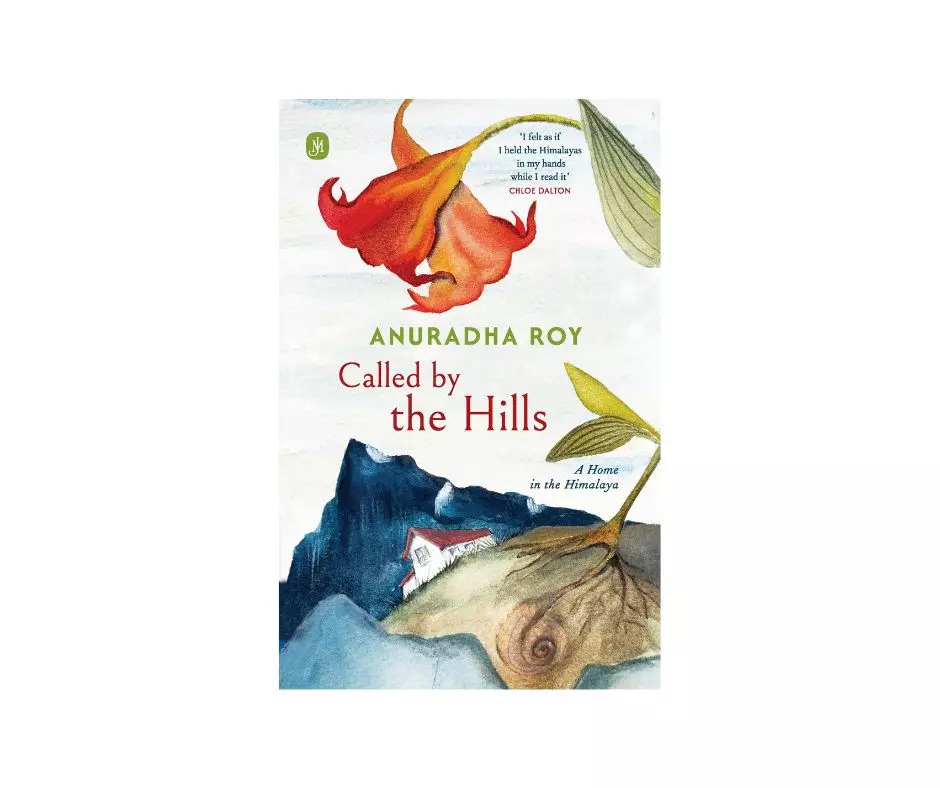
The affective intimacies that bind the natural and “man-made” worlds have been part of Anuradha Roy’s oeuvre right from her very first novel, An Atlas of Impossible Longing, which opens with a dreamlike sequence of a house overwhelmed by the sudden flooding of the river next to which it stood. In the years since, the trajectories of her fictional characters have often been carried off the back of great entanglements between the Earth and the work of the heart, mind and hands.
Here, in her first work of non-fiction, Roy quotes Geoffrey Dyer: “It’s often said that writers have only one or two themes they consistently return to, finding new ways of addressing them, new fictional situations in which they can be explored.” Though the concerns of her novels have been far broader than the simple, occasionally reductive framework of the ‘ecological’, Anuradha Roy’s latest work offers a fascinating, often deeply pleasurable glimpse into a life of letters in the hills of Ranikhet, to which she relocated a few decades ago alongside her husband. It reads, at once, as an account of an unorthodox relocation, a backstage view to the literary sensibilities behind some of Roy’s work, a rumination on the patient, attentive labour of gardening and an elegy to an ecosystem which, like so many others around us, has been left irrevocably transformed by the engine of ecological extraction.
“In the mountains, time is neither clockable nor divisible into discrete segments,” she writes. “It is a thing that can stretch when the day is beautiful and there is tea and conversation; it can feel dangerously brief, as when there is a landslide and you have to navigate to a place of safety.” What a marvellous thing it is to witness time unfurl in this author’s hands. In the 25 years that pass across these pages, we witness the lives of not just Roy or her husband but a cast of intimately drawn non-human actors too: barbets in “party clothes”, lemon trees which take years and all manner of coaxing until dramatically bearing fruit; meticulously detailed wildflowers, and a charming cast of mountain dogs, each with their own peculiarities (and names like Biskoot, Soda and Barauni Junction). Unlike many others who take to the hills, Roy refused to trek or hike, preferring instead “a more intimate exploration,” as if one were “a lover who needed to understand and memorise every detail of a beloved: the folds of the hills, the buses in its dark and secret parts, the contours and curves, the changes of light and the changes of colour in every season”.
The deep romance of this sensibility percolates into the characteristic elegance of Roy’s prose in this instance, peopled as it is with the memory of a Ranikhet which fades as we move closer and closer into the smog of the present.
Called by the Hills
By Anuradha Roy
Hachette India
pp. 184; Rs 999
