Book Review | A War Reporter Chases the Meaning of Home

The prosaic writing would have been fine had it been witty and crisp and correct, but it offers none of these lifelines either to the floundering reader
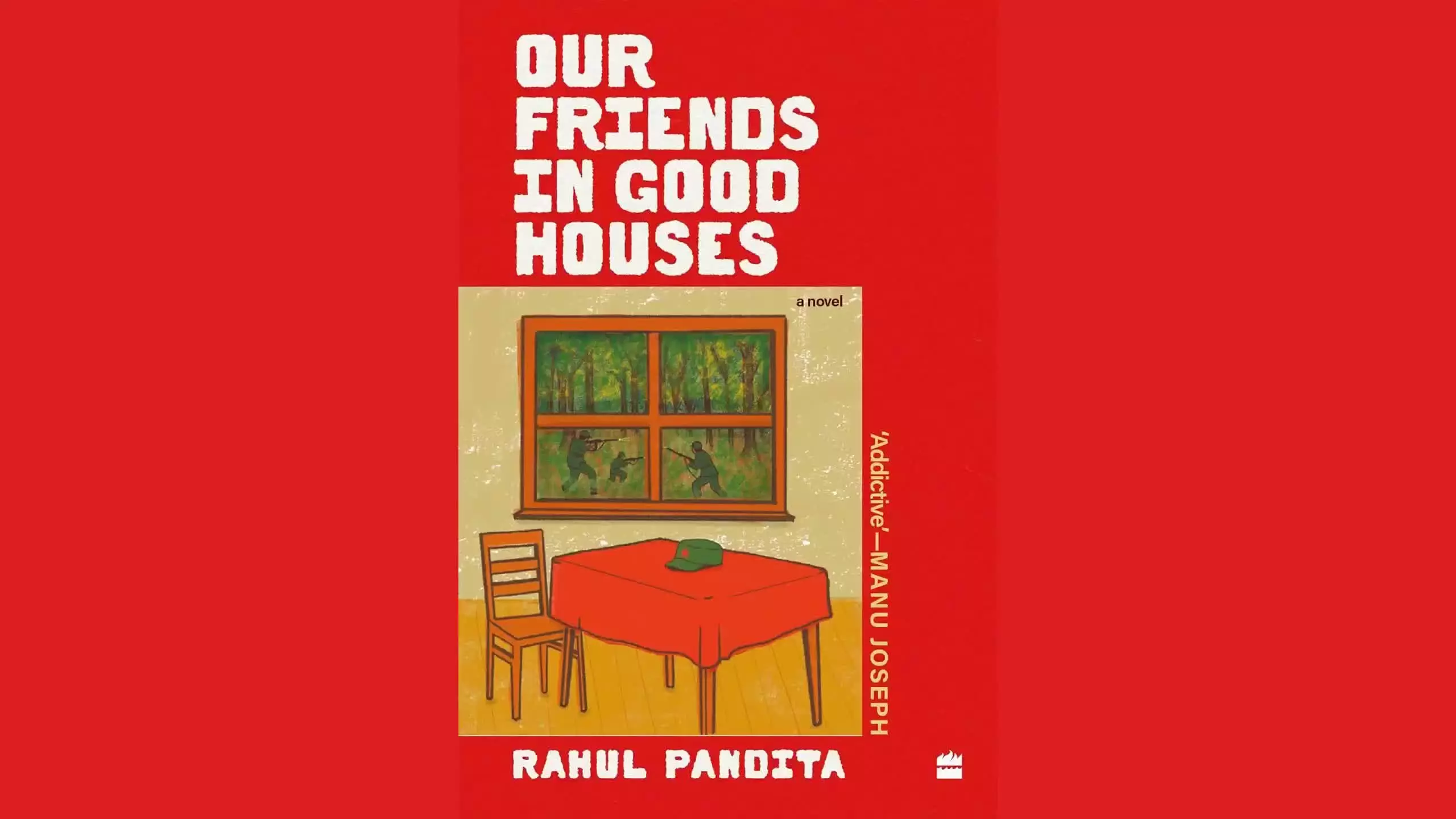
When this eye-catchingly red book with its firm spine and pleasing design turned up in the post, I pounced on it, anticipating a good week’s reading ahead, but I had forgotten the most oft-repeated aphorism of all, not to judge a book by its cover! Because, alas, nothing that is promised by the elegant garb of Rahul Pandita’s Our Friends in Good Houses materialises.
The blurbs emblazoned front and back are as frustrating in their misrepresentation, till one remembers that endorsements are so often coded. “Addictive” should mean it is a compelling tale, able to hold us in thrall, but the only impact this book shares with addiction is its soporific effect. That it’s also called a “meditation” should have tipped us off about the authorial self-indulgence on display, but despite the veiled warnings, we are left stunned by the sinking standards of publishing.
Seeking to gloss over the unpleasant whine of the central character Neel’s incessant self-pity, by positioning it as an exploration of a man’s inner workings, is a further disservice to readers, because the wallowing monologue that is this book drowns out the voices of its every other character; lovers, parents and “comrades”. Not allowing them to develop, strips the unremitting scab-picking of the protagonist in turn, of any universality or depth.
The prosaic writing would have been fine had it been witty and crisp and correct, but it offers none of these lifelines either to the floundering reader. It proceeds in a monotone, in step with the pointless circumlocutory nature of the narrative itself, and cadences in speech and distinctions in vocabulary that could have been used to distinguish characters, an early Jewish American girlfriend from a later South Indian lover, for example, are absent. Every character communicates in a uniformly ponderous way.
A firm grip on the language appears to elude the author, with the poor choice of words and phrases jarring the reader out of the stupor brought on by the narrative’s inverse, tranquilizing influence. Descriptions are often avoided in favour of references to other works and authors, as if conceding that they would have done it better, adding to the slapdash lethargy of this work.
The same “paralysis” that grips Neel, a recurring theme in this book, rendering him unable to find love or meaning in this world, would seem to have the author in its power too, which the latter then bestows upon us readers, leaving us semi-comatose in disappointment. Consequently, the “spade moving soil” that the endorser hears, which should have been the sound of the author deservedly digging his own literary grave, is instead the rush of word-sludge under which we readers find ourselves buried, far too often.
Rhimjhim is a book lover and culture critic.
Our Friends in Good Houses
By Rahul Pandita
Harper Fiction
pp. 236; Rs 599