Book Review | A Raconteur Unravels The Mysteries Of Internet

Some of the sharpness of his views comes from this feeling of being a misfit in the mainstream. He doesn’t find “cringe”, for instance, cringeworthy: For him, it’s a form of courage, an acknowledgment from its makers that something uncomfortable does exist, and coming to terms with it
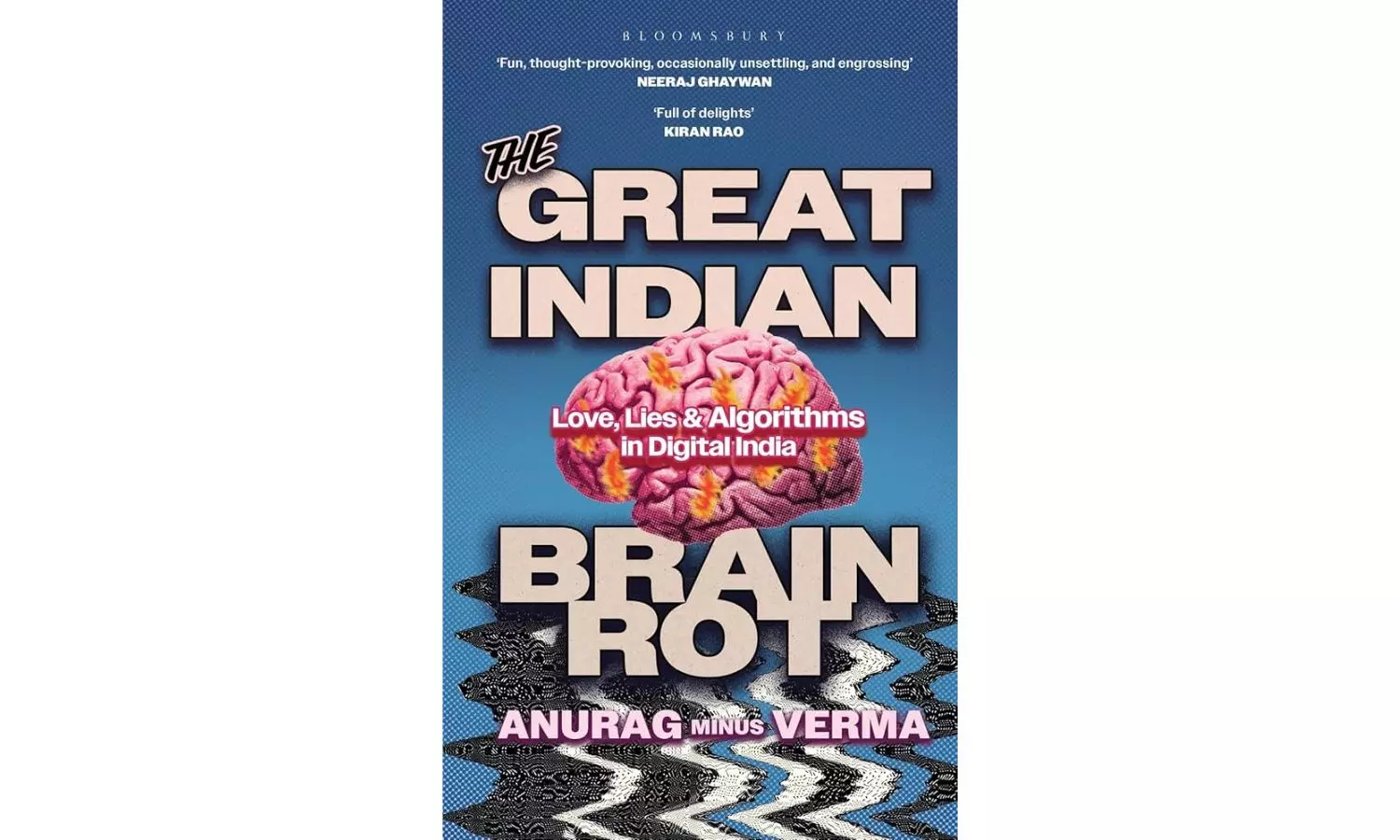
The author’s name might indicate a book written tongue in cheek, but the nine essays here are serious; leavened with wit and humour, they cover every aspect of Indians going digital, including Jio-politics.
So, what is brain rot? Mr Verma asks this question in the beginning: The rest of the book is the answer in the context of the overwhelming amounts of information, opinion and cyber-garbage inflicted on the hapless majority of Indians through the Internet.
It’s also an unfiltered view of the political mechanisms operated through the Internet. Some of this we understand from Mr Verma’s own evolution: He found himself a misfit in call centres, where his name was changed to Ron and told to speak in an accent acceptable to customers in Europe and America, as well as in other ‘regular’ jobs he held. He broke out of a dead-end career progression by breaking into social media; his vlogs during the pandemic were a crucial stepping stone to his eventual success, as indeed were his knowledge of and passion for film-making.
Some of the sharpness of his views comes from this feeling of being a misfit in the mainstream. He doesn’t find “cringe”, for instance, cringeworthy: For him, it’s a form of courage, an acknowledgment from its makers that something uncomfortable does exist, and coming to terms with it.
His observations on some bits of India are born from his own experience as a Dalit, and the fractures in the “backward” castes and among the “savarnas” are noteworthy: Did Lalu Prasad Yadav find himself excluded from the Delhi’s India International Centre despite his prominence in politics on the grounds of his caste? But, hearteningly, there’s a pushback. Reader, did you know that there is a Dalit counterculture movement on the Net? Yes, it exists and it “doesn’t mimic the violence of the dominant castes… but it does something more subversive — it ignores their approval entirely”.
Some of Mr Verma’s other striking observations are about the mushrooming of coaching classes even during the pandemic, and he picks three contrasting examples from this industry to illustrate what he says. There’s Awadh Ojha, who, beginning as a teacher of history, acquired something like godman status among his students in a few years. His “personality is that of an omniscient orator”, knowing everything about everything. There’s Dr Vikas Divyakarti, who, after a brief stint in government, turned to his passion, teaching, which he does with profound equanimity. Says Mr Verma: “… in cricket, Ojha would be Sehwag and Divyakarti, Tendulkar.” The third of this group is Faisal Khan, better known as “Khan Sir”, known for explaining complex problems in down-to-earth, light-hearted ways. Khan adds to his image by taking public stands on issues affecting students. In December 2023, for example, he supported students in their protests against the Bihar Public Service Commission, spending some time in police custody in the process. As Mr Verma puts it, “this often means cultivating a persona — motivator, influencer, brand — beyond the role of a teacher.”
Even more impressive is the 17 pages worth of notes and references, chapter by chapter, at the end. This is no frothy collection of wit — underneath is an active, unfettered mind that leads to an uncomfortable conclusion — the Internet, by itself, is simply a tool, and what we see on it, good, bad, or ugly, is what we make with it.
The Great Indian Brain Rot
By Anurag Minus Verma
Bloomsbury
pp. 204; Rs 499
