Book Review | A Politician Who Stands up for Human Rights

In this book of articles published in various newspapers and the lectures he gave reflects Kumar’s discerning thoughts about judiciary and democracy
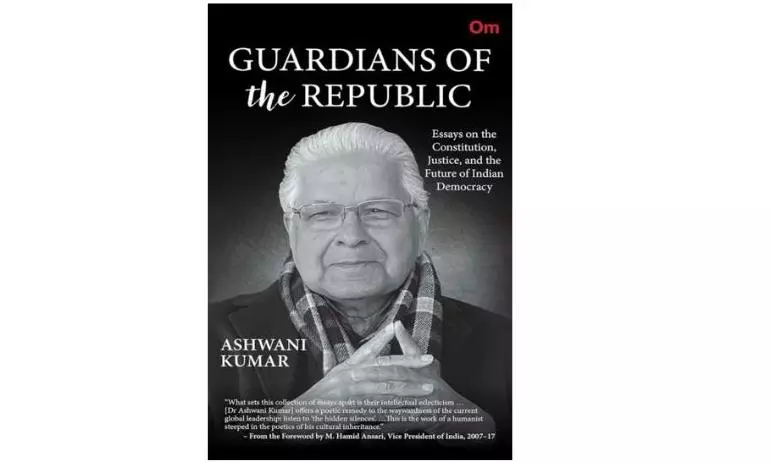
One of the overlooked facts is that in the ranks of the Congress party, despite its internal structural distortions, there are well-read, sophisticated and articulate individuals. Former Congressman Ashwani Kumar is one of them. He displayed his intellectual finesse even while he was in parliament and while he was a minister of law and justice in the Manmohan Singh government. But such is the fury in the public mind against the Congress, that the virtues if any of the few individuals in the party and the government go unnoticed. So it was with Kumar.
In this book of articles published in various newspapers and the lectures he gave reflects Kumar’s discerning thoughts about judiciary and democracy. His reflections go beyond platitudes, and he confronts the stark choices one is forced to make in the system of governance. The article, “Constitutional Right, Democracy and Judicial Review: A Case for Balanced Constitutionalism”, published in Economic and Political Weekly in 2019, makes for instructive reading. Kumar cites from diverse and admirable authors on the issue, including Alexander Hamilton from the Federalist papers where eminent American politicians explained the rationale of the American Constitution. Kumar writes, “The Court’s power of judicial review is validated essentially on the premise that democracy is not merely the rule of the majority. It is also about the protection of human rights that constitute ‘substantive democracy’, and therefore, its exercise in defence of human rights is not anti-democratic.” This is a position that many politicians would hesitate to take. But he does not lean completely towards the need for judicial review. He approvingly quotes Justice Chelameswar’s dissent judgment in the National Judicial Appointments Commission (NJAC) case: “…to assume to or assert that the judiciary alone is concerned with the preservation of liberties and does that job well, is an assumption that is dogmatic, bereft of evidentiary basis and historically disproved…”
He also takes a brave stand against torture and he is dissatisfied with the fact that India has not yet ratified the UN Convention Against Torture (UNCAT), which it had signed in 1997. Commending the Supreme Court’s decision not to interfere with Punjab and Haryana High Court terming the 14-hour 40-minute custodial interrogation of Surender Pawar as “not heroic” and “against the dignity of a human being”. But he is unhappy with the court for not nudging the government to legislate on banning torture. And in the case of G.N. Saibaba, the disabled professor who was incarcerated for 10 years before he was acquitted by the Nagpur bench of the Bombay High Court in March 2025, Kumar does not hesitate to rap the Supreme Court’s 2022 decision “restoring Saibaba to custody after setting aside his discharge by the High Court and hearing the state’s appeal on a holiday” as “worrisome and wholly unconscionable”.
We need articulate people like Kumar to speak out about the injustices of a system.
Guardians of the Republic: Essays on the Constitution, Justice and the Future of Indian Democracy
By Ashwani Kumar
Om Books International
pp. 255; Rs 595/-
