Book Review | A Master’s New Avatar Fails to Grip

In Ghost-Eye, his first work of fiction in seven years and a sequel in more than just spirit to his previous novels The Hungry Tide and Gun Island, we witness the maestro faltering a little
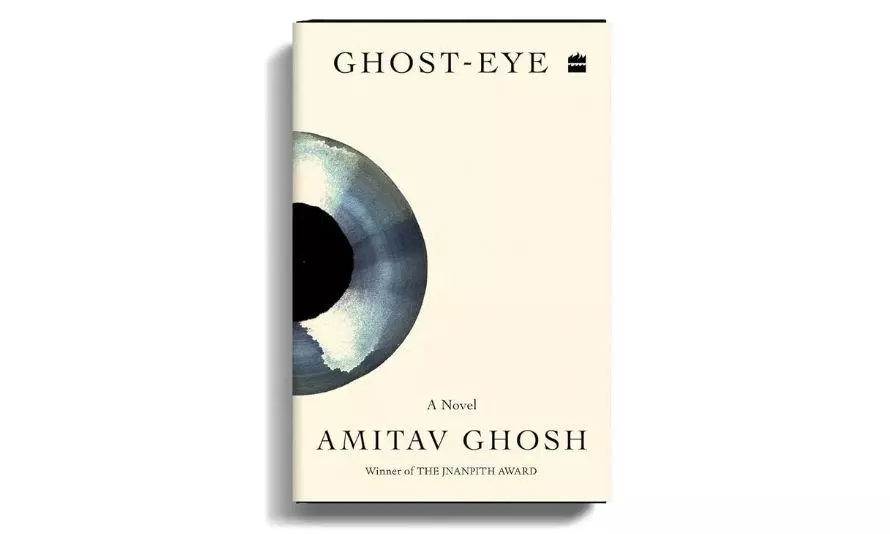
In these very pages around a year ago, I compared Amitav Ghosh to a Hindustani classical singer who, after a string of ambitious bada khayals in his fictional work, had retreated into a series of shorter, non-fictional bandish-es, solidifying his ideas and concerns around the braided themes which appear across his work: the way ecology, history, politics and the production of knowledge therein all intertwine across the warp and weft of our postcolonial lives. In Ghost-Eye, his first work of fiction in seven years and a sequel in more than just spirit to his previous novels The Hungry Tide and Gun Island, we witness the maestro faltering a little.
This story takes up where Gun Island leaves off, returning to its characters Dinanath “Deen” Datta and Tipu, as they rove through the archives of Dinu’s aunt Shoma, investigating a “case of the reincarnation type” from thirty years ago surrounding a three-year old girl born into a Marwari family in Calcutta, who claims to be the reincarnation of a fisherwoman from the Sunderbans.
On a plot level, there is much to savour for those of us who have admired Ghosh’s previous novels: over his career, no writer has illuminated the mysteries of the archive and the meticulous, loving labour of research quite as much as him. In spite of its pulpy reliance on reincarnation and happenstance, I found myself easily drawn into the classically Ghosh conceit of a Bengali researcher uncovering the places where folklore, mysticism and the much more tangible sociopolitical realities of climate change meet.
Yet these pleasures are soured by a surprisingly workmanlike affectation that lingers across much of the author’s prose in this novel, which stumbles half-heartedly across a lazily rendered 1960s Calcutta and Covid-stricken near-present. The crowdpleasing contrivances of Ghosh’s story are continually undercut by a mistrust of his reader; his writing is marred by ham-fisted exposition — characters repeat themselves and look directly at the camera at each eco-mystical turn in the story, draining the life out of an otherwise brisk plot.
Most besur of all is the dialogue here: which alternatingly grates and bores. The bhadralok Bengalis all sound alike; and the pseudo-American chatter of Tipu, the Gen-Z climate activist from Gun Island, makes for grim reading (“Okay, pops, since you’re trippin’ on me, I’ll spill the tea”).
A few loose threads of this sort are enough to spark doubts over the overall craftsmanship of a piece. Ghosh’s story unravels into a frantic denouement: a montage of breathless action and revelation punctuated by a bafflingly long interlude where Dinu learns to prepare the fish curries of his youth. Literate and entertaining as Ghosh’s stories often are, the strangely rushed, dramatically inert conclusion of this novel left me weary. There is enough to the music of this novel — its charm and dramatic complexity — to suggest the author has better, richer fiction in store for us. In the meantime, we must make do.
Ghost-Eye
By Amitav Ghosh
HarperCollins
pp. 336; Rs 799/-
