Book Review | A Double Act in Politics and Media

22 Nov 2025 12:33 PM IST22 Nov 2025 12:33 PM IST
The book is full of anecdotes and claims which can only be denied or confirmed by the other people present in such meetings
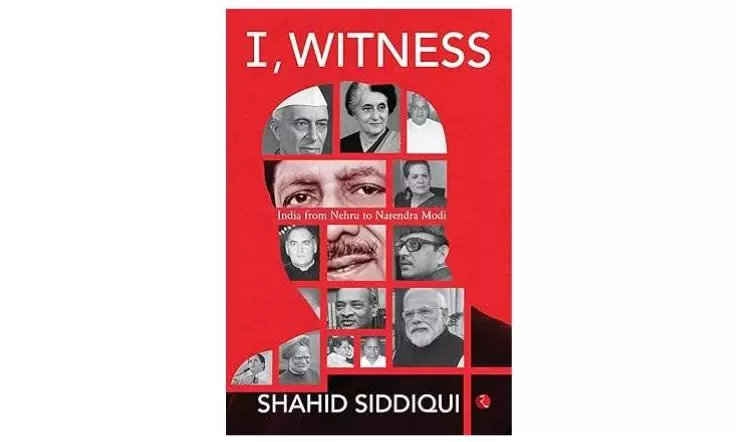
Cover page of I, Witness: India from Nehru to Narendra Modi
Shahid Siddiqui is a journalist-cum-politician. In fact, it is often difficult to distinguish whether he is a politician first or a journalist. It is perhaps because he inherited this ambiguity from his late father, Abdul Waheed Siddiqui, who also played the double role of a politician and a journalist. Over the years, Siddiqui has switched several political parties, starting with the Congress. Apart from Congress, he has also been a part of all major political parties of Uttar Pradesh such as the Samajwadi Party, the Bahujan Samaj Party and the Rashtriya Lok Dal.
I, Witness is a recollection of the activities and events Siddiqui participated in and witnessed, as well as the important people he has met over the last seven decades first in the shadow of his father and later as a journalist and political activist. Born on the third anniversary of Indian Independence (August 15, 1950), Siddiqui informs us that the book is also the story of a young Indian and Muslim who faced difficult times after the partition of the country. I was fortunate to be born into a family of freedom fighters who continued their struggle for a democratic, secular India even after India gained independence. Through the lanes of old Delhi, and across the length and breadth of India, I have witnessed the best and worst facets of Hindu-Muslim relationships.
The book is full of anecdotes and claims which can only be denied or confirmed by the other people present in such meetings. For example, Siddiqui recounts his meeting with the then Prime Minister P.V. Narasimha Rao where he claims to have been offered a Rajya Sabha seat provided he wrote an article praising Rao. My conscience didn't allow me to take any favours from a person whom I held responsible for doing something against all that I believed in as an Indian, he writes. According to Siddiqui, and rightly so, Rao was responsible for the demolition of Babri Masjid. In my view, Rao’s politics damaged the secular foundation of India for a long time to come. It is not accidental that the BJP conferred the Bharat Ratna (India’s highest civilian award) on him posthumously in 2024, he notes.
Now, contrast this with Siddiquis praise for Atal Behari Vajpayee, the man who played a crucial role in the Babri Masjid demolition movement and the rise of Hindutva in India. (For details, see Abhishek Chaudharys Vajpayee: The Ascent of Hindu Right 1924-1977, reviewed in the paper in June 2023: https://www.asianage.com/opinion/columnists/100623/book-review-vajpayee-never-a-liberal-but-hindu-rights-first-spin-doctor.html.) In the chapter titled, ‘Right Man, Wrong Party, he is full of praise for Vajpayee and narrating his association with the first BJP PM, concludes, More than his admirers, his lifelong critics in the Congress and the Left parties still miss and remember him. That's always the mark of a great leader.
To be fair, the book is much better than this exception and it is an enjoyable read. However, it reads more like the memoir of a politician rather than that of a journalist. No wonder that at its book launch in Delhi, there were more politicians than journalists on the panel.
Mahtab Alam is a Delhi-based multilingual journalist and writer
I, Witness: India from Nehru to Narendra Modi
By Shahid Siddiqui
Rupa
pp. 448; Rs 795
( Source : Deccan Chronicle )

Next Story