Abhay Prabhavana: Pune’s Tech-Driven Jainism Museum Redefining Heritage

Near the 2,200-year-old Pale Jain caves, the Abhay Prabhavana Museum is redefining heritage with immersive technology, replicas of ancient art, and a philosophical journey into Jainism
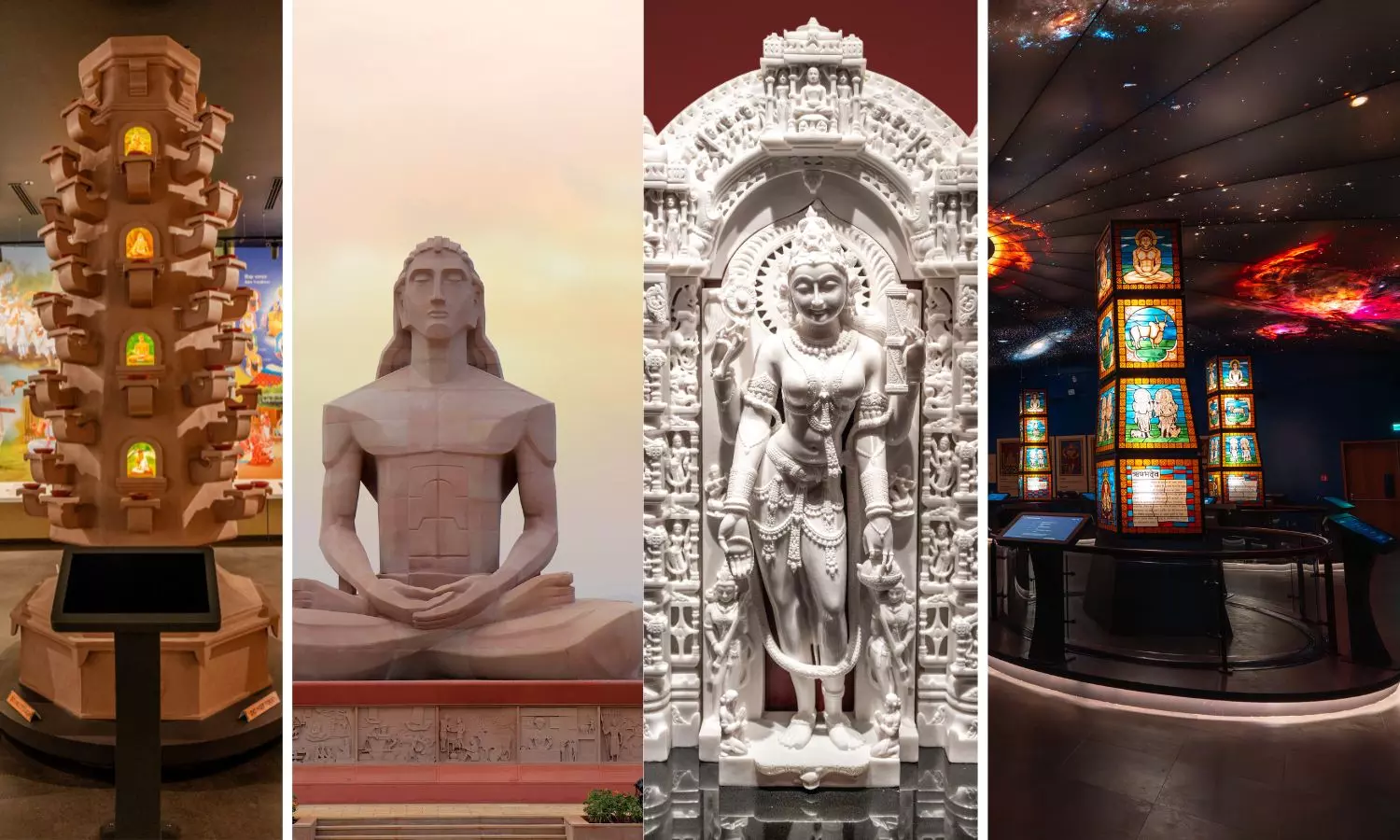
On a rainy day, with thick, grey, and overcast clouds, we find ourselves on a road that crosses the city of Pune, leading us to Abhay Prabhavana, the world's largest museum dedicated to propagating Jainism principles and philosophy.
Helmed by Abhay Firodia, founder of Abhay Prabhavana Museum and chairman, Force Motors, the museum opened to the public less than a year ago, spread over 50 acres of land that overlook rolling hills with the awe-inspiring Indrayani river flowing in the distance. Over a decade in the making, costing roughly Rs 400 crore, Abhay Prabhavana can be best described as the face of a new-age museum and knowledge centre, which relies heavily on immersive technology, AI, and overall gadgetry to engage with the visitors.
It has also commissioned over 350 artworks, creating works inspired by centuries-old pieces that remain in leading museums and galleries, including the National Museum and the National Gallery of Modern Art, among others. The curatorial team, along with artists, travelled across the length and breadth of India to identify important paintings, sculptures, and monuments, most of which have been replicated with thought and care.
Though my initial impression was to encounter original works of art, including pichwai, mandala, and yantra paintings done in vegetable colours and gold dust on fabric, which many of the enthusiastic art collectors continue to purchase from leading auction houses and art galleries, Abhay Prabhavana has focussed on creating replicas of paintings and sculptures.
“The museum is not about antiquity of the Jain tradition,” clarifies Firodia, adding that the museum, in fact, “is about the logical validity of the most ancient Jain value system, in today’s most advanced world.” Having travelled extensively with some of the curatorial members of his team to understand the intricacies of creating some of the world's finest museums, Firodia decided it was time to move ahead with the times and make a museum back home to engage deeply with the audience. “I realised that the values propagated in Jain tradition had to be explained through technological innovations,” says Firodia.
A day later, when I visit the library section of Aga Khan Palace museum in Pune, it’s not difficult to understand Firodia’s point of view. It’s a pity to see books of immense value, many of them rare ones on Mahatma Gandhi, lying in utter neglect, covered in layers of dust. The impressive building notwithstanding, the rooms housing sculptures, paintings, and artefacts depicting the time when Mahatma Gandhi stayed there imprisoned, along with his wife Kasturba Gandhi (who also breathed her last here), seem dull, the paint in some of the sections of the rooms peeling.
Abhay Prabhavana, then, is the changing face of the museum with its technologically savvy, immersive audio-visual experiences. It has interactive exhibits for installations, murals and artworks that can be further studied through touch tables and kiosks. The museum features 35 projectors, 670-plus audio speakers, 230 LED TVs/ kiosks, and 8,000-plus lighting fixtures. A trip to Abhay Prabhavana, however, also allows you to feel nostalgic about the old times and raises a question: Is a museum meant only to rely on technology and look all made-up rather than house original works of art?
It’s good to be prepared to keep a day aside to experience Abhay Prabhavana, given that there’s so much to explore in the galleries. “Even two days aren’t enough here,’ quips a member of the curatorial team who is taking us around. Some of us joke about completing double the number of steps in a day than what we’d do in two days. The museum is divided into four main sections: Timeless Wisdom, Evolution of Culture and History, Eternal Stream of Indic Values, and Path to Happiness, all of which allow us to extensively explore the core of ethics and values prescribed for centuries by the Jain tirthankaras or preachers. The lighting is top-notch, as is the information given about all the artwork – a huge miss in so many other museums where visitors struggle to get even the titles of paintings at times. The best part about the well-curated galleries in Abhay Prabhavana is that it keeps the focus on the philosophical way of living rather than being preachy or religion-centric. For instance, one of the interactive, multimedia exhibits ‘Letting It Go’ allows visitors to put their finger on a touch screen and delete negative feelings of anxiety, sadness, grief that float away in an AI-generated boat near your feet.
It is the outside area of the museum (Heritage Walk section), overlooking the impressive river body and lush green hills in the distance, complete with replicas of important cave temples and sculptures from ancient India, along with gardens that allow for a meditative experience. The imposing 43 ft high sculpture in marble of Rishabdev, the first Tirthankara of Jain tradition, made in Art Deco style, is impressive in that it’s very alive and not “dispassionate as mostly depicted in paintings and sculptures” as Firodia explains. Interestingly, when he saw Brad Pitt’s Troy, Firodia felt like he knew what sort of sculpture he wanted as a depiction of Rishabdev. “I wanted the sculpture to exude energy, and we rejected many models before making the final model, scaling it to a point where we could use a 3D projection to see how it looked,” says Firodia.
A group of children and their families huddle together in a big group, squint their eyes, and look at the 100-foot-tall Manstambh, a marble tower carved with murals, showcasing aspects of Jainism and human life. The viewing gallery atop the tower offers spectacular views of the surroundings. Everyone’s eyes are transfixed on the imposing structure. Three generations of people in this family have engaged themselves in viewing the museum from their perspective. Elsewhere, a toddler is running towards a replica of an Ellora cave temple that’s in the outdoor Heritage Walk section, asking his parents to explain the structure. They do so with patience, and in that moment, I can tell Firodia’s dream is a success – of building a museum that may be tech-reliant, but one that also attracts different generations of families that come together to experience Abhay Prabhavana.
Things to do
Walking and wandering in Pune
Pune Food and Snack Tasting Walking Tour: In 2.5-3 hours, you'll explore the city's best breakfast eateries and discover the local food scene. The tour also brings you to the ancient Pataleshwar Cave Temple.
Heritage Walking Tours: A lot of companies in Pune offer guided tours for young and old by bringing an experienced resident of the city to help you explore the oldest parts of the city, including tourist attractions such as Shaniwar Wada, Lal Mahal Chitra, Shreemant Dagdusheth Halwai Ganpati Mandir, and other hidden gems. Pune Municipal Corporation offers some interesting walks that provide a nice way to get introduced to the city.
Walks and shoots: Photowalks Pune conducts interesting tours for photography enthusiasts in Pune. The city can become an interesting muse, with its vibrant streets and markets in Juna Bazar, Tulshibaug, and Mandai, historical sights such as Shaniwar Wada and Parvati Hill Temple, besides very scenic landscapes and waterfalls that are a short drive away from the central city.
Pub Crawling: The areas of Kalyani Nagar, Koregaon Park, along with Deccan, Baner, Aundh, among others, are buzzing with an increasing number of pubs, allowing people to explore a different side of Pune. A good way to meet new people, explore the city at night, while checking out the latest pubs and bars, companies such as Pune Pub Crawl, By Food, Invato, among others, are your go-to places to book bar hopping evenings in the city.
The article is authored by Abhilasha Ojha.