Book Review | A Short Primer on Advaita

A thought-provoking philosophical novel that challenges orthodox notions of celibacy, love and spiritual fulfilment, inviting readers to question long-held assumptions within Hindu thought.
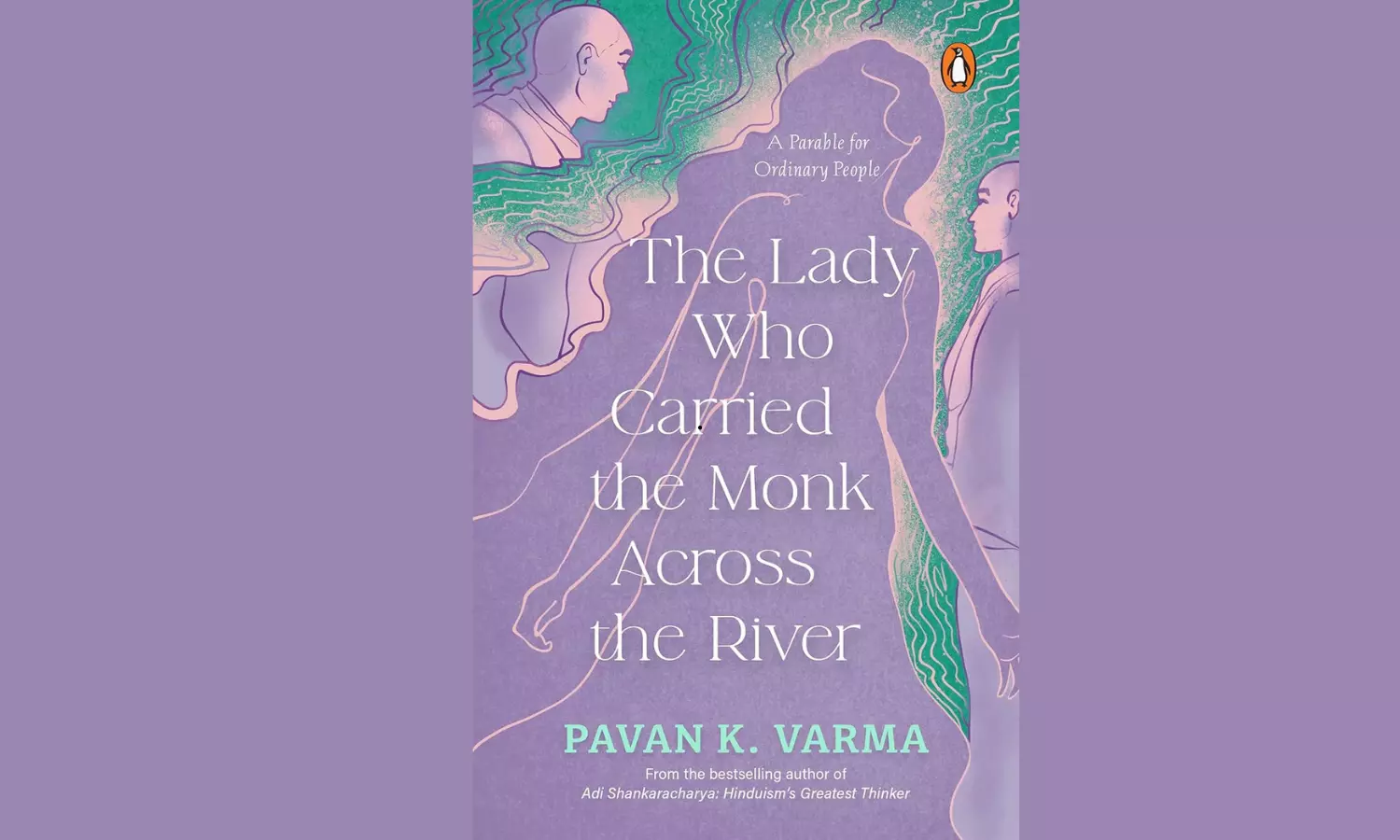
In a Zen fable, two celibate monks on a journey see a lady on the banks of a river, wanting to cross but unsure. One of the monks picks her up and carries her across. Many hours later, when they reach their resting place for the night, the other monk asks, “You’re not supposed to touch a woman, so why did you carry that lady across?”
The reply: “I put her down on the river bank. Why are you still carrying her?”
Pavan Varma has altered the fable to describe some aspects of Hinduism. Two modern monks, brahmacharis, Kevala and Guna, see a girl at the side of a river they have to cross to get to the town near their gurukul. Kevala picks up the girl and deposits her on the other side. Guna thinks this is a violation of the rules they follow as brahmacharis, and complains to their guru Brihaspati.
Brihaspati tends to agree that Kevala broke the rules, but would like his disciple to see his mistake for himself. And so he tells Kevala that they will debate the matter – a shastrartha – over five days. Kevala agrees, but, on consideration, knowing that the guru can simply steamroll him in a debate, asks for a question answer session where Brihaspati replies to Kevala’s questions. Brihaspati, pleased by his disciple’s acknowledgment of his intellectual superiority, though disappointed at having lost the chance to display his learning, agrees.
As the shastrartha begins, Kevala opens with questions about mind and matter, easy topics for the guru to handle, and more important, flaunt his knowledge. As the sessions proceed, the questions deepen, and, at one point, Kevala gets the guru to confirm that experience is a form of evidence. And then he springs his little trap. He says that he has experienced the joy of being at peace, without thought. He has also experienced the joy of love, and there is something in common between the two. The guru, who has permitted experience to be treated as evidence, essentially loses control here.
Stirring events occur during the evenings of the shastrartha. Kevala meets the girl, Mandakini, who happens to be a friend’s sister. The chemistry between them is evident. She asks him why he became a monk: the question sparks doubt in his mind. On the evening of the fourth day of the debate, their longing for each other is clear to them. Kevala proposes to her, and is accepted. He decides then to leave his monkhood and return to the world. Guna, meanwhile turns out to have feet of clay: he is a regular at a discreet brothel run by one Ratnavati.
At the end of the shastrartha, Kevala tells Brihaspati he is returning to the world. Brihaspati faints, but recovers and blesses Kevala. Kevala then sets out to cross the river during a rainstorm, with the river in wild spate: and here the title of the book becomes clear.
So, does this book throw fresh light on love or spirituality? No. Does it blur the distinction between the joy of romantic love and the bliss of moksha? Yes. Is the interpretation debatable? Yes. Could it do with some careful editing? Yes. For all that, though, its outstanding quality as didactic fiction is this: it gives readers an easy-to-read start on wondering about and questioning the foundations of Hinduism.
The Lady Who Carried the Monk across the River
By Pavan K. Varma
Penguin
pp. 149; Rs 499/-
