A Deeper Look At The Meaning Of Resilience

Neena Varma’s book argues that adversity does not just test us, but transforms us
If one thing defines the 21st century, it is technology. Over the last 20 years, if not more, people have become habituated to seeking technological solutions for every problem they face. The advent of artificial intelligence has further deepened humans’ dependence on technology, even for advice. One thing, however, that technology cannot take over from humans is dealing with problems or setbacks in one’s life.
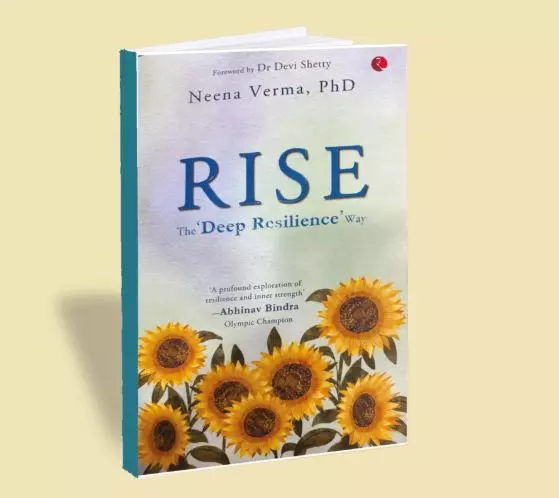
Neena Varma’s ‘Rise, the ‘Deep Resilience’ Way’ tries to address this precise issue. However, this book isn’t the typical “pull yourself up by your bootstraps” self-help manual of the kind often found stacked in bookstores. Instead of the shallow “bounce back” narrative, the author argues that true resilience isn’t about returning to who you were before a crisis, but rather about being fundamentally shaped by it.
The author argues that modern society has a “fragility problem” because we focus on avoiding discomfort rather than building the capacity to sit with it. It also underscores an often-overlooked fact: resilience is often a product of necessity rather than choice.
One of the most compelling aspects of the book is its multidimensional approach. It doesn’t just stick to psychology; it draws parallels from ecology — how forests recover after a fire through nutrient cycling — and structural engineering — how buildings are designed to sway, not snap, during earthquakes.
The book also introduces the concept of ‘Resilience Cycles’, identifying that growth happens in distinct phases: Disruption, Integration, and Emergence. By identifying which phase one is in, the book provides a roadmap for navigating the “messy middle” of a life transition.
The author skillfully deconstructs the myth of the “unshakeable” leader, replacing it with the image of the “integrated” individual — someone who acknowledges vulnerability and harnesses it as a source of strength. This approach positions the book as a timely antidote to toxic positivity.
The book makes us understand that while a person cannot control the depth of the valley they fall into, they can control the quality of the climb back out.
It is an essential read for anyone navigating a high-pressure career, personal loss, or the general “permacrisis” of the modern world, or for those looking for a book on inner strength, growth, and well-being.

