The Liar Among Us: The Fine Line Between Truth and Deception

A haunting psychological thriller where truth is as dangerous as deception
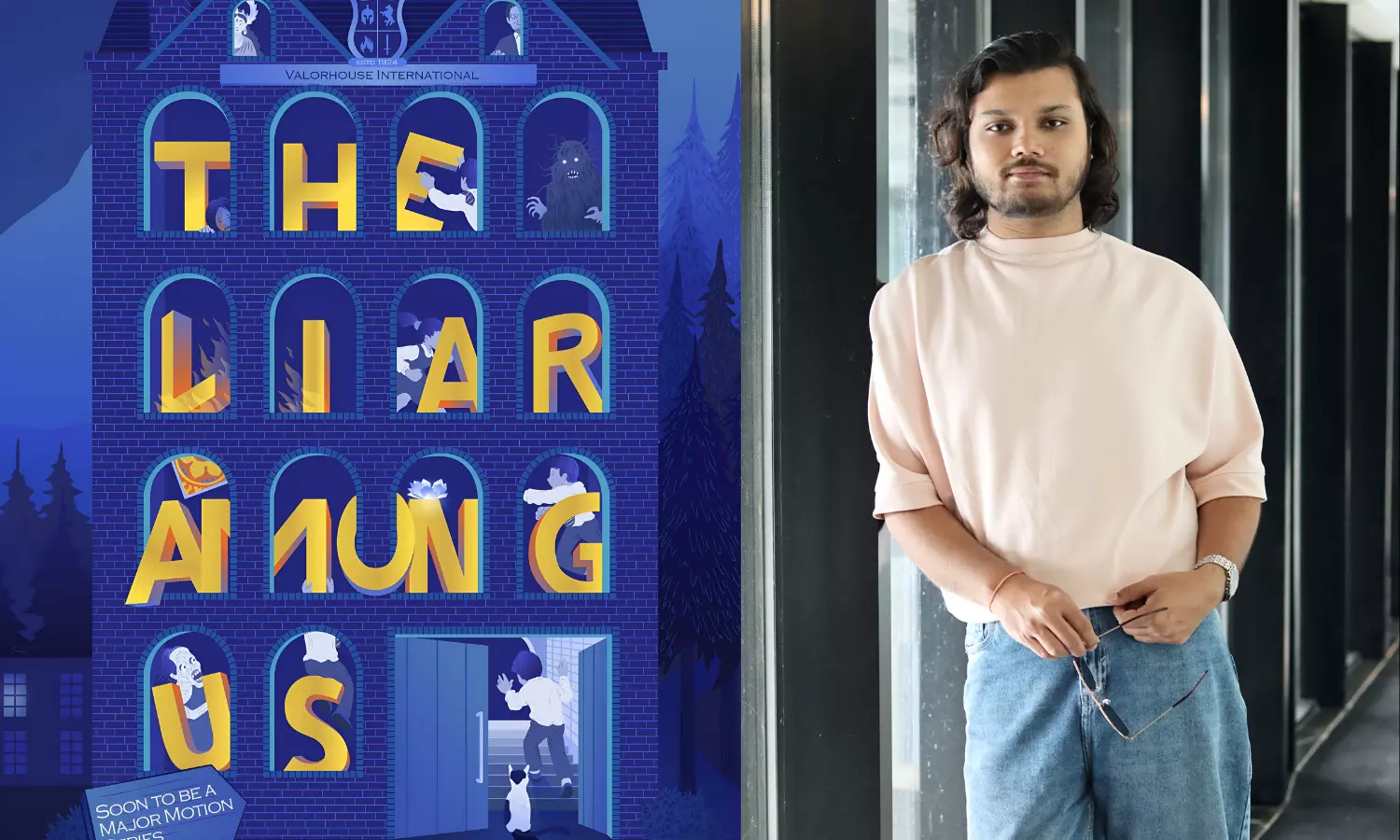
In his debut novel The Liar Among Us (Bloomsbury Publishing), filmmaker and political strategist Bishhal Paull turns his lens toward a boarding school in Sikkim, where lies, guilt, and folklore intertwine. Through a cinematic narrative, Paull explores how truth itself can be the most terrifying illusion of all.
The Liar Among Us dives deep into truth and deception — what first drew you to that theme?
I’ve always been fascinated by the idea that truth isn’t something absolute. It bends depending on who’s telling the story, and in a country like ours, everyone’s version of truth feels slightly edited. In families, in politics, in friendships; we all tweak reality a little to survive. That’s really where this story came from. I wanted to explore what happens when those small, harmless lies start adding up, when the version of life you’ve built for yourself begins to fall apart. For me, The Liar Among Us isn’t just about people lying to each other; it’s about the lies we tell ourselves to feel okay, to keep moving, to not face what hurts. I think that’s the most human kind of deception and the scariest one too.
How did your background in filmmaking and politics shape the way you told this story?
Both taught me the power of narrative and how it can be manipulative. In filmmaking, you learn how emotion is built through rhythm, pacing, light, silence. In politics, you see how emotion is used to persuade, to polarise, to protect. So when I started writing this book, I found myself using both lenses - the storyteller’s eye and the strategist’s brain. Each scene was treated almost like a frame; I could “see” it before I wrote it. I didn’t want to lecture readers about morality. I wanted them to feel the manipulation, to sense how easily perspective can shift with deception. That’s something both film and politics prepared me for - how fragile our sense of reality really is.
Valorhouse feels almost alive — why did you choose Sikkim as the setting?
Coming from Guwahati, Assam, I wanted to bring northeast folklore and storytelling into the mainstream. But Sikkim was a very specific choice. Readers will know when they read the book why I decided to base the story there. I travelled there years ago, and that landscape just stayed with me. It felt sacred and slightly haunted at the same time. I didn’t want to set The Liar Among Us in a generic boarding school; I wanted a place that had memory in its soil. The monasteries, the prayer flags, the quiet valleys, everything in Sikkim feels like it carries stories older than you can imagine. So Valorhouse became a reflection of that - beautiful on the outside but built on layers of silence and secrets underneath.
The book blends mystery, suspense, and the supernatural. How did you balance those elements?
For me, the supernatural only works when it feels believable. I didn’t want floating ghosts or cheap scares. I wanted the kind of fear that lingers even after the chapter ends, the fear that maybe it wasn’t a ghost at all, maybe it was guilt. So I used mystery as the engine, suspense as the heartbeat, and the supernatural as the shadow following both. The trick was not to overdo any one thing. Whenever it felt too fantastical, I grounded it in emotion. Whenever it got too real, I let folklore slip in. The goal wasn’t to prove if the haunting was real, it was to make you feel that it could be.
Angad’s curiosity drives the plot — what do you think his story says about the cost of seeking truth?
Angad’s biggest flaw is that he knows that truth doesn’t automatically equals freedom. But the more he searches, the more he realizes that truth can destroy as much as it reveals. Every answer costs him something - his friends, his peace, his sense of self. I think his story reflects that universal fear: what if the thing you’ve been desperate to know ends up breaking you? For me, curiosity is both brave and dangerous. Angad learns that truth isn’t a reward; it’s a responsibility. And sometimes, ignorance really is a form of mercy.
You’ve worked in media, politics, and now fiction — how do these worlds influence each other in your storytelling?
All three are built on the same foundation: storytelling. In media, you learn how attention works. What makes people stop scrolling. In politics, you learn how belief works, how a story can shape a crowd. And in fiction, you finally get to ask why those stories matter in the first place. These worlds constantly talk to each other in my head. Politics gave me an understanding of power of who controls the narrative. Media taught me speed and structure. How to build tension and release it. And fiction gave me the freedom to slow down and tell the truth underneath it all.
At its heart, this book isn’t about ghosts or conspiracies. It’s about memory, guilt, and the quiet ways people lie to survive. And maybe that’s the real horror - that all of us are liars in our own gentle, necessary ways.
