Meteor Showers to Full Moon: October Celestial Lineup

1 Oct 2025 3:15 PM IST1 Oct 2025 3:15 PM IST
From star clusters and planets to meteor showers and galaxies, here's a list of some must-see astronomical events set to take place this month
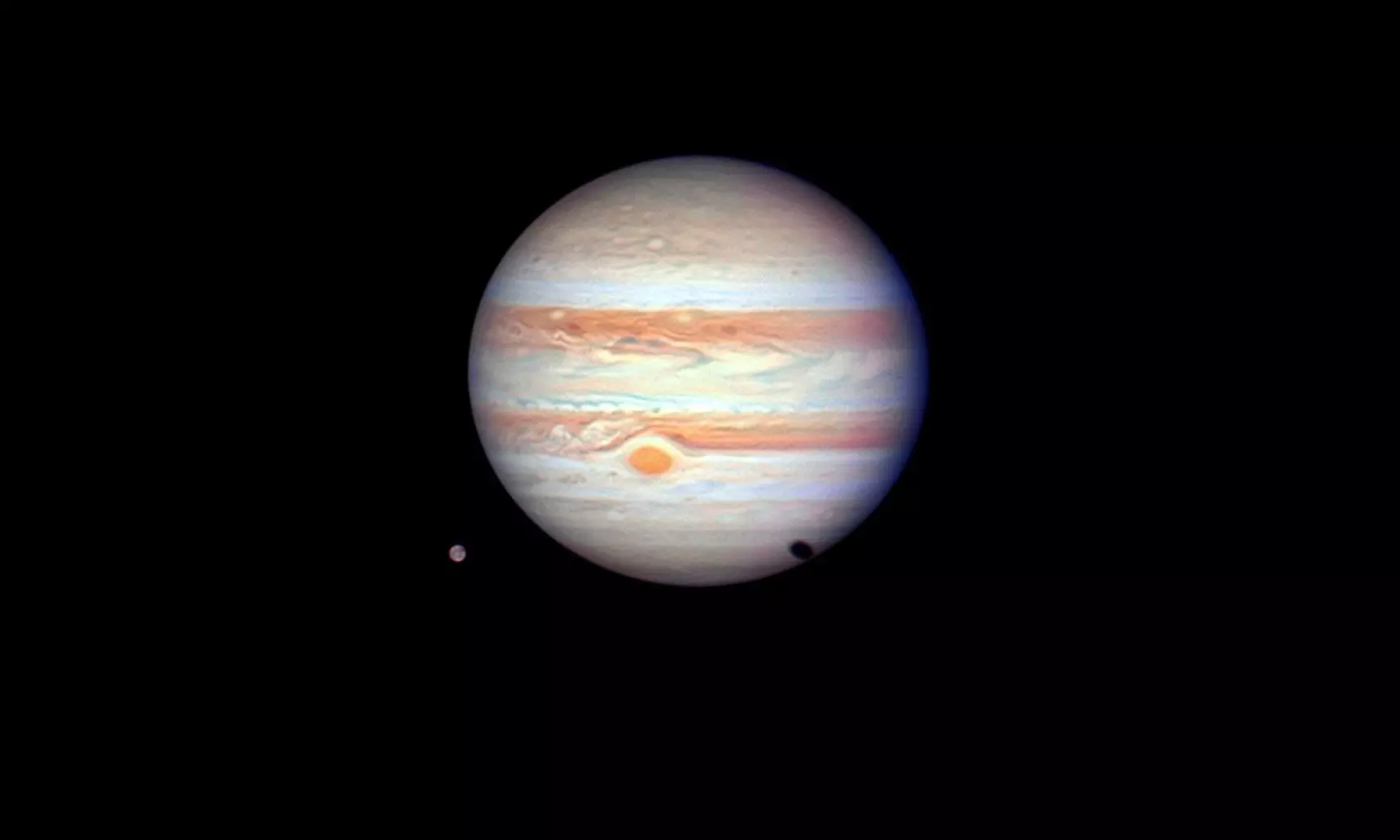
Representational Image
It's the first of the month, and for astronomy enthusiasts across the country, this October is packed with several celestial events for both experts and novices to behold. From star clusters and planets to meteor showers and galaxies, here's a list of some must-see astronomical events set to take place this month:
1. Andromeda Galaxy (M31) and Ceres - around 2 October
The Andromeda Galaxy, the closest major galaxy to the Milky Way, will be visible to the naked eye around midnight on 2 October. It's best to use a telescope or binoculars to spot the galaxy, but it would still be visible under very dark skies.
Around the same time, the largest object in the Asteroid Belt, Dwarf Planet Ceres, will also reach opposition, lying opposite the sun from the Earth and shining at its brightest.
2. Moon near Saturn and Neptune - the night of 5-6 October
October is prime time for Saturn viewing. It travels in a retrograde movement across the night sky day by day, from east to west - something that happens several months in a year because of Earth's orbit.
The planet and the moon can be spotted 3.33 degrees apart from each other on the night of 5-6 October, rising to their highest point around midnight.
3. The Harvest Supermoon - 6-7 October
This month's full moon is known as the Harvest Moon, the closest full moon to the autumnal equinox. However, the moon is also moving to the opposite side of the Earth from the Sun and reaching perigee, the closest point in its elliptical orbit to Earth, making this Harvest Moon a supermoon.
This is a rare moment when the moon appears 14% larger and 30% brighter than when it's at its farthest point from the planet, so don't miss it!
4. Draconid Meteor Shower - 8 October
Between 6 and 10 October, the Earth will move through the debris trail of Comet 21P/Giacobini-Zinner and create the Draconid Meteor Shower. On 8 October, meteor activity will peak. Although it might be difficult to see the brightest meteors in the moonlight, keep your eyes peeled for any shooting stars.
5. Moon near the Pleiades star cluster - 10 October
The Pleiades is an open star cluster in the constellation Taurus, located about 444 light-years away from Earth. On 10 October, the moon and the star cluster will be less than one degree apart, and unlike the Draconid meteors, the brightest stars will shine through even in the moon's glare.
6. Triangulum Galaxy (M33) - 15 October
The Triangulum Galaxy is the third-largest major galaxy in the Local Group after Andromeda and the Milky Way. Similar to the Andromeda, it will be visible to the naked eye under very dark skies on 15 October. Use a telescope or binoculars to see it in its full glory.
7. Moon near Venus; Mercury near Mars - 19 October
On 19 October, the moon and Venus will appear less than four degrees apart in the pre-dawn sky.
Due to its thick, light-reflecting clouds, Venus is the brightest object in the sky after the Sun and the moon, appearing as the "morning star" or "evening star" depending on its position in orbit.
Mercury will also be visible near Mars around the same time.
8. Orionid Meteor Shower - 20-21 October
The comet 1P/Halley leaves debris as it orbits the Sun, creating the Orionid Meteor Shower during this month, which peaks on 20-21 October. This year, it coincides with the new moon, making for optimal stargazing conditions. The shower is also known for its extremely bright and fast shooting stars, so this year's meteors will be impossible to miss. Expect to see 15-20 meteors per hour.
9. Mercury at greatest eastern elongation - 29 October
The Sun's rays usually obscure the view of the planet Mercury. But on 29 October, Mercury will reach its greatest separation from the sun in our perspective, its greatest eastern elongation. It will be one of the best days to see Mercury in the early evening sky.
This article is authored by Tejasree Kallakrinda, interning with Deccan Chronicle
( Source : Guest Post )

Next Story