Inclusion Should Become Part of Everyday Life: Raghu Duth Degala

As Akan Aahvaanam 2026 brings together food, music, art and community this Independence Day to raise funds for inclusion, The Good Talk Factory is creating an experience zone that allows visitors to understand autism and accessibility through participation rather than just awareness. Founder Raghu Duth Degala talks about why inclusion needs to move beyond designated days and become part of everyday life.
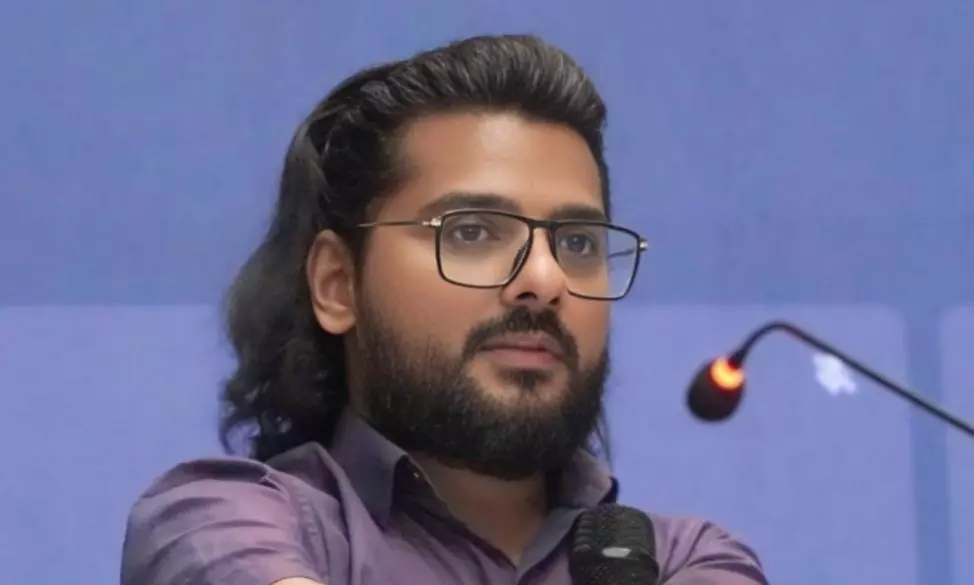
Independence Day is usually marked with flags, celebrations and reminders of the freedoms the country enjoys. For Raghu Duth Degala, it is also an opportunity to ask a different question: what does independence mean to people who still find everyday spaces difficult to access?
This year, that question is at the centre of Akan Aahvaanam 2026, an Independence Day community fundraiser in Hyderabad. The event is supporting the Hyderabad-based NGO, The Good Talk Factory’s work in accessibility and inclusion, autism awareness and support, and education and livelihood development through Project Vidya. As part of the event, The Good Talk Factory (TGTF), is creating an experience zone where visitors can get a better understanding of autism, sensory experiences and the challenges faced by people with different abilities.
Degala, founder of The Good Talk Factory, says the idea is to move away from the usual awareness campaign where people listen to a few talks, look at photographs and then move on.
“Usually, awareness campaigns end up being about panel discussions, speeches, photographs and slogans, but that alone does not really help people understand the issue,” he says.
Instead, the curated experience zone will allow visitors to participate. It will include a sensory room, a calm and dark space, and activities where people can use touch while blindfolded to experience their surroundings differently. The idea is to make the experience open to everyone, rather than treating it as something meant only for autistic children.
“We are trying to create a sensory room space, not just for autistic kids, but for the rest of the people just to experience the other side of the coin,” Degala says.
He believes that such experiences can also help people recognise concerns at an early stage. “When people are not aware of what autism is, especially when concerns arise at an early age, we want to plant that seed so they know where to seek help.”
The experience will also include an art workshop, with caregivers included in the process. Degala says caregivers are often overlooked even though they deal with their own emotional and practical challenges while supporting their children.
“Most of the time we forget the caregivers of all these spectrum of people. They go through a lot of challenges and emotional patterns. We want to actually be there for them when the kids start experiencing the space.”
For Degala, connecting the event to Independence Day has a deeper meaning. Akan’s flagship event happens on August 15, but when The Good Talk Factory was selected as the beneficiary, he saw a connection between the date and the organisation’s work.
“True independence is all about being there for each other as community stakeholders and supporting the abilities irrespective of the disabilities,” he says.
The Good Talk Factory has spent seven and a half years working across different communities and telling stories that often remain outside the mainstream. Degala says the organisation initially found people through its network of journalists, storytellers and friends, and then began researching stories of people who had made an impact but had not received attention.
Over time, the focus has moved beyond storytelling to implementation. For Degala, awareness alone is not enough. “Unfortunately, awareness on inclusion accessibility happens only during those particular weeks or days. Post that, it becomes a routine and people end up not pushing this ahead into the implementation,” he says. “Our journey with TGTF is not just to talk, but to implement it on ground so that we will be the people who rather do on ground work than just speak.”
That is also why he does not want the fundraiser to rely simply on emotional appeals. The organisation wants people who contribute to understand where their money goes and what it supports.
“The culture we have created at TGTF is if somebody is donating their money for a cause, they need to know where it goes on,” he says.
This year, the experience zone will also take visitors through The Good Talk Factory’s seven-and-a-half-year journey and its work across different areas. The fundraiser follows Akan Aahvaanam’s pay-as-you-please model, allowing people to contribute while experiencing the event.
For Degala, inclusion itself needs to be understood differently. He says ability should not be reduced to physical or psychological characteristics or defined by stereotypes.
“Abilities can be nurtured, given the right direction. The concept of ability is still being stereotypical. “Ability is all about how you perceive things and how you push your own horizons to make things happen.”
His definition of inclusion is equally broad. “For me, inclusion is about putting every mindset on the same page. When we include every body, every mind, that’s where people will be respected for what they are.” And he wants that conversation to continue long after Independence Day is over.
He points out that accessibility is often treated as an issue that concerns only people with disabilities. But ramps, accessible toilets and other facilities can help many others too, including elderly people, patients and children.
“Accessibility and inclusion is about every individual who needs that space to access it,” he says.
For Hyderabad, Degala believes the biggest change required is not necessarily another piece of technology or infrastructure, but a change in mindset. A city can grow rapidly, he says, but that growth means little if its schools, workplaces, restaurants and public spaces are not accessible to everyone.
“And if the mindset is changed, I think Hyderabad would be the first city to be absolutely accessible.”
This Independence Day, the experience zone at Akan Aahvaanam is therefore intended to do more than raise funds. It is an attempt to make visitors pause, participate and understand that independence and inclusion cannot be limited to a single day on the calendar.
