Kadamba Is the Kind of Bar You will Keep Going Back To

Kadamba - cultural compound is a relaxed rooftop bar overlooking Durgam Cheruvu that trades pretence for comfort, good drinks, and conversation.
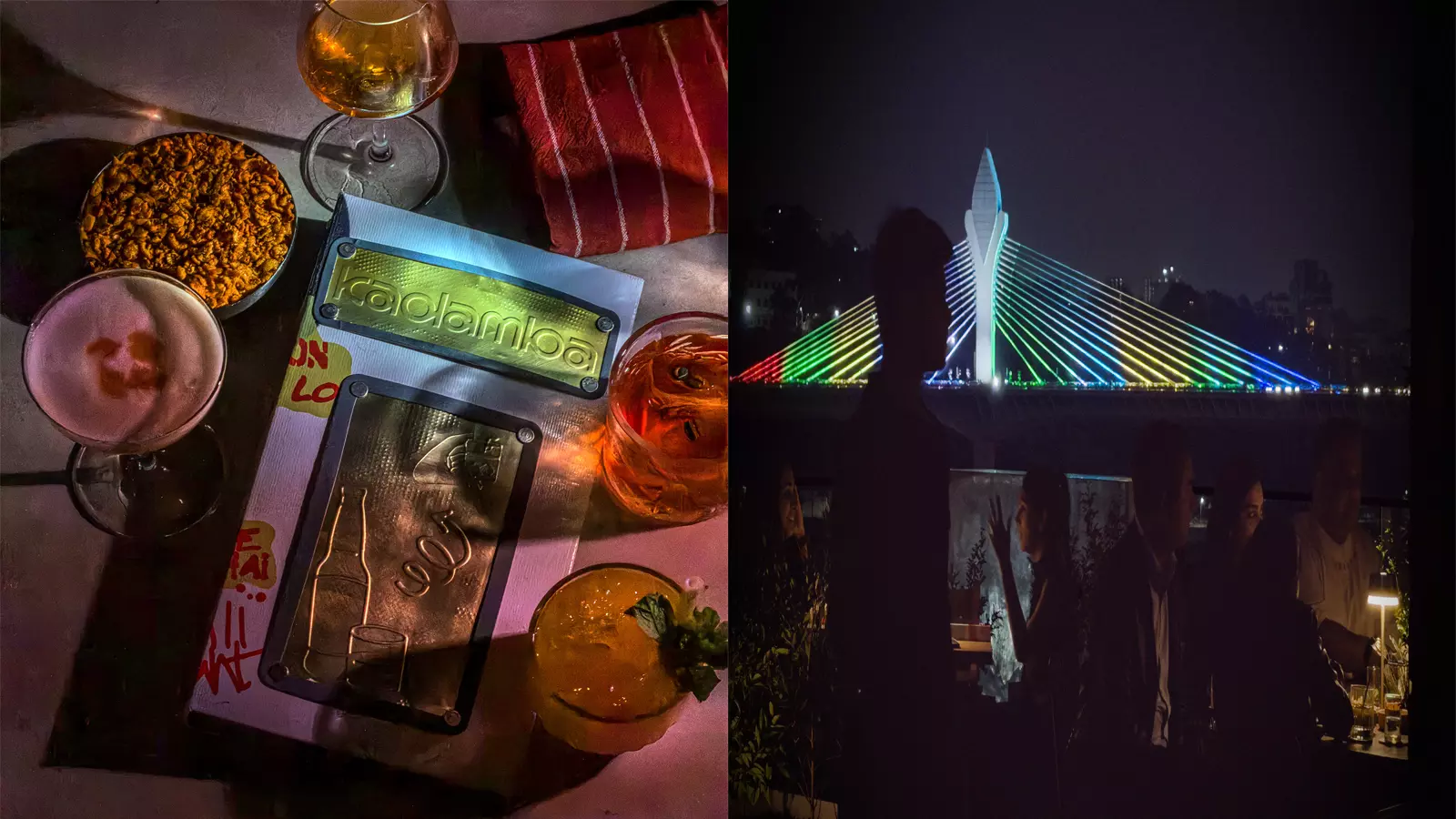
On most evenings, the view does half the work at Kadamba. The rooftop opens out to the still shimmer of Durgam Cheruvu, with the cable bridge lit up in the distance, but what keeps you here is not just the view. It’s the feeling that you don’t have to be anywhere else.
The story behind the name is as unplanned as the mood it now carries. “We were sitting under these trees one day, trying to figure out what to call the space,” says founder Kshitij Bhurari. “And out of nowhere, Vikas Passary (another founder), just started saying Kadamba instead of cheers. It stuck.” The trees he refers to are the local Kadamba trees planted within the space, around which sits a low, informal seating area that he calls the chaupal.
It’s here that the idea of Kadamba really comes alive. You can sit cross-legged, lean back, or simply stretch out with a drink. “We wanted a place where you can just be yourself. Come in your slippers, sit how you want, no one’s judging you,” he says. In a city where bars are increasingly polished and structured, Kadamba leans into something more relaxed, more familiar.
The bar itself is another departure. Designed low and open, it draws from the Japanese omakase style, encouraging conversation rather than distance. “When there are layers between you and the bartender, you feel excluded. We wanted to remove that,” Kshitij explains. The result is a space where people actually sit at the bar, talk, watch drinks being made, and sometimes even step in to try their hand at it.
The beverage program, led by Goa-based mixologist Sujan Shetty with Palash Kadam on the ground, keeps things approachable. The brief was simple: make drinks people want to come back for. The Rumba Ho, a pineapple-chilli rum-based cocktail, does exactly that, balancing heat and sweetness without trying too hard. Then there’s T- Loop, a playful nod to Telangana, layered with muskmelon and tequila, designed to be smooth but memorable.
There’s also a clever series of “Aam” cocktails, rooted in familiar Indian flavours but reworked with subtle technique. Nothing feels overthought, which is precisely the point. As Kshitij puts it, “It doesn’t need to be fancy. It just needs to be delicious.”
The food follows a similar philosophy. Designed to be bar-friendly and shareable, the menu moves across regions and memories. A dish like 50-50 plays with corn in three textures, inspired by Indore’s bhutte ki kees, while the podi edamame brings together local spice and a global ingredient with ease. There’s chaat, seafood, parathas, and even a late-night section that leans into comfort, including a reworked version of Maggi using ramen noodles.
What stands out is how familiar everything feels, even when it’s been reimagined. You recognise the flavours, but there’s just enough twist to keep it interesting.
Kadamba also builds its sense of community in quieter ways. A board near the entrance carries everything from city updates to handwritten notes and requests. There are music-led nights that move away from the usual playlist, blending rock, R&B, and even live Indian instruments with electronic sets.
“We wanted to bring back that old bar culture,” Kshitij says, adding, “A place where you don’t think twice before coming in, and you keep coming back.”
And that’s really what Kadamba is. Not a place you visit once for the view, but one you return to because it feels easy, familiar, and entirely your own.
