A Complete Guide to Kidney Stones: Symptoms, Diagnosis, and Care

24 Sept 2025 4:17 PM IST24 Sept 2025 4:17 PM IST
Kidney stones are hard deposits formed from minerals and salts inside the kidneys when urine becomes too concentrated and this happens over a period of months to years.
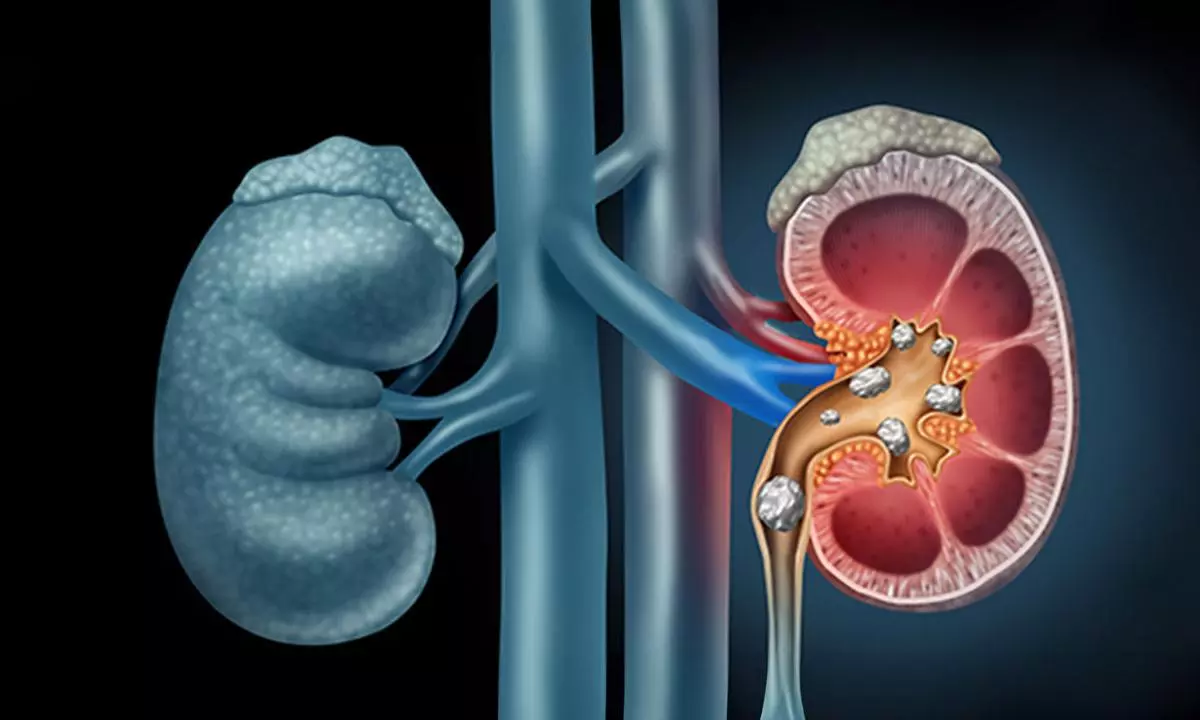
Representational Image/X
Kidney stones are one of the commonest urinary tract problem that affect millions of people world wide.
Kidney stones are hard deposits formed from minerals and salts inside the kidneys when urine becomes too concentrated and this happens over a period of months to years.
This deposits over a period stick together and create stones.
The medical term for kidney stones is renal calculi or nephrolithiasis. Although they can cause severe pain, kidney stones are usually are usually asymptomatic , and not life- threatening . However, if untreated stones can lead to complications like infections or permanent kidney damage.
What Causes Kidney Stones
Formation of kidney stones is multifactorial
Listing out few of this reasons which over a period of times leads to formation of stones.
Dehydration:Not drinking enough water is the main cause. Without enough fluid, urine becomes concentrated, making it easier for crystals to form.
Diet: High consumption of salt, animal protein, and foods with high oxalate levels (like spinach, beets, and nuts) can contribute.
Family history: Genetics can play a role, as kidney stones often run in families.
Medical conditions: Disorders such as gout, obesity, inflammatory bowel disease, and urinary tract infections raise the risk.
Medications: Some drugs, including diuretics, calcium-containing antacids, and certain antibiotics, can increase the likelihood of forming stones.
Lifestyle factors: A sedentary lifestyle, lack of exercise, and poor eating habits can also add to the risk.
Types of Kidney Stones
There are four main types of kidney stones:
Calcium stones: The most common type, usually made of calcium oxalate. Too much calcium or oxalate in urine leads to these stones.
Uric acid stones: These occur when urine remains acidic, often linked to a high-protein diet, gout, or dehydration.
Struvite stones: These form due to chronic urinary tract infections. They tend to grow quickly and can become quite large.
Cystine stones: Rare and caused by an inherited condition called cystinuria, where excess cystine leaks into the urine.
Symptoms of Kidney Stones
Symptoms vary based on the size and location of the stone. Small stones may go unnoticed, while larger ones can cause severe pain and block urine flow.
Common symptoms include:
Sharp pain in the backside, lower abdomen, or groin is classic for stones this is also called as Renal colic.
Painful urination accompanied by a burning sensation.
Blood in urine (hematuria), which can cause urine to appear pink, red, or brown.
Frequent urge to urinate or difficulty passing urine.
Nausea and vomiting due to pain.
Cloudy or foul-smelling urine if an infection is present.
Fever and chills, indicating an infection that requires prompt treatment.
The pain from kidney stones is often described as one of the most intense types a person can feel.
Diagnosis
Doctors use several methods to diagnose kidney stones:
Medical history and physical examination is the first thing to begin with followed by routine tests in the form of Urine analysis to look for crystals, blood, or infection.
Blood tests to check levels of calcium, uric acid, and kidney function and any evidence of infection.
Imaging remains gold standard test for identification of stones – ultrasoundand X-rays to start and CT scans to confirm the size, type, and location of stones.
In genetic variants of stone disease we do 24 hours urine analysis and genetic testing also
Treatment
The treatment for kidney stones depends on their size, type, and severity of symptoms:
Small stones: They often pass on their own with increased fluid intake. Drinking 2–3 liters of water daily can help flush them out. Doctors may prescribe painkillers and medications that relax the urinary tract (alpha-blockers).
Large stones: depending on there site will need some sort of surgical intervention.
Listing out few of the commonly used surgical procedures
Extracorporeal Shock Wave Lithotripsy (ESWL): High-energy sound waves break stones into smaller pieces for easier passage one of the most commonly used procedure.
Ureteroscopy: A thin scope is placed into the urinary tract to locate and either remove or break the stone.
Percutaneous nephrolithotomy: Surgical removal of very large stones through a small incision in the back.
RIRS – a newer modality where a flexiable scope is introduced into kidney and laser break down of stones is done.
Medication: Drugs might be prescribed to prevent stone formation, particularly for uric acid or cystine stones.
Infections with stones: These require immediate care with antibiotics and, in some cases, urgent surgery to relieve blockage.
Prevention
Because kidney stones often come back, prevention is crucial. Some preventive measures include:
Stay hydrated: Drinking enough water (at least 8–10 glasses daily) dilutes urine and prevents crystals from forming.
Balanced diet: Reduce salt intake, limit animal protein, and avoid foods high in oxalates. Increase consumption of fruits and vegetables.
Limit sugar and processed foods: These can disrupt the balance of minerals in urine.
Maintain a healthy weight: Obesity increases the risk of kidney stones.
Regular exercise: This improves kidney health overall.
Follow medical advice: Those with a history of kidney stones should have regular check-ups and may need medications to lower the risk of recurrence.
Complications
If kidney stones are not properly treated, they can lead to:
Urinary tract infections.
Kidney blockage causing swelling (hydronephrosis) latter leading to kidney failure.
Over a period of time if untreated stones can cause permanent kidney damage and CKD latter leading to dialysis
Conclusion
Kidney stones are a painful but preventable issue affecting millions worldwide. They stem from an imbalance of minerals and waste in urine, influenced by diet, lifestyle, and genetics. While small stones may pass naturally, larger ones often require medical treatment. Preventive measures like staying hydrated, making dietary changes, and adopting healthy habits play a vital role in reducing recurrence. With proper awareness, early diagnosis, and treatment, kidney stones can be effectively managed to maintain good kidney health and overall well-being.
The article has been authered by Dr. Anoop M Gowda, MBBS, MD, DNB - Nephrology, Consultant - Nephrologist & Transplant Physician at Apollo Hospitals, Sheshadripuram, Bengaluru
( Source : Deccan Chronicle )

Next Story