Supreme Court Cuts Gangrape Sentence to 20 Years

Court cites young age, good jail conduct and possibility of reformation.
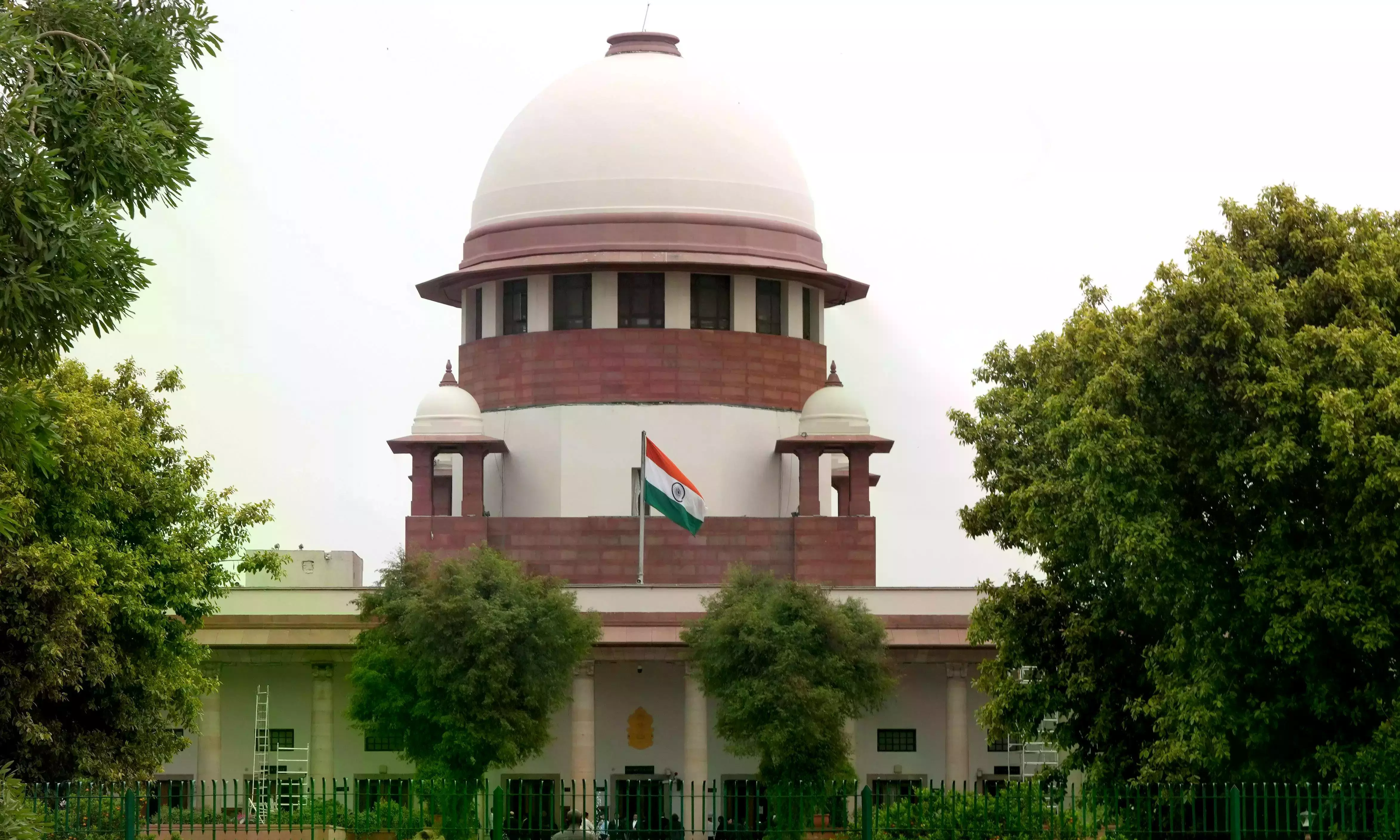
New Delhi: The Supreme Court on Monday reduced the sentence of a man convicted in a 2016 gangrape case from life imprisonment to 20 years’ rigorous imprisonment with remission, citing the possibility of reformation.
A bench of Justices Sanjay Karol and Augustine George Masih noted that the convict had no criminal antecedents and was 25 years old at the time of the offence, and had maintained good conduct in jail.
“In the present case, the appellant convict has no criminal antecedents; was of only 25 years when the offence was committed; given the young age there is a possibility of reformation.
“The state has neither brought on record anything to show that the same would not be possible, nor has it contravened the statement made on behalf of the appellant that in the nearly ten years (including remission) that he has been convicted, he has maintained a good conduct,” the bench said.
The trial court had sentenced the man to imprisonment for the remainder of his natural life and imposed a fine of Rs 25,000, a decision upheld by the Delhi High Court.
According to the case, the victim had hired a rickshaw from the Delhi railway station at night after being assured she would be dropped home. Instead, she was taken to a secluded place where another accused was present, and the two committed rape. An FIR was registered at IP Estate police station on September 7, 2016.
The court said the offence was heinous and against society.
“Despite much evolution, sociologically and psychologically, to break away from the chains of patriarchal thought, incidents such as these are only continuing unabashedly.
“Various amendments have been brought in over the years in the law, and while they may have had positive impact to some extent, the urgency to root out such offences cannot be simmered down even for a bit till these incidents are recorded only in history and are viewed with collective disdain,” the bench said.
It also quoted Justice K. Ramaswamy, stating, “By deft modulation of sentencing process be stern where it should be, and tempered with mercy where it warrants to be.”
The court noted that Section 376D IPC, under which the conviction was recorded, was introduced through the 2013 Criminal Law Amendment following the Nirbhaya case.
“Considering the principles discussed above and applying them to the factors accruing in favour of the appellant - convict noted earlier, we deem it appropriate to modify the sentence to 20 years with benefit of remission, if any,” the bench said.
