SC Takes Cognisance of NCERT Class 8 Chapter on Corruption in Judiciary

25 Feb 2026 12:05 PM IST25 Feb 2026 12:05 PM IST
NCERT may drop controversial textbook section after SC objection
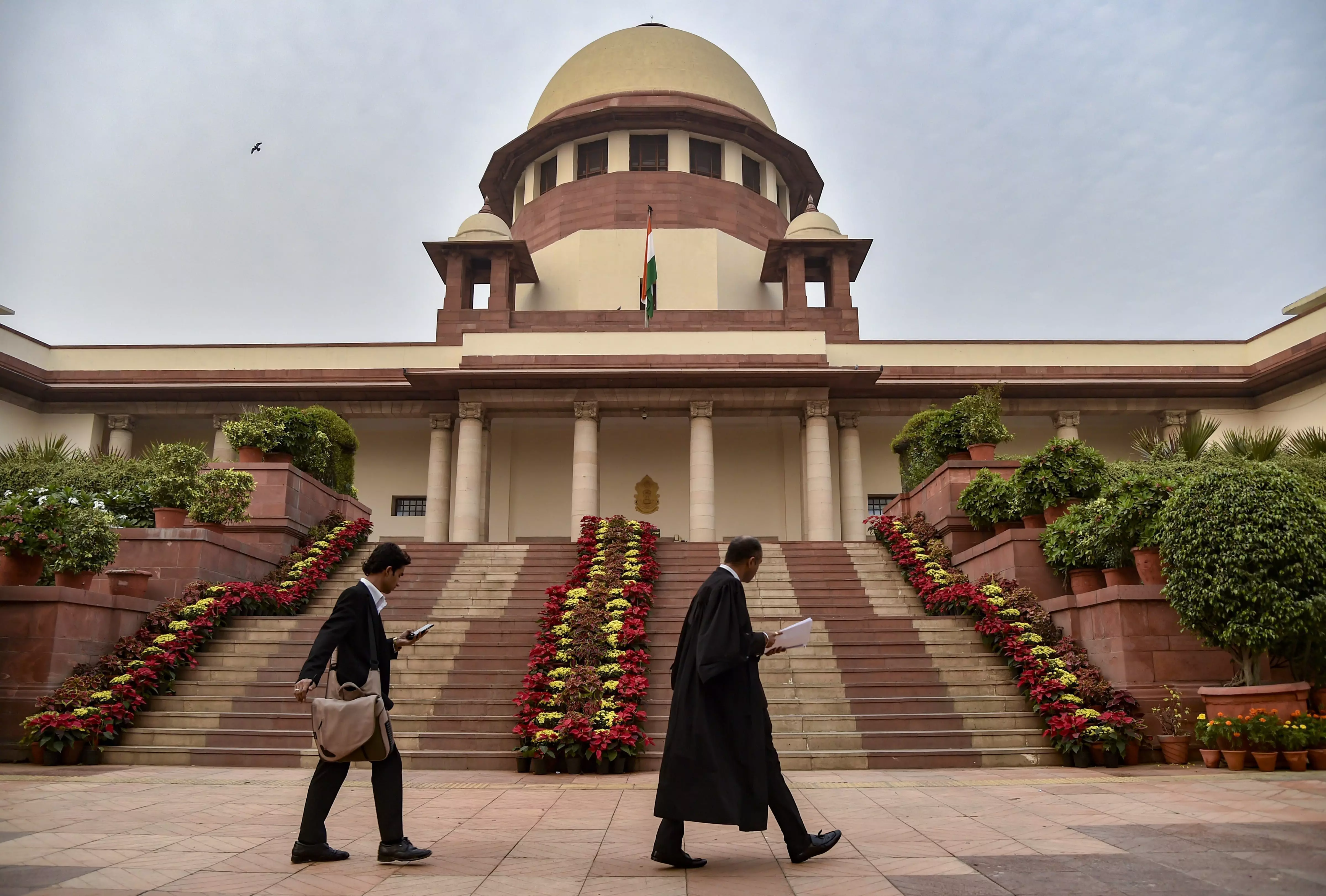
Supreme Court (PTI file image)
New Delhi: The National Council of Educational Research and Training (NCERT) is likely to remove a controversial section on “corruption in the judiciary” from its new Class VIII social science textbook after the Supreme Court took suo motu cognisance of the issue on Tuesday. The book has been taken down from the NCERT website.
A three-judge Bench led by Chief Justice of India Surya Kant, and comprising Justices Joymalya Bagchi and Vipul M. Pancholi, initiated proceedings after senior advocate Kapil Sibal, along with Abhishek Singhvi, mentioned the matter for urgent consideration.
“We are very disturbed as members of this institution to find that children of Class 8 are being taught about corruption in the judiciary. It is part of the NCERT book. We have a great stake in the institution. It (the chapter) is entirely scandalous. We have the copies of the book,” Sibal said.
“I can assure you all that I am fully aware of this,” the CJI said, adding that he had received calls and messages and that many High Court judges were “perturbed”.
When Sibal urged the court to take suo motu cognisance, the CJI said, “Wait for a day. This is definitely concerning the entire institution. Not only the bar and the bench but also every stakeholder in the system is really perturbed.”
The CJI later said he had already passed an order taking cognisance. “I will not allow anyone on earth to taint the integrity of the institution and defame the institution. At any cost, I will not permit it. Howsoever high it may be, the law will take its course. I know how to deal with it,” he said.
Justice Joymalya Bagchi observed that “constitutional integrity to the basic structure is missing in the contents of the textbook”.
The textbook refers to corruption, backlog of cases and shortage of judges as challenges faced by the judiciary. It cites pendency figures of about 81,000 cases in the Supreme Court, 62.40 lakh in High Courts and 4.70 crore in district and subordinate courts. It also mentions that more than 1,600 complaints were received through the Centralised Public Grievance Redress and Monitoring System between 2017 and 2021.
The book quotes former CJI B.R. Gavai as stating in July 2025 that instances of corruption and misconduct within the judiciary negatively impacted public confidence. “However, the path to rebuilding this trust lies in the swift, decisive and transparent action taken to address and resolve these issues... Transparency and accountability are democratic virtues,” he is quoted as saying.
Sources said the government has taken exception to the inclusion of the topic and that NCERT is reviewing the chapter. An internal meeting has been convened to examine the recommendations of subject experts and officials involved in approving the content. Sources also indicated that removal of the controversial portions from already printed copies is being considered.
They said if corruption was to be discussed in textbooks, it should have covered all three organs of the state — the executive, legislature and judiciary — rather than focusing on one institution. They also stated that the Union law ministry was not consulted for cross-verification of the data cited in the book.
Former law minister Ashwani Kumar welcomed the court’s intervention, stating that the prompt action would help address concerns regarding the judiciary’s reputation.
( Source : Deccan Chronicle )

Next Story