J&K: High Court Upholds PSA Detention in 2017 Police Officer Lynching Case

J&K High Court rejects habeas plea; NIA court also denies Malik bail in terror case
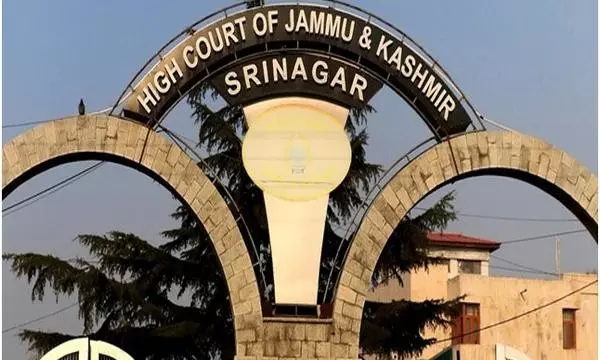
Srinagar: The High Court of Jammu & Kashmir and Ladakh has upheld the preventive detention of Bilal Ahmad Lone, a Srinagar resident accused of involvement in the brutal 2017 lynching of Deputy Superintendent of Police (DySP) Muhammad Ayub Pandith outside the historic Jamia Masjid.
Dismissing a habeas corpus petition challenging Lone’s detention under the Public Safety Act (PSA), the Court held that the order was lawful, procedurally sound, and supported by fresh, specific intelligence inputs indicating renewed terror-linked activity following his release from custody.
The lynching of DySP Pandith on the intervening night of June 22–23, 2017, remains one of the most shocking incidents in recent Kashmir history. The officer, deployed on surveillance and anti-sabotage duty during Lailat-ul-Qadr—an auspicious night in Islamic belief marking the revelation of the first verses of the Quran—was reportedly taking photographs of people emerging from Jamia Masjid when a mob attacked and killed him.
In its judgment, the single Bench of Justice Sanjay Dhar upheld detention order No. DMS/PSA/31/2024 dated October 11, 2024, issued by the District Magistrate, Srinagar. The Court found that the order satisfied constitutional safeguards and was based on concrete material rather than vague or outdated allegations. Lone had argued that the grounds of detention lacked specificity and relied on events from 2017, thereby failing the legal test of proximity required for preventive detention. He also claimed that continuous incarceration made fresh involvement impossible.
The J&K administration countered that Lone had a documented history of involvement in three criminal cases, including FIR No. 51/2017 related to the DySP’s lynching. Authorities maintained that his release posed a credible threat to state security. The Court noted that Lone had been released on bail and had completed a prior PSA detention term before being freed on September 10, 2024. He was subsequently bound down under Sections 126 and 170 of the Bharatiya Nagarik Suraksha Sanhita (BNSS) on September 14, 2024, before the fresh detention order was issued.
Justice Dhar rejected the claim of vagueness, pointing to explicit intelligence inputs cited in the detention order. According to the grounds, a Pakistan-based handler of The Resistance Front (TRF)—a proscribed militant outfit—identified as Ahmad Khalid, allegedly contacted Lone via an encrypted messaging application after his release, directing him to recruit young boys for terrorist activities. The Court emphasised that these were specific, post-release allegations naming individuals and detailing conduct, thereby meeting legal standards for preventive detention.
The Bench also dismissed arguments regarding non-supply of material and delay in deciding Lone’s representation. Records showed he had acknowledged receiving 58 pages of detention material, and his representation dated October 21, 2024, was duly considered and rejected on November 4, 2024. Concluding that no procedural or legal infirmity existed, the Court dismissed the petition as meritless.
The PSA, enacted in 1978 under Sheikh Muhammad Abdullah’s government to curb timber smuggling, has since been used by successive administrations for a wide range of security-related detentions. The law permits detention without trial for up to two years and has drawn criticism from human rights organisations, including Amnesty International, which has described it as a “lawless law.” A 2018 United Nations report on Kashmir also recommended its repeal.
In a separate development, a Special NIA Court in Jammu has rejected the bail application of Tanveer Ahmad Malik, a private school teacher arrested over five years ago for allegedly providing shelter, food, and logistical support to proscribed Hizb-ul-Mujahideen militants in the Doda–Kishtwar region.
Special Judge Prem Sagar observed that the evidence on record prima facie indicated Malik’s involvement in unlawful and terror-linked activities and expressed concern that his release could jeopardise the ongoing trial by enabling potential witness influence. Malik, a resident of Tantna village in Doda, was arrested on March 1, 2021, and is among seven accused—three of whom were later killed in encounters—chargesheeted by the NIA on May 22, 2021.
