Advocate Seeks Criminal Contempt Action Against CEC Gyanesh Kumar

The contempt request alleges that bypassing the other Election Commissioners while issuing decisions or communications in the name of the "Full Commission" would amount to wilful defiance of the law declared by the Supreme Court under Article 141 of the Constitution
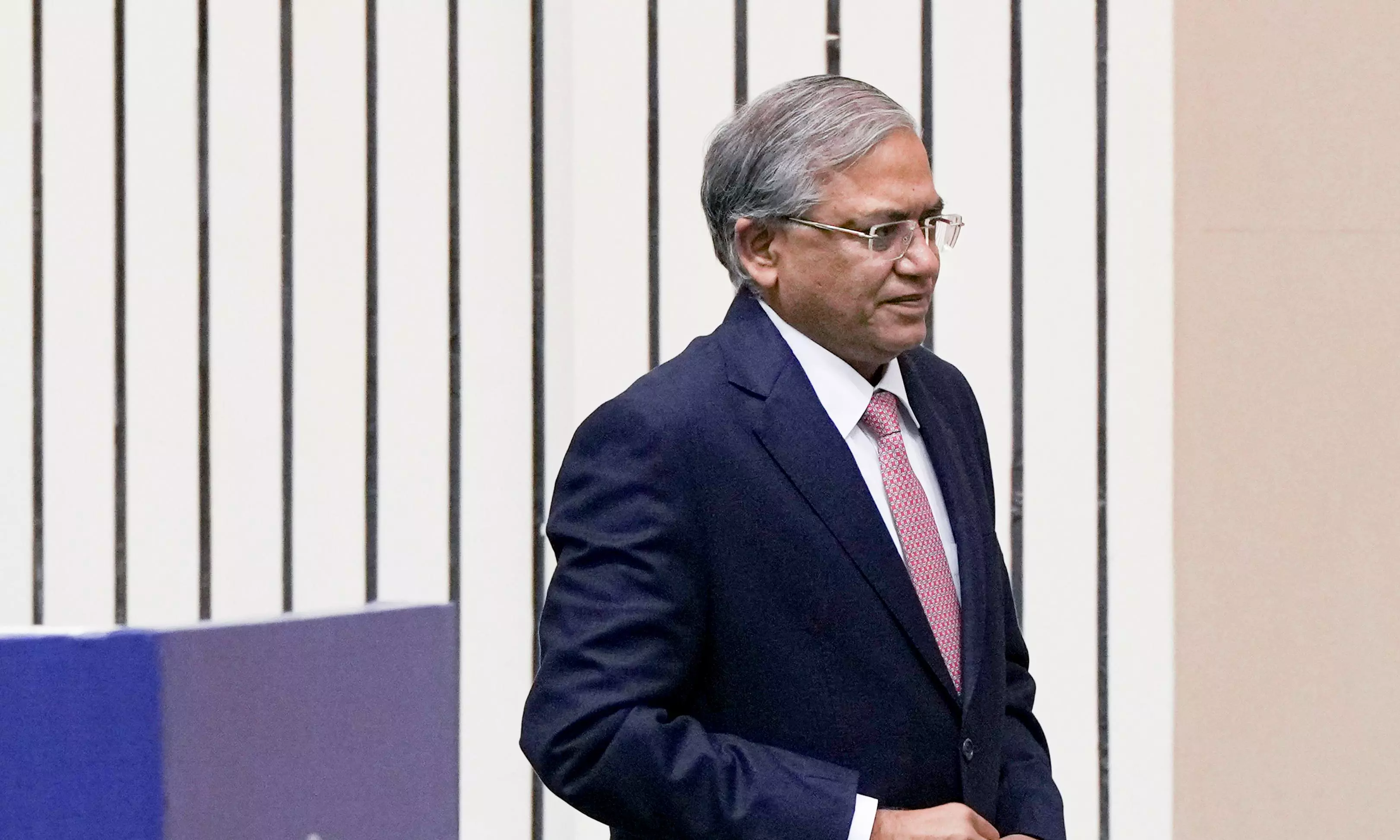
Following the expose report published by media, a Supreme Court advocate has sought the Attorney General for India's statutory consent to initiate criminal contempt action against Chief Election Commissioner Gyanesh Kumar, alleging wilful disobedience of the apex court’s judgments governing the functioning of the Election Commission of India.
Referring to media report that accused of a “complete breakdown of multi-member consensus within the Election Commission of India (EC)”, advocate Brajesh Singh submitted in a letter addressed to Attorney General R Venkataramani on September 24 that the other two Election Commissioners, Sukhbir Singh Sandhu and Vivek Joshi, formally registered written objections at least 14 times over the last 10 months, as said in the report.
According to Singh's letter, the two Election Commissioners had described several decisions as "unauthorised" and "illegal". He alleges that these actions demonstrated a departure from the constitutionally mandated functioning of the three-member Election Commission.
The contempt request alleges that bypassing the other Election Commissioners while issuing decisions or communications in the name of the "Full Commission" would amount to wilful defiance of the law declared by the Supreme Court under Article 141 of the Constitution.
Singh has invoked Section 15(1)(b) read with Section 2(c) of the Contempt of Courts Act, 1971, and Rule 3 of the Rules to Regulate Proceedings for Contempt of the Supreme Court, 1975.
The report said the objections related, among other things, to changes in Form 6, addition and deletion of names from electoral rolls, and centralisation of access to the electoral-roll database.
Notably, the Supreme Court on Wednesday delivered a split verdict on whether petitions challenging the 2023 law that excludes the Chief Justice of India from the panel selecting the Chief Election Commissioner and Election Commissioners should be referred to a five-judge Constitution bench. Following the split verdict, the petitions were referred to a larger bench and the CJI was requested to explore setting up a permanent five-judge Constitution bench to decide significant constitutional questions.
The petitions challenge the constitutional validity of the Chief Election Commissioner and Other Election Commissioners (Appointment, Conditions of Service and Term of Office) Act, 2023. The law, enacted in December 2023, excludes the CJI from the selection panel.
Under the 2023 law, the selection committee comprises the Prime Minister, the Leader of the Opposition and a Cabinet minister nominated by the Prime Minister. The concern raised by Justice Dipankar Datta, is that the cabinet minister could not, for practical purposes, be expected to defy the person who nominated him.
