No One Is Coming to Save Your Career: LinkedIn’s Aneesh Raman

As AI reshapes the world of work, LinkedIn’s Chief Economic Opportunity Officer Aneesh Raman argues that the future belongs not to those who cling to job titles, but to those who stay curious, adaptable and willing to reinvent themselves every day.
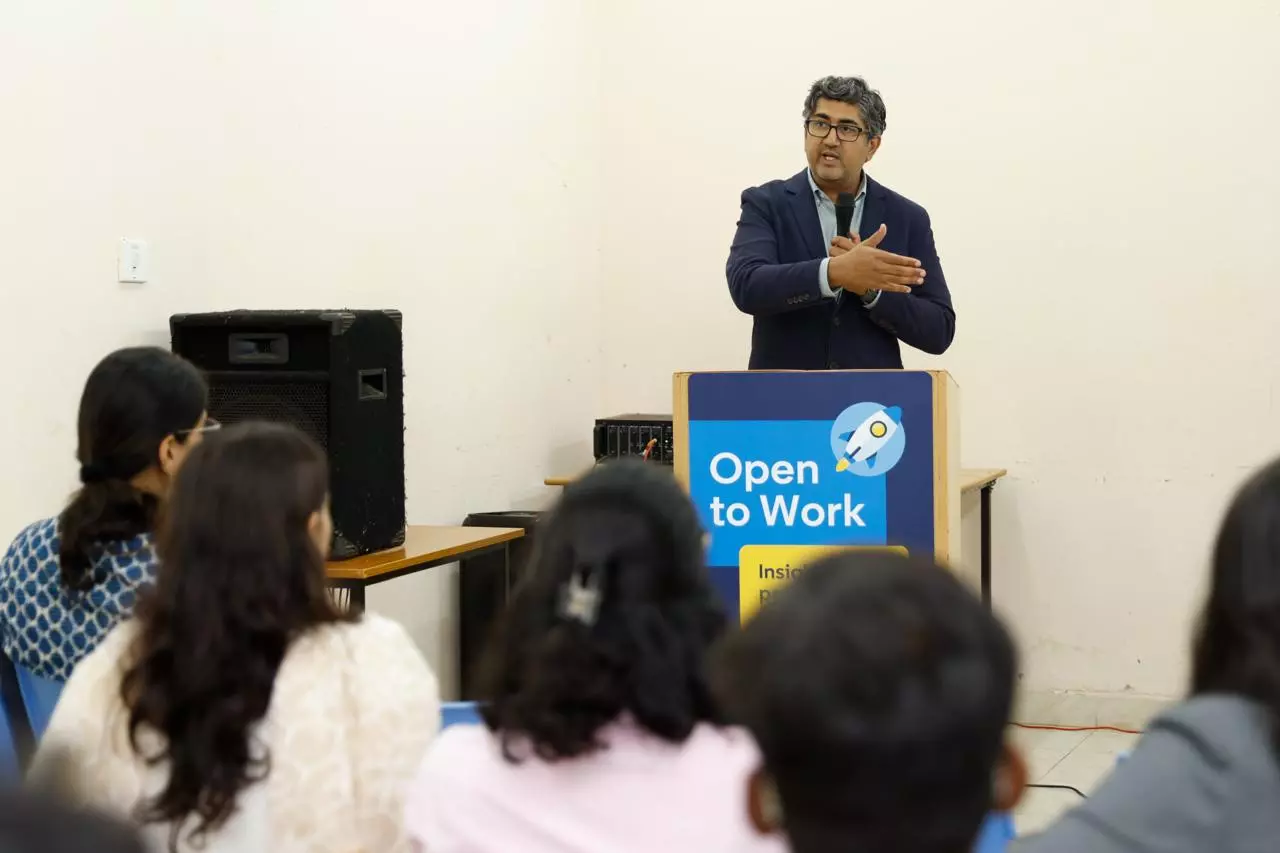
The idea of a stable career once seemed straightforward. Study hard, find the right company, climb the ladder and stay the course. But according to Aneesh Raman, Chief Economic Opportunity Officer at LinkedIn and co-author of the book ‘Open to Work: How to Get Ahead in the Age of AI’, that model is rapidly becoming obsolete.
“If you are hoping to have one job at one place and have that be it, I don’t think that that is a safe bet to make,” begins Aneesh, adding, “The first thing I say to everyone is you have to get control of your career. No one is going to come save you. No one is going to come worry about your career. You have to do that for yourself.”
His own career is evidence of that philosophy. A former war correspondent, presidential speechwriter, startup executive and policy advisor, Aneesh occupies a role that barely existed a few years ago.
“Our then CEO who wrote the book with me created this job a couple of years ago and I do think it represents where work is going. My career by job title makes no sense.”
For years, he struggled to explain where he fit. Employers looked at his varied experiences and searched for a neat box into which they could place him. What eventually helped was focusing not on job titles but on transferable skills.
“The core skill I have always used is explanatory storytelling, making the complex simple for people,” he explains. “From my first job as a reporter to this conversation right now, that’s the skill I have used.”
That shift from job titles to skills forms the central argument of LinkedIn’s first-ever book, ‘OPEN TO WORK: How to Get Ahead in the Age of AI’, co-authored by Ryan Roslansky, EVP, Microsoft and LinkedIn. In an age where AI is transforming tasks faster than organisations can redesign roles, Aneesh believes professionals must think differently about their careers.
“Pretend you have a made-up job title that speaks to your unique skills. And even if you don’t actually have that job title, just have it in your mind and start building your job and your career around those skills.”
AI, he argues, is accelerating this transformation. Traditional notions of lifelong professions are giving way to a world where adaptability matters more than permanence.
“The worst thing you can do right now is hunker down, hold back, stay away from the change and hope that you are going to stay in the job you are in in a way that it doesn’t change,” Aneesh says. “That’s the worst thing you could do.”
Yet he rejects both the utopian and dystopian narratives surrounding artificial intelligence. Asked whether AI will make opportunity more democratic or more unequal, Aneesh’s answer is simple: “We don’t know yet.”
“The beliefs we hold, the actions we take, that will determine whether it democratizes access or whether it consolidates and entrenches inequity,” he says, adding, “We will determine that as humans.”
What excites him most is AI’s ability to lower barriers. For entrepreneurs, small business owners and professionals without access to expensive expertise, the technology can become a powerful equaliser.
“If you are a small business owner and you dont know anything about sales or marketing and you can’t afford to hire someone, these tools can help you think about sales, marketing and growing your business. It also democratizes access to building and prototyping,” he says.
But there is a caveat. Using AI well requires intention. “The first mistake people make is they start using it for everything,” he cautions. “If I keep asking AI every question and copying and pasting every answer, my brain is going to shut down. It’s not actually being challenged.”
Instead, he encourages people to use AI as a catalyst rather than a crutch. “The key thing in the book is it’s not human versus AI. It’s human versus human with AI,” he says. “Because the human who’s using AI correctly has a superpower now.”
For Aneesh, the best use of AI is not doing old tasks faster but enabling entirely new possibilities. “Do something you couldn’t do before AI. That’s how you know you are doing it right,” he suggests.
The skills that will matter most in this environment are often deeply human ones. Curiosity sits at the top of his list.
“Curiosity is the thing that has always pushed humans forward,” he says, adding, “There are so many questions right now and no answers. We have to figure it out.”
Creativity follows closely behind.
“AI is going to help us execute. It’s going to help us pull generic expertise and generic knowledge. It’s going to be can we come up with new things? That’s going to be the core to work,” he says.
While much of the discussion around AI focuses on jobs disappearing, Aneesh believes the conversation is often misplaced. “Don’t worry about job titles. Don’t worry about job categories going or coming,” he says, and further suggests, professionals focus on what they can do, what they can learn and where they want to apply that.”
He points to software engineering as an example. Early predictions suggested AI would eliminate coding jobs. Instead, the profession is evolving. “The job of a software engineer is less time coding and more time talking to customers, more time thinking about the ethical dimensions of what you are building,” he says.
The same principle applies across industries. Tasks may change. Job descriptions may evolve. Human value remains.
When it comes to future-proof careers, Aneesh again returns to skills rather than professions. He believes the most resilient careers will be anchored in human connection, whether in healthcare, teaching, coaching or mentoring.
“It’s all these things that even a robot can’t figure out. You seem a little sad. You seem excited by what I just said. Those are the parts of jobs that are going to be safe.”
For young professionals entering the workforce, Aneesh offers advice that may sound radical in a culture obsessed with long-term plans. “You don’t need a 10-year plan. If you have one, rip it up. We don’t know what the jobs are going to be in 10 years.” Instead, he advocates focusing on the present. “All you have to do is every day do something new. Every day try something new. Every day get better at something. Learn something. Build something. Partner in some way.”
Resilience, adaptability and experimentation, he believes, are becoming the defining career skills of the AI era. When recruiters assess candidates today, those qualities increasingly matter more than credentials.
Perhaps his most powerful message is that authenticity is becoming a competitive advantage. “The biggest mistake job seekers are making on LinkedIn is they are trying to be someone else,” he says. “Right now, the best way to be is to be yourself.”
The book contains a chapter titled ‘Nobody Beats You at Being You’, a phrase that neatly captures his outlook on the future of work. “Each of us has to figure out what is our secret sauce,” he says. “Be you. That’s the most important thing.”
In a world where technology is advancing at unprecedented speed, Aneesh believes success will belong not to those who have all the answers, but to those willing to keep learning.
Reflecting on his own unconventional career, he embraces discomfort as a necessary companion to growth. “I wish for you a career of only hard parts,” he says. “Because each of those moments made me stronger.”
And perhaps that is what being open to work really means today. Not merely being available for a job, but being open to change, open to uncertainty and open to becoming something you have not yet imagined.
Watch Interview here:
