Jaishankar Set to Begin First China visit in Five Years

13 July 2025 7:27 AM IST13 July 2025 7:27 AM IST
Jaishankar will meet his counterpart and the leadership of Singapore as part of the regular exchanges between the two countries
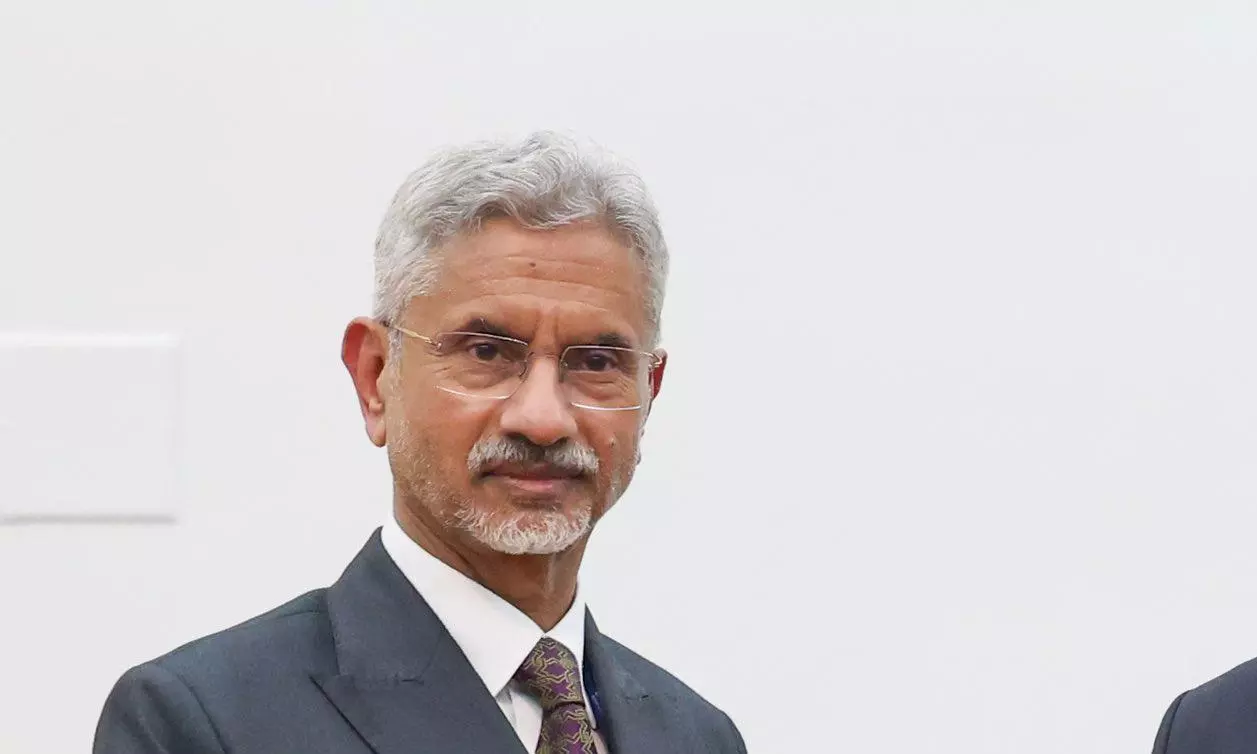
External Affairs Minister S. Jaishankar (X.com)
New Delhi: External Affairs Minister S. Jaishankar will arrive in Beijing on Sunday evening, marking his first trip to China in five years. The visit comes at a time when both countries are attempting to ease tensions and improve ties, which deteriorated significantly after the deadly Galwan Valley clashes in 2020.
Jaishankar, who is on a two-nation tour to Singapore and China, is scheduled to land in Beijing this evening after wrapping up the Singapore leg of his visit. The External Affairs Minister is expected to meet his Chinese counterpart, Wang Yi, for a bilateral meeting on Monday. The two leaders last met in February on the sidelines of a G20 meeting in Johannesburg, where both sides called for mutual trust and support.
Jaishankar will also attend the Shanghai Cooperation Organisation (SCO) Council of Foreign Ministers’ Meeting in Tianjin on July 15. The Ministry of External Affairs confirmed that “EAM will visit the People’s Republic of China to participate in the SCO Council of Foreign Ministers’ Meeting (CFM) being held in Tianjin. EAM will also hold bilateral meetings on the sidelines of the CFM.”
This marks Jaishankar’s first visit to China since bilateral relations soured in 2020 following the Galwan Valley clash — the worst border incident between the two countries in over four decades, resulting in casualties on both sides. His visit follows that of Defence Minister Rajnath Singh and National Security Advisor (NSA) Ajit Doval, who travelled to China in June for SCO-related meetings.
Wang Yi is also expected to visit India next month to meet NSA Ajit Doval under the Special Representatives (SR) mechanism — a dialogue format aimed at resolving the longstanding boundary dispute.
Despite diplomatic overtures, tensions remain. China’s recent trade actions — including delaying or halting key exports to India such as rare earth magnets, fertilisers, and tunnel boring machines for the Mumbai-Ahmedabad bullet train project — have raised concerns in New Delhi.
Further straining ties, Beijing’s continued overt and covert support to Pakistan, especially during the clashes in May this year, remains a major point of contention. These thorny issues risk overshadowing any constructive dialogue at the upcoming SCO meeting.
The SCO gathering itself may pose challenges. Last month, India declined to sign a joint statement at the SCO Defence Ministers’ Meeting after it omitted references to the terror attack in Pahalgam, which killed 26 people. India had pushed for a strong condemnation of terrorism, but one member — believed to be Pakistan — objected. A similar deadlock could emerge during the foreign ministers’ meeting, adding to the complexity of Jaishankar’s mission.
The SCO is a 10-member Eurasian political and security grouping that includes China, Russia, India, Pakistan, and Iran. The 25th Heads of State Council Meeting of the SCO is scheduled to be held in Tianjin later this year. India chaired the SCO Presidency in 2023, while Pakistan hosted the Leaders' Summit in 2024.
The decision to revive the SR dialogue and other dormant communication channels was reportedly taken during a brief exchange between Prime Minister Narendra Modi and Chinese President Xi Jinping on the sidelines of a summit in Kazan, Russia, in October last year.
A rare positive development has been the resumption of the Kailash Mansarovar Yatra after nearly five years. However, it remains uncertain whether Prime Minister Modi will travel to China to attend the SCO's annual summit.
( Source : ANI )

Next Story