Juno will let us take a giant step forward in our understanding of how giant planets form and the role these titans played.
 Juno launched on August 5, 2011, from Cape Canaveral, Florida, and arrived in orbit around Jupiter on July 4, last year. During its mission of exploration, Juno soars low over the planet's cloud tops as close as about 3,400 kilometres.
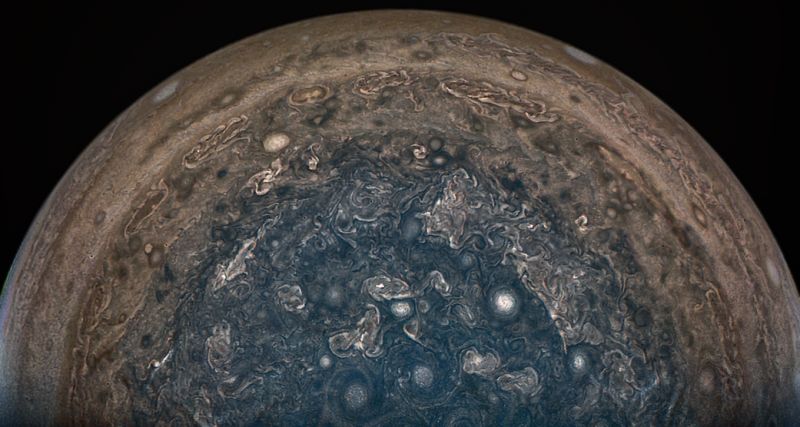
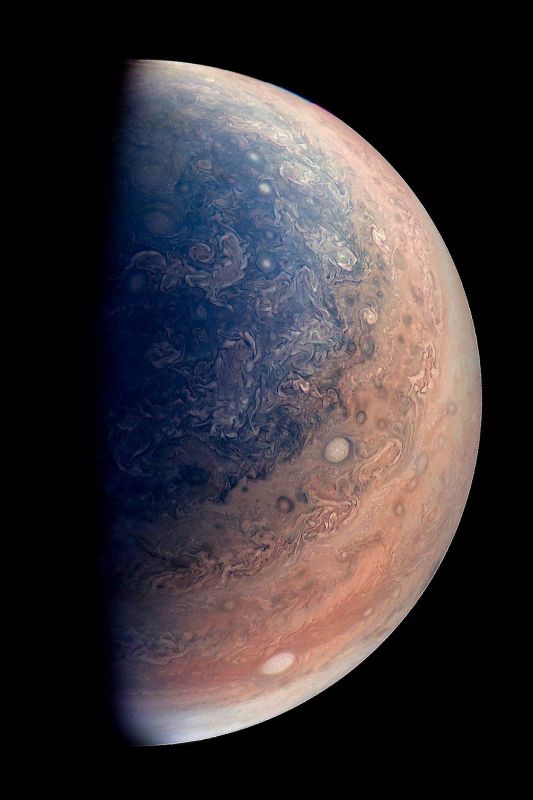
- Jovian Stormy Weather: NASA's Juno spacecraft soared directly over Jupiter's south pole when JunoCam acquired this image.
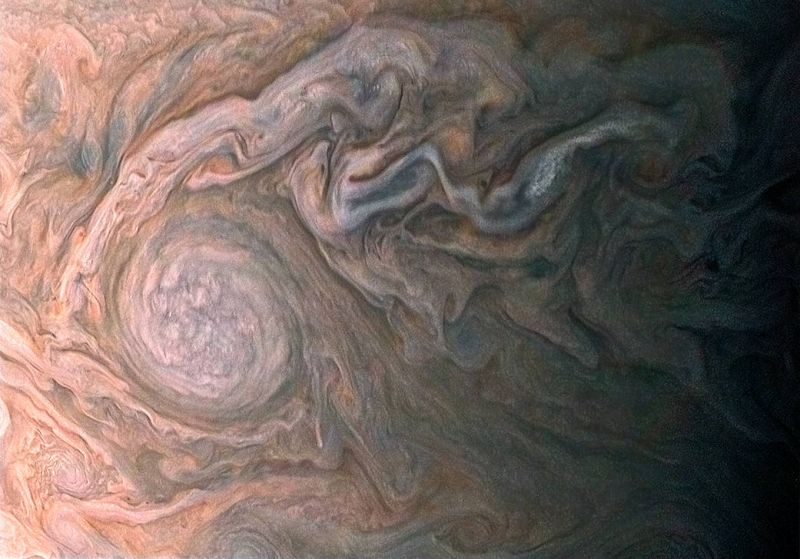
- Jovian Art: NASA's Juno spacecraft skimmed the upper wisps of Jupiter's atmosphere when JunoCam snapped this image on Feb. 2 at 5:13 a.m. PT (8:13 a.m. ET), from an altitude of about 9,000 miles (14,500 kilometres) above the giant planet's swirling cloudtops.
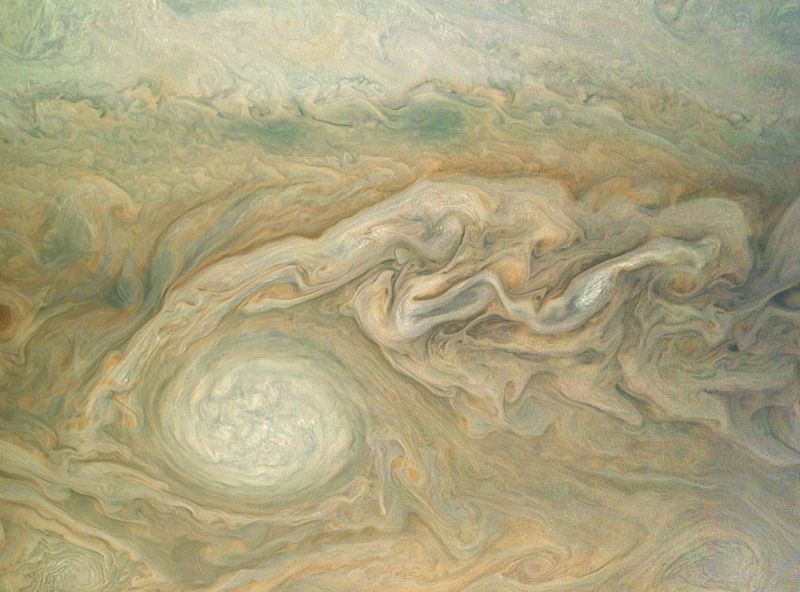
- Juno Captures Jupiter Cloudscape in High Resolution: This close-up view of Jupiter captures the turbulent region just west of the Great Red Spot in the South Equatorial Belt, with resolution better than any previous pictures from Earth or other spacecraft.
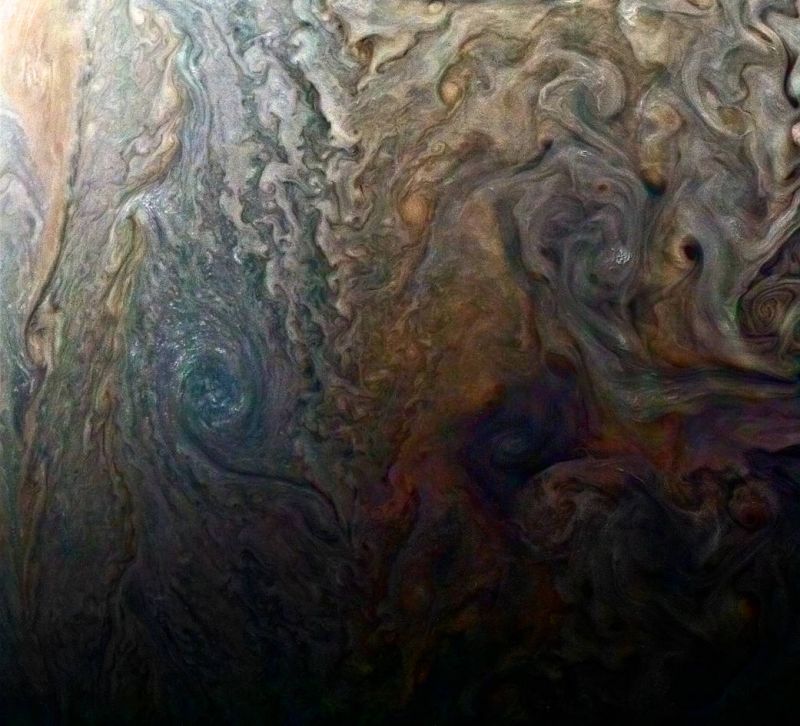
- Dark Spot and Jovian Galaxy': This enhanced-color image of a mysterious dark spot on Jupiter seems to reveal a Jovian “galaxy†of swirling storms.
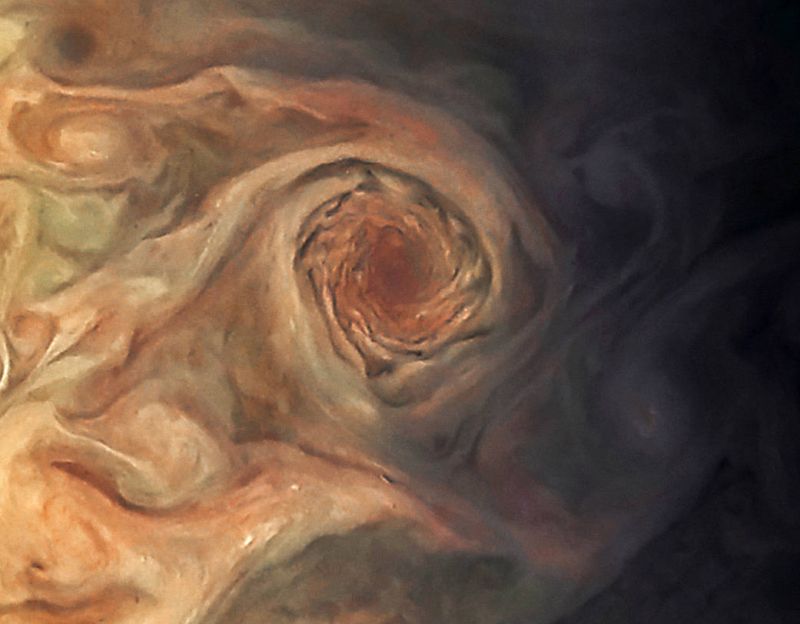
- Jupiter's Swirling Pearl' Storm: This image, taken by the JunoCam imager on NASA's Juno spacecraft, highlights a swirling storm just south of one of the white oval storms on Jupiter.
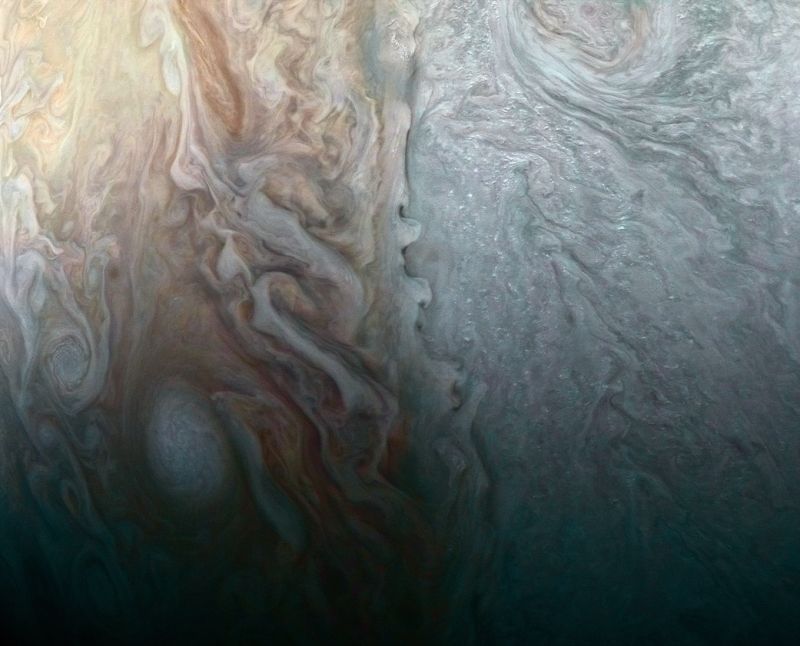
- This image, taken by the JunoCam imager on NASA's Juno spacecraft, highlights a feature on Jupiter where multiple atmospheric conditions appear to collide. (Photo:NASA)
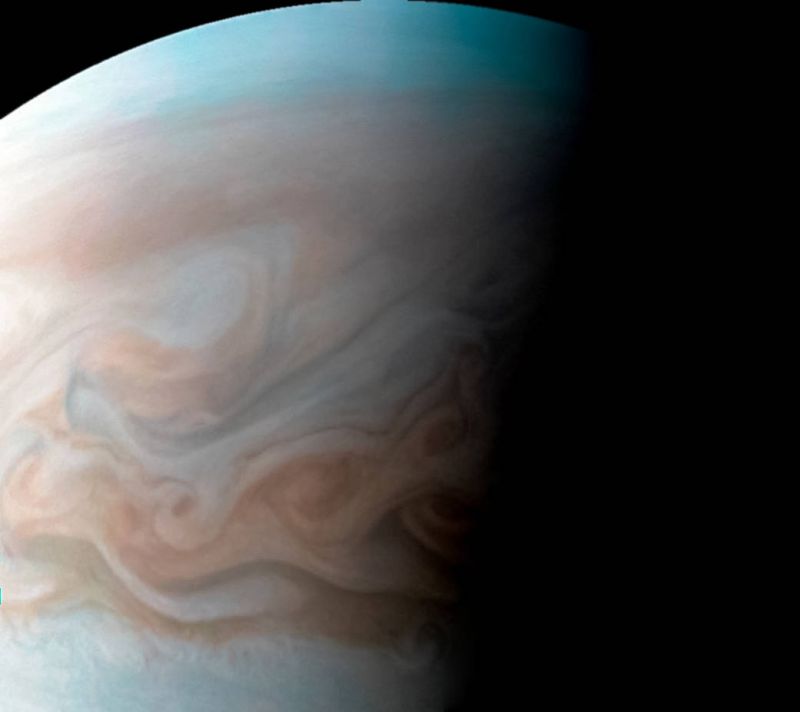
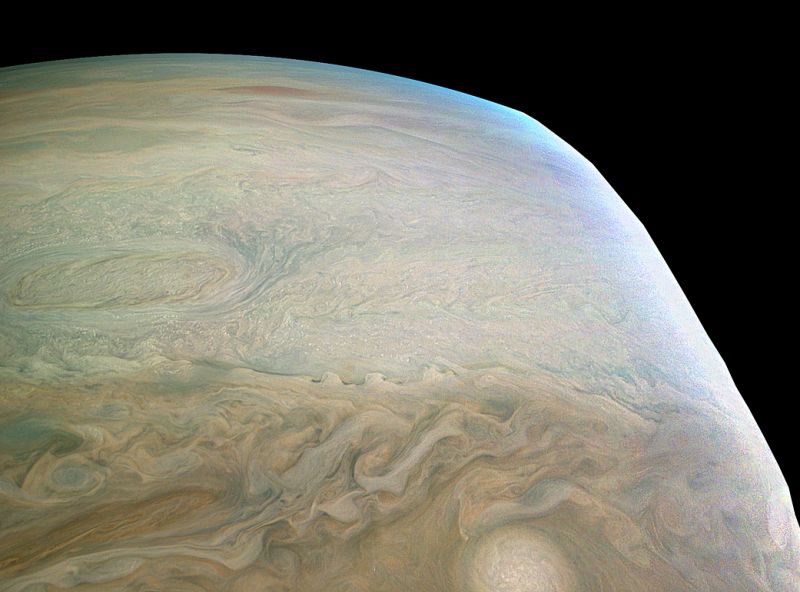
- The Edge of Jupiter: This enhanced color Jupiter image, taken by the JunoCam imager on NASA's Juno spacecraft, showcases several interesting features on the apparent edge (limb) of the planet.
- Approaching Jupiter: This enhanced color view of Jupiter's south pole was created by citizen scientist Gabriel Fiset using data from the JunoCam instrument on NASA's Juno spacecraft.
- Jupiter's Little Red Spot: This view of Jupiter, taken by the JunoCam imager of NASA's Juno spacecraft, highlights Oval BA
- Sequence of Juno Spacecraft's Close Approach to Jupiter: This sequence of enhanced-color images shows how quickly the viewing geometry changes for NASA's Juno spacecraft as it swoops by Jupiter. The images were obtained by JunoCam.
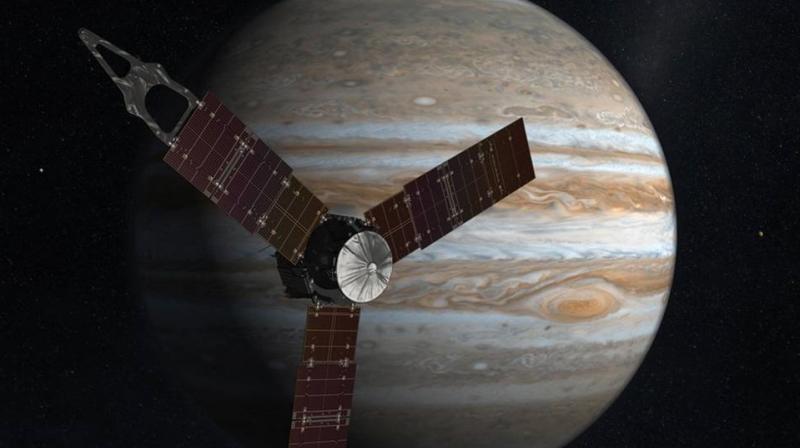

Juno\'s principal goal is to understand the origin and evolution of Jupiter. Underneath its dense cloud cover, Jupiter safeguards secrets to the fundamental processes and conditions that governed our solar system during its formation. As our primary example of a giant planet, Jupiter can also provide critical knowledge for understanding the planetary systems being discovered around other stars. (All images - Source - NASA)
Juno will let us take a giant step forward in our understanding of how giant planets form and the role these titans played.


Next Story