Earth right now: Understanding of our home planet

2 July 2017 9:55 AM IST2 July 2017 9:55 AM IST
NASA monitors Earth's vital signs from land, air and space with a fleet of satellites and airborne and ground-based observation campaigns.
 At its most depleted, around the turn of the 21st century, the ozone layer had declined by about five percent, earlier research has shown.
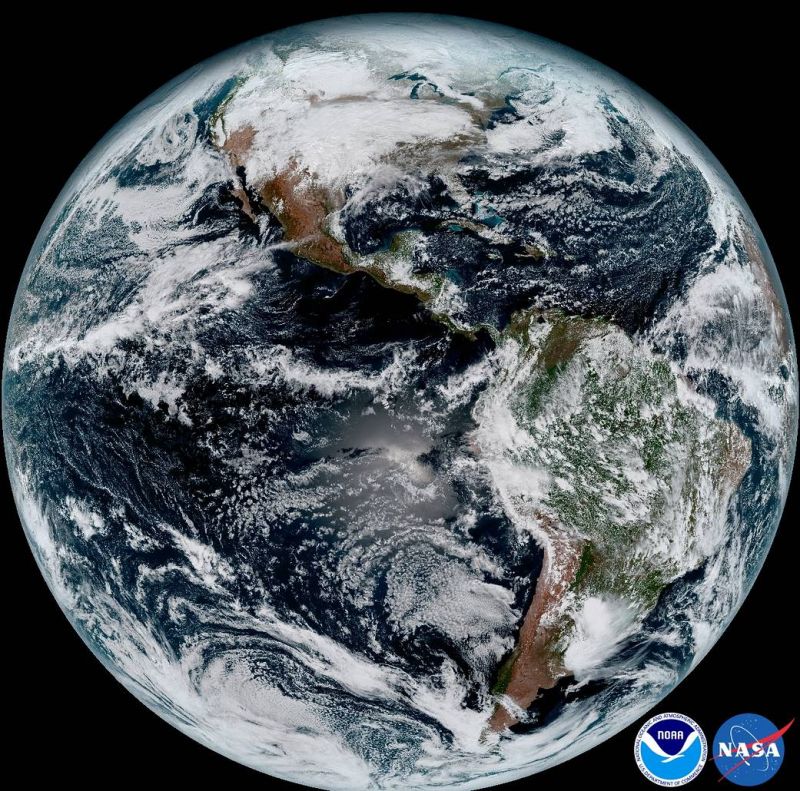
- New Weather Satellite Sends First Images of Earth: The release of the first images today from NOAA's newest satellite, GOES-16, is the latest step in a new age of weather satellites. This composite color full-disk visible image is from 1:07 p.m. EDT on Jan. 15, 2017, and was created using several of the 16 spectral channels available on the GOES-16 Advanced Baseline Imager (ABI) instrument. (Image: NASA)
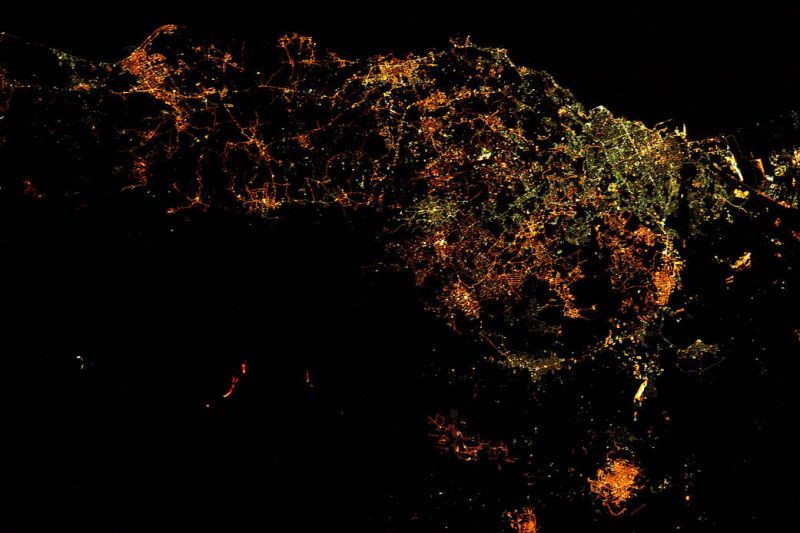
- Space Station View of Mount Etna Erupting: The Expedition 50 crew aboard the International Space Station had a nighttime view from orbit of Europe's most active volcano, Mount Etna, erupting on March 19, 2017. Astronaut Thomas Pesquet of ESA captured this image, writing, \"Mount Etna, in Sicily. The volcano is currently erupting and the molten ava is visible from space, at night!\" (Image: NASA)
- Space Station View of Mount Etna Erupting: The Expedition 50 crew aboard the International Space Station had a nighttime view from orbit of Europe's most active volcano, Mount Etna, erupting on March 19, 2017. Astronaut Thomas Pesquet of ESA captured this image, writing, \"Mount Etna, in Sicily. The volcano is currently erupting and the molten ava is visible from space, at night!\" (Image: NASA)
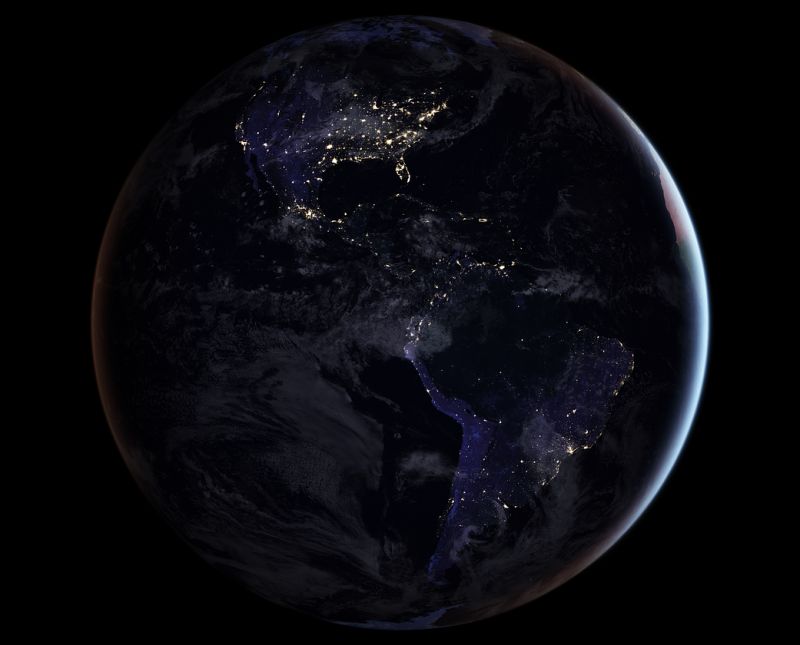
- New Full-hemisphere Views of Earth at Night: NASA scientists are releasing new global maps of Earth at night, providing the clearest yet composite view of the patterns of human settlement across our planet. This composite image, one of three new full-hemisphere views, provides a view of the Americas at night. (Image: NASA)
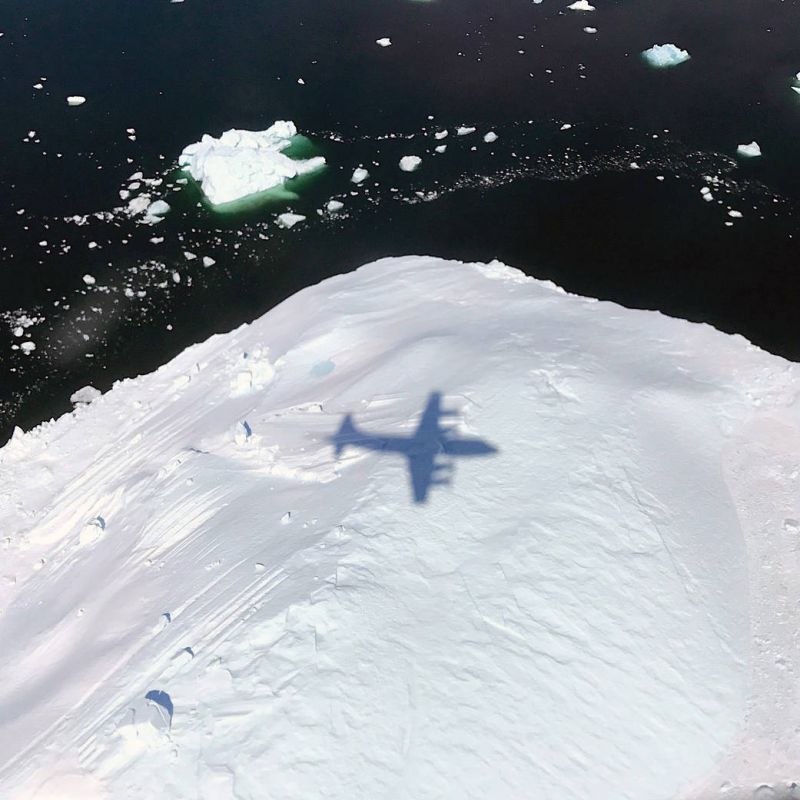
- NASA's P-3 Aircraft Flies Over Southeast Greenland: The shadow of NASA's P-3 aircraft is seen over an iceberg on a May 8, 2017 flight supporting NASA's Operation IceBridge mission. IceBridge began its final week of Arctic Spring 2017 surveys with a glacier-packed mission in Greenland, called Southeast Glaciers 01. (Image: NASA)
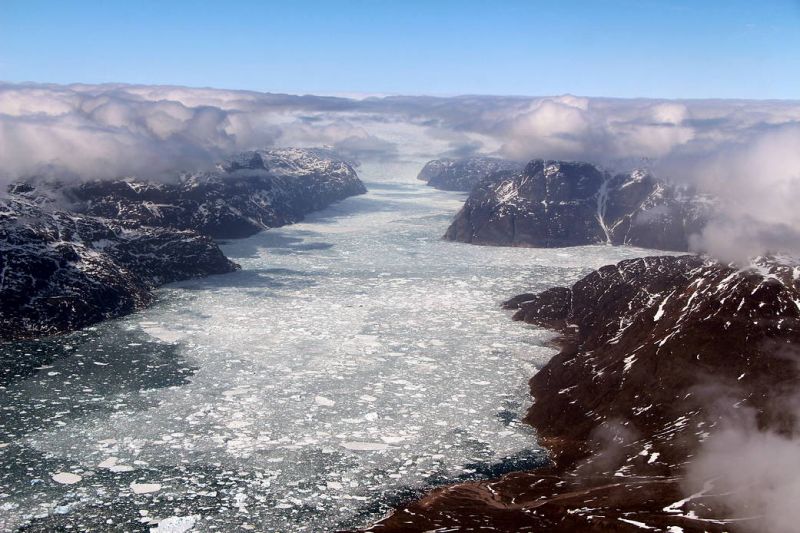
- NASA's IceBridge Wraps Up 2017 Arctic Campaign With Southern Greenland Flight: A fjord in southern Greenland, as seen during Operation IceBridge's last flight of the 2017 Arctic campaign, on May 12, 2017. This final full science flight, ICESat-2 South, was designed along the ground tracks of NASA's upcoming ICESat-2, to fill in a gap in altimetry coverage of central southern Greenland. (Image: NASA).
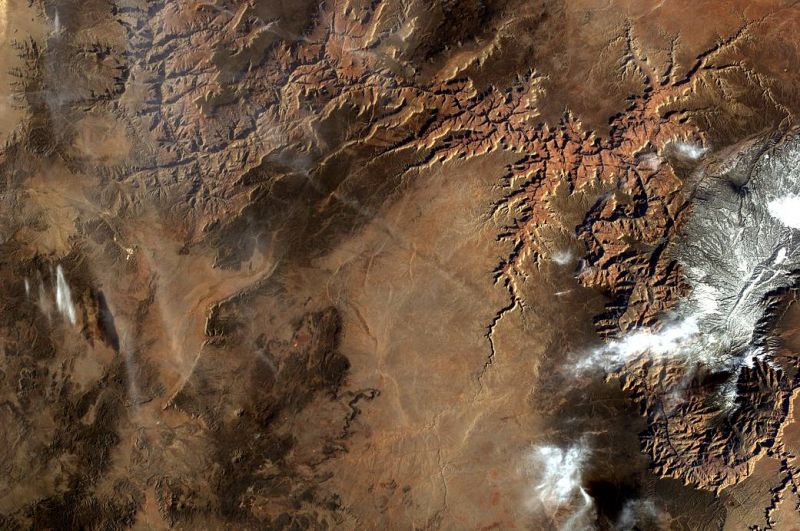
- Space Station's EarthKAM Sees the Grand Canyon: On April 3, 2017, the student-controlled EarthKAM camera aboard the International Space Station captured this photograph of a favorite target -- the Grand Canyon -- from low Earth orbit. The camera has been aboard the orbiting outpost since the first space station expedition began in November 2000 and supports approximately four missions annually. (Image: NASA).
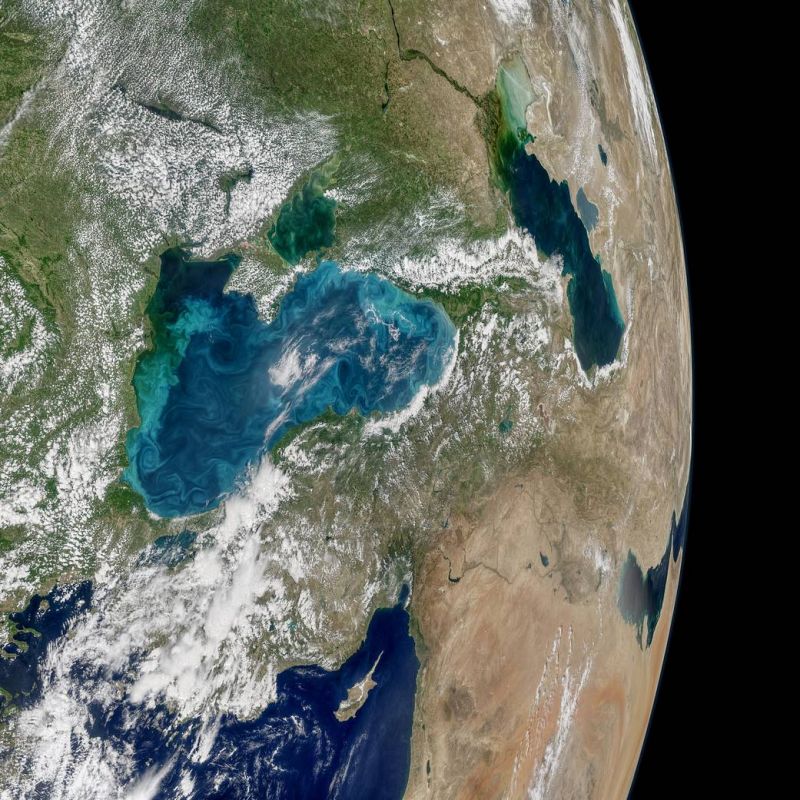
- Turquoise Swirls in the Black Sea: On May 29, 2017, the Moderate Resolution Imaging Spectroradiometer (MODIS) on NASA's Aqua satellite captured the data for this image of an ongoing phytoplankton bloom in the Black Sea. The image is a mosaic, composed from multiple satellite passes over the region. (Image: NASA)
The earth has asteroids whizzing past it several times a week but these are smaller in size that the one expected on April 19
NASA monitors Earth's vital signs from land, air and space with a fleet of satellites and airborne and ground-based observation campaigns.

Next Story