J&K Leaders Alarmed by Growing PoJK Unrest, Call for Restraint and Dialogue

Some other J&K political leaders, along with many social media users, have echoed a broader appeal for restraint and dialogue instead of coercive measures.
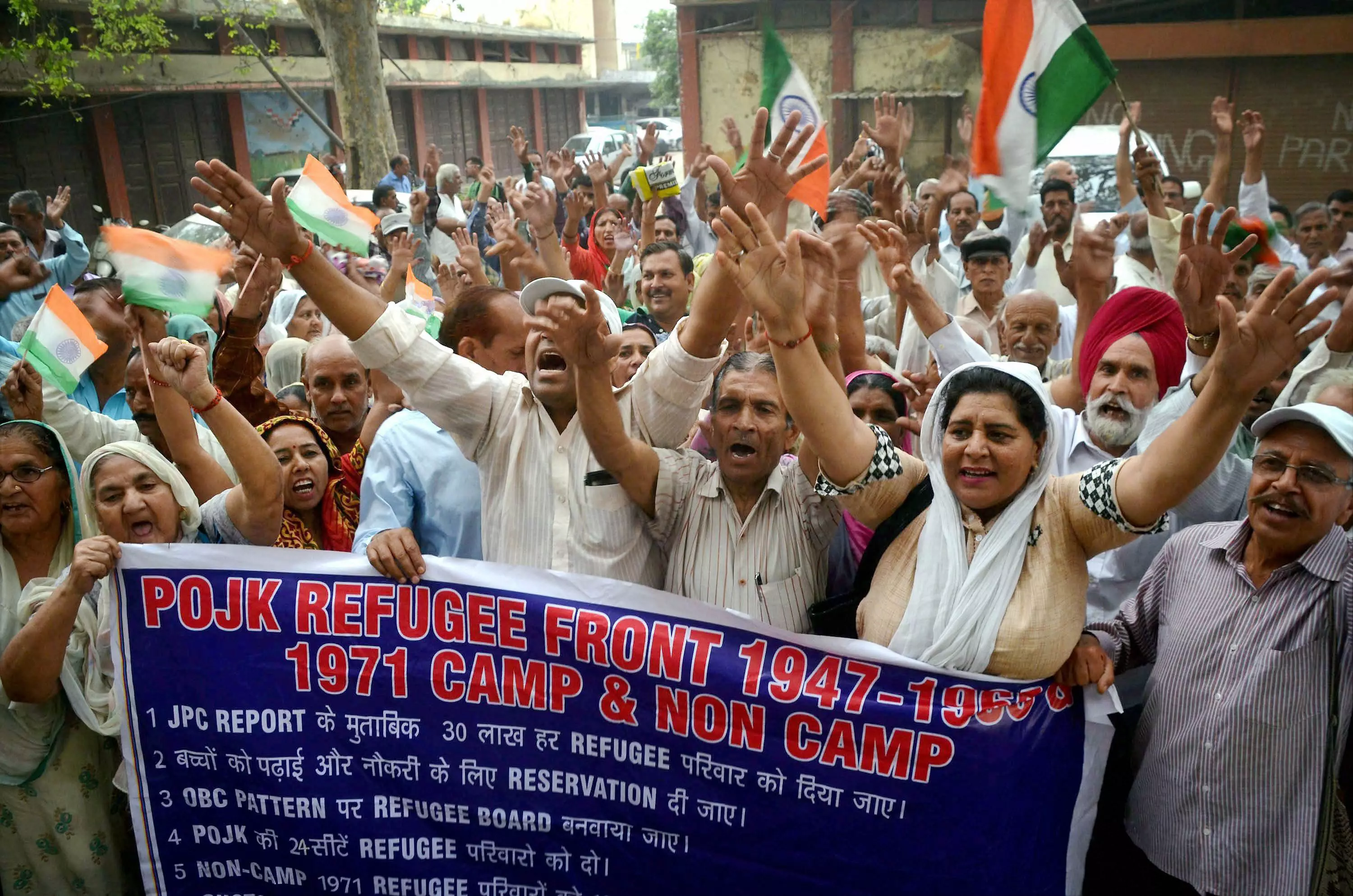
Srinagar: Political leaders in Jammu and Kashmir have voiced concern over the fast-changing situation in Pakistan-occupied Jammu and Kashmir (PoJK), where a fresh wave of unrest has deepened into one of the region’s most serious crises in recent months.
The latest flare-up has centred on Rawalakot and then spread across capital Muzaffarabad and other towns, with protests, shutdowns, arrests and an intensified security response drawing wider regional and international attention. The unrest reflects a volatile mix of economic hardship, political dissatisfaction and anger over the authorities’ handling of dissent.
Former J&K chief minister Farooq Abdullah expressed concern over the developments and said he hoped the people of that part of Kashmir would be able to live in peace. “The people living in the part of Kashmir that is under Pakistan are facing many difficulties. I hope these hardships come to an end and they are able to live in peace,” Abdullah told reporters here on Wednesday.
Kashmir’s chief Muslim cleric Mirwaiz Umar Farooq also reacted with alarm to reports of deaths and injuries, saying that when people come out on the streets to express grievances, the responsibility of those in authority is to listen and address the matter peacefully rather than allow it to spiral into violence, arrests and further loss of life. He said, “I’m deeply disturbed by the news coming from across the LoC. The killing of more than a dozen protesting civilians and police personnel is extremely sad. The Government there should know better than to use force to handle public grievance and demands in this manner.”
The Mirwaiz asserted, “When people take to the streets to express their concerns, it is a signal that they seek to be heard. It is the responsibility of those in authority to listen, engage and peacefully resolve the matter, rather than allow it to escalate into violence, arbitrary arrests and loss of life.” He added, “I hope and pray that better sense prevails and the matter is handled with maturity while addressing the concerns of the people”.
Some other J&K political leaders, along with many social media users, have echoed a broader appeal for restraint and dialogue instead of coercive measures.
The immediate trigger for the latest confrontation was the crackdown on the Jammu and Kashmir Joint Awami Action Committee (JAAC), a grassroots alliance that has led repeated protests in the held territory over the past two years. What began as mobilisation over rising inflation, high electricity tariffs, shortages of subsidised wheat and demands for governance reform has now broadened into a wider political movement. In recent days, the dispute sharpened further over the reservation of 12 seats in the legislative assembly for J&K refugees living in Pakistan, an arrangement that protesters say distorts local representation and weakens the voice of residents in the territory.
The violence escalated sharply in Rawalakot, where clashes between protesters and security personnel left at least 11 people dead and more than 70 injured, according to widely cited official and local and Pakistani media reports. Though accounts differ on the exact distribution of casualties, PoJK officials reported that the dead included both protesters and security personnel, while the injured included dozens of civilians as well as police officials. The clashes took place ahead of a PoJK-wide strike and long march call by the banned JAAC, and the fallout quickly paralysed towns across the territory.
Authorities have moved aggressively against the JAAC. The organisation was formally designated a proscribed body under anti-terror legislation on June 5, a step criticised by Amnesty International which said the measure marked a dangerous escalation and raised serious concerns about freedom of association and the use of anti-terror laws against a grassroots protest movement. The authorities have since detained scores of its members, initiated sedition cases against prominent leaders and announced rewards for information leading to the arrest of key figures.
Official notifications issued in Muzaffarabad directed that cases be registered against four prominent leaders —Shoukat Nawaz Mir, Umar Nazir Kashmiri, Khawaja Mehran Arshad and Sardar Amaan Khan—and announced a bounty of 10 million Pakistani rupees for their arrest. The action came after the authorities banned the JAAC and sought to prevent the group’s planned strike over the refugee-seat issue. Residents in Muzaffarabad described the capital as deserted, with markets shut, transport halted and only security vehicles visible in many areas.
The crackdown has been accompanied by sweeping restrictions. Mobile and internet services were suspended across major urban centres, additional police and paramilitary personnel were deployed, and travel advisories urged outsiders and visitors to leave or avoid the territory during the protest period. Human rights groups and residents say these measures effectively sealed off the region and made independent verification of events more difficult at the very moment tensions were peaking.
The latest unrest has also revived scrutiny of earlier promises made after previous protest waves in 2024 and 2025, when governments in Islamabad and Muzaffarabad offered relief measures and reform commitments that many activists say were only partly implemented. As a result, the present mobilisation is widely seen not as an isolated outburst but as the continuation of a deeper crisis of governance, representation and trust. Local political watchers are of the view that with elections scheduled later this summer, the dispute over reserved seats, the use of anti-terror laws, and the heavy-handed security response have all heightened fears of further confrontation unless a credible political dialogue is opened.
Despite the rising violence, PoJK Prime Minister Raja Faisal Mumtaz Rathore has extended an offer for dialogue to address the protesters’ grievances. However, earlier negotiations between the JAAC and the authorities have produced little progress, particularly regarding the Muzaffarabad Agreement — a 2025 accord that pledged economic relief and structural reforms but remains largely unimplemented.
Some officials in Muzaffarabad and Islamabad have publicly suggested that elements within the JAAC movement may be influenced or encouraged by India. Similar suspicions have appeared in sections of the Pakistani media and among certain commentators, who have questioned whether the agitation reflects external involvement. However, these assertions remain largely speculative and have not been supported by concrete evidence. On Tuesday, security forces in Muzaffarabad claimed to have arrested five individuals whom they accused of being agents of India’s intelligence agency, RAW.
India has reacted sharply to the crackdown and bloodshed, with official statements criticising Pakistan’s handling of the protests and alleging serious rights violations. On Tuesday, Ministry of External Affairs spokesperson Randhir Jaiswal sharply criticised Pakistan for what he described as “brutality” and “severe police violence” against protesters in PoJK. He accused Islamabad of attempting to divert attention from its internal governance failures by spreading misinformation. Jaiswal also urged the international community to take note of the situation and hold Pakistan accountable for the alleged human rights violations occurring in the region.
Meanwhile, several international rights organisations have called for restraint, accountability and the restoration of civil liberties.
