How Rs 15 Lakh Crore in Alleged Fraud Is Draining Public Savings

Rajesh Exports has been flagged by the Securities and Exchange Board of India (SEBI) for what it calls “egregious and unheard of” financial irregularities
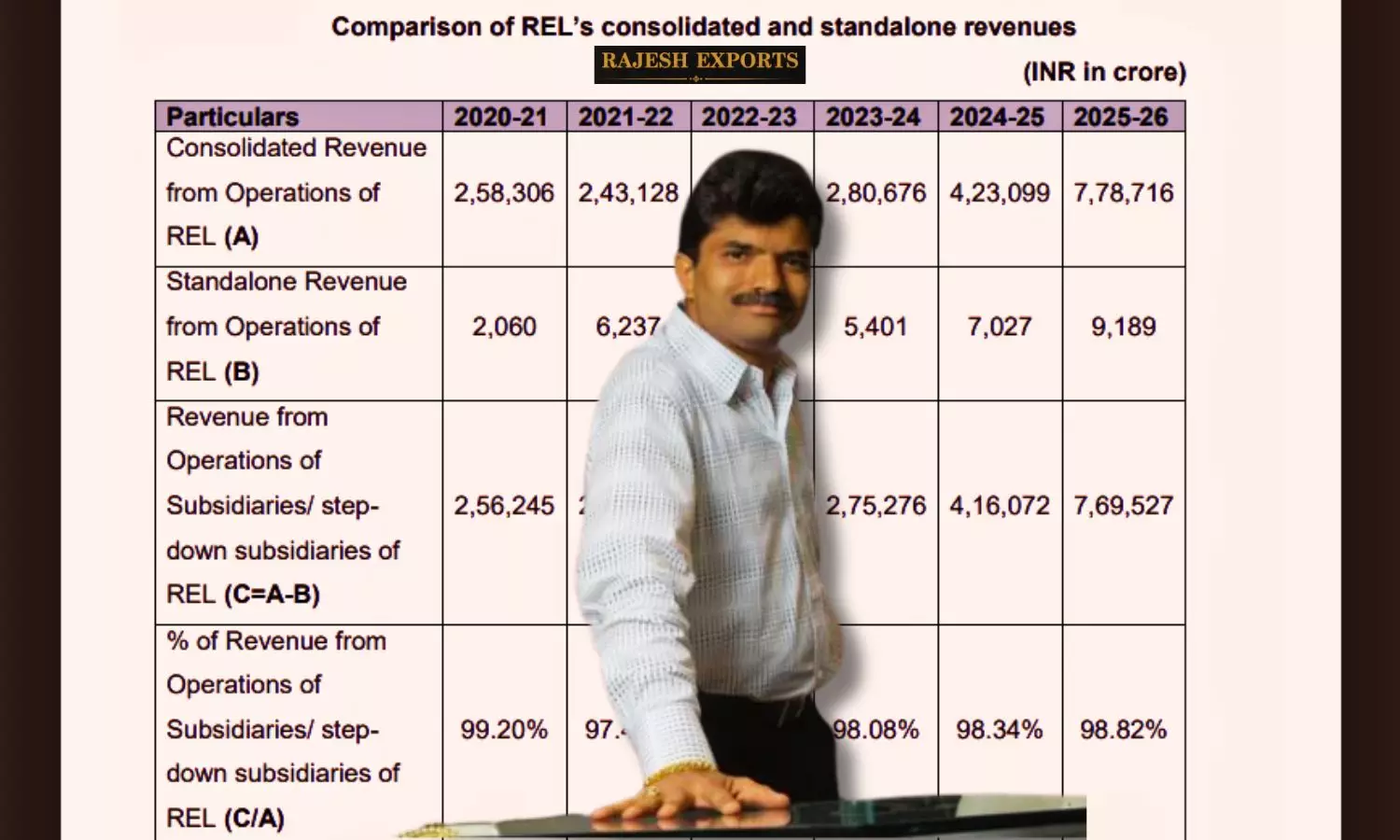
The Securities and Exchange Board of India (SEBI), primary regulatory body for the Indian capital and securities markets has flagged what it calls “egregious and unheard of” financial irregularities at Rajesh Exports Limited (REL), a multinational gold retailer. The capital markets regulator Sebi barred its promoter and CEO Rajesh Mehta from dealing in the company's securities, alleging large-scale misrepresentation of financial statements and diversion of funds.
The investigation alleges a massive misrepresentation of Rs. 15.15 Lakh Crore in the company’s books over five years. Meanwhile, the Life Insurance Corporation of India (LIC) owns 10.8% of the company’s shares, putting the hard-earned money of millions of Indian citizens at immediate risk.
Who Is Rajesh Mehta?
Rajesh J. Mehta, is the founder, chairperson and CEO of Bengaluru-based Rajesh Exports. He started the company in 1989 after beginning his career in trading silver and eventually grew into one of the world’s largest gold refining and export businesses. A major turning point in his career occurred in 2015 when REL acquired Valcambi, a Swiss gold refinery.
The company claims to operate across the entire gold value chain, from refining raw gold to manufacturing pure gold and selling jewellery, reporting annual revenues of approximately Rs 15.15 lakh crore. Now, SEBI’s investigation found that 97% to 99% of its annual revenue reported over the years between 2020-21 and 2025-26 were inflated or misrepresented.
SEBI’s latest 109 pages interim order on the company points to massive misrepresentation, a scale described as "egregious and unheard of"by the regulatory body. SEBI found that 97% to 99% of the company’s reported revenue was inflated between the fiscal year 2020-21 and 2024-25. REL claimed that most of its revenue (99.8%) came from overseas subsidiaries, primarily from Valcambi, however, its actual audited financial statements show negligible revenue, providing the consolidated numbers vastly exaggerated.
Approximately Rs 11,487 crore in sales and purchases with an entity called Affluence Shares and Stocks Private Limited was reported by the company. However, affluence denied conducting these transactions, suggesting they were "non-genuine entries" used to increase the turnover.
While the company's books were being miscalculated, ₹339 crore was allegedly routed to Rajesh Mehta’s personal accounts without any board or audit committee approval for his own trades. Without proper disclosure ₹926 crore in total, was sent away.
LIC and Retail Investors
The most alarming part of this crisis is how it directly drains the savings of ordinary Indian citizens through LIC and retail stock investments. LIC, which manages the insurance premiums of millions of Indians, is a prominent shareholder in the company, with a 10.8% stake (over 3.18 crore shares). As the stock price of Rajesh Exports plummeted to ₹104.65, the value of LIC's holding dropped to ₹333.58 crore. When the SEBI order was released, LIC’s own shares fell by over 1% as investors reacted to the risk.
The number of small retail shareholders in Rajesh Exports has exploded from about 22,000 in 2020 to nearly 2 lakh (194,110) by March 2026. These individuals own a 14.13% stake, currently worth about ₹436.73 crore. Since the stock peaked in February 2023, public investor wealth has been dented by a staggering ₹12,725 crore. Together, LIC and retail investors face a combined risk of losing ₹770 crore in the current collapse.
Public Money at Risk
As the SEBI’s order went public, the stocks of Rajesh Exports went crashing, leaving investors with no way to escape. The stock has been hitting its 5% lower circuit limit daily, meaning trading stops because the price has dropped as far as allowed for the day. On the National Stock Exchange (NSE) alone, over 20.6 lakh shares were put up for sale by panicked investors, but there were zero buyers. This means common citizens are effectively "trapped" in a crashing asset. Notably, no domestic mutual funds own any stake in the company, leaving LIC and retail investors to bear the brunt of the losses alone.
The SEBI investigation, triggered by a 2024 shareholder complaint about uncollected trade receivables, has exposed a sustained pattern of non-cooperation and deception. Despite repeated summons, the company and its auditors refused to provide clear financial records, a move SEBI says indicates an "intent to suppress material information". For the nearly 2 lakh citizens involved, this is a stark reminder of the risks when public institutions invest in firms with weak corporate governance.
(This article is written by Archana Prasad, student of EFLU, interning at Deccan Chronicle.)