Drone view of the Musi River
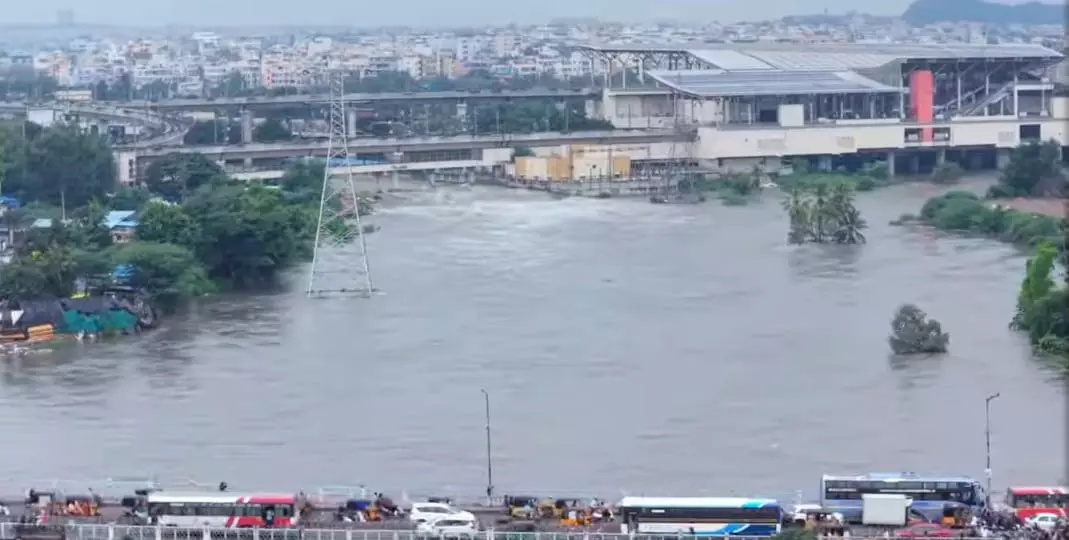
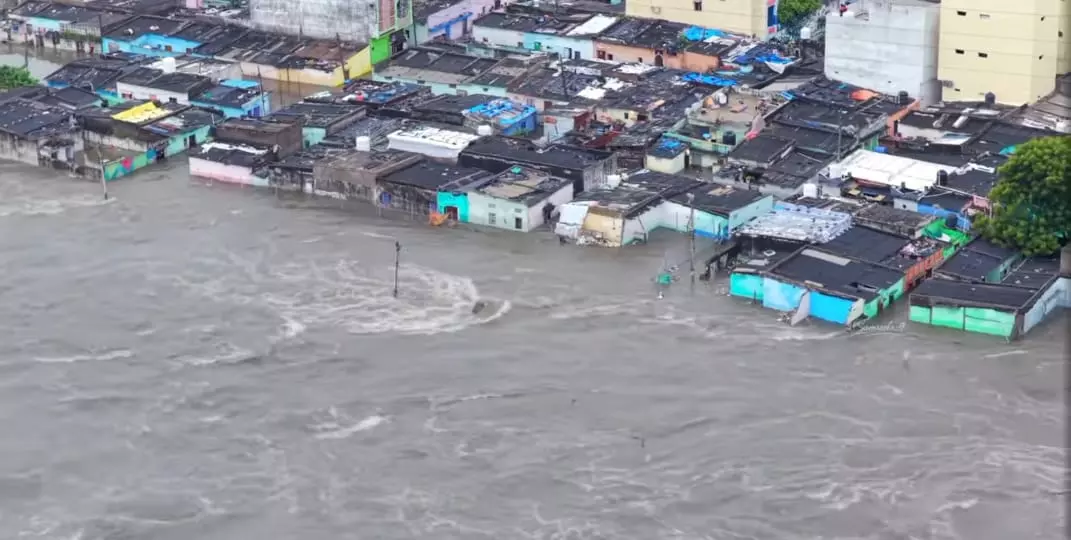
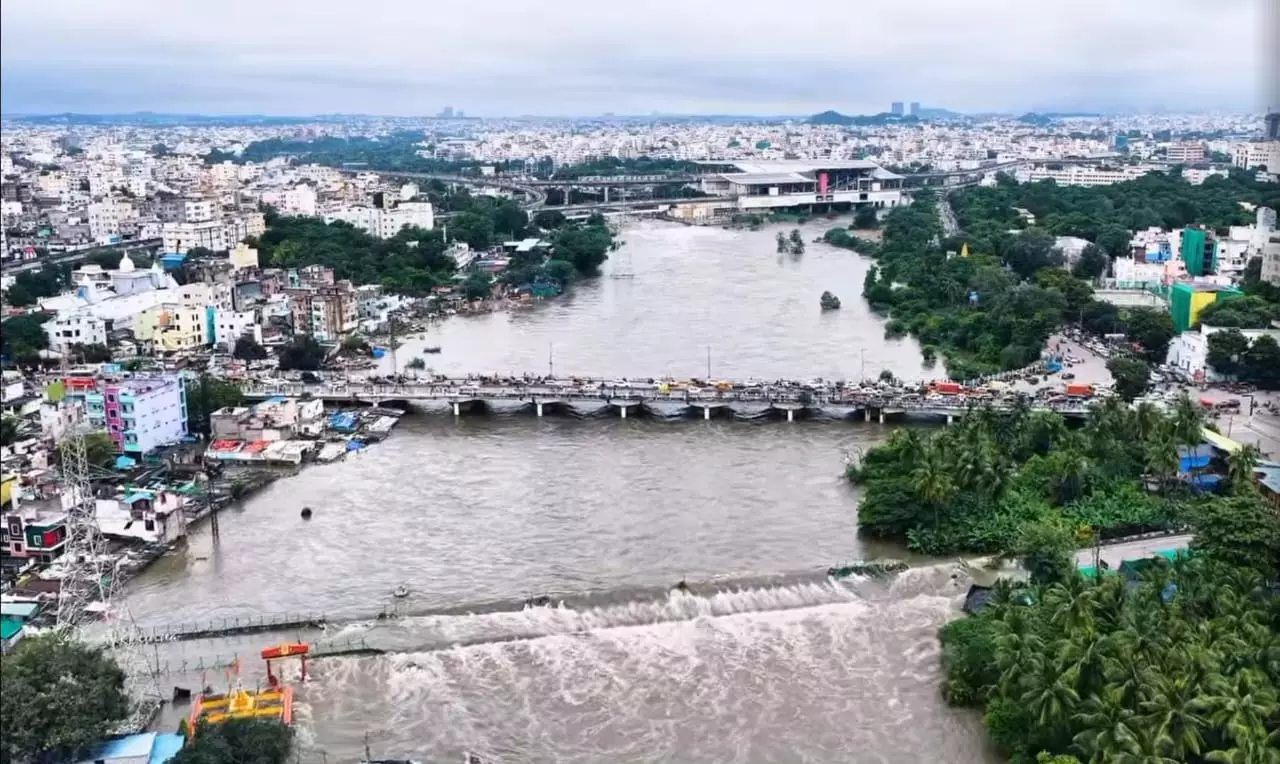
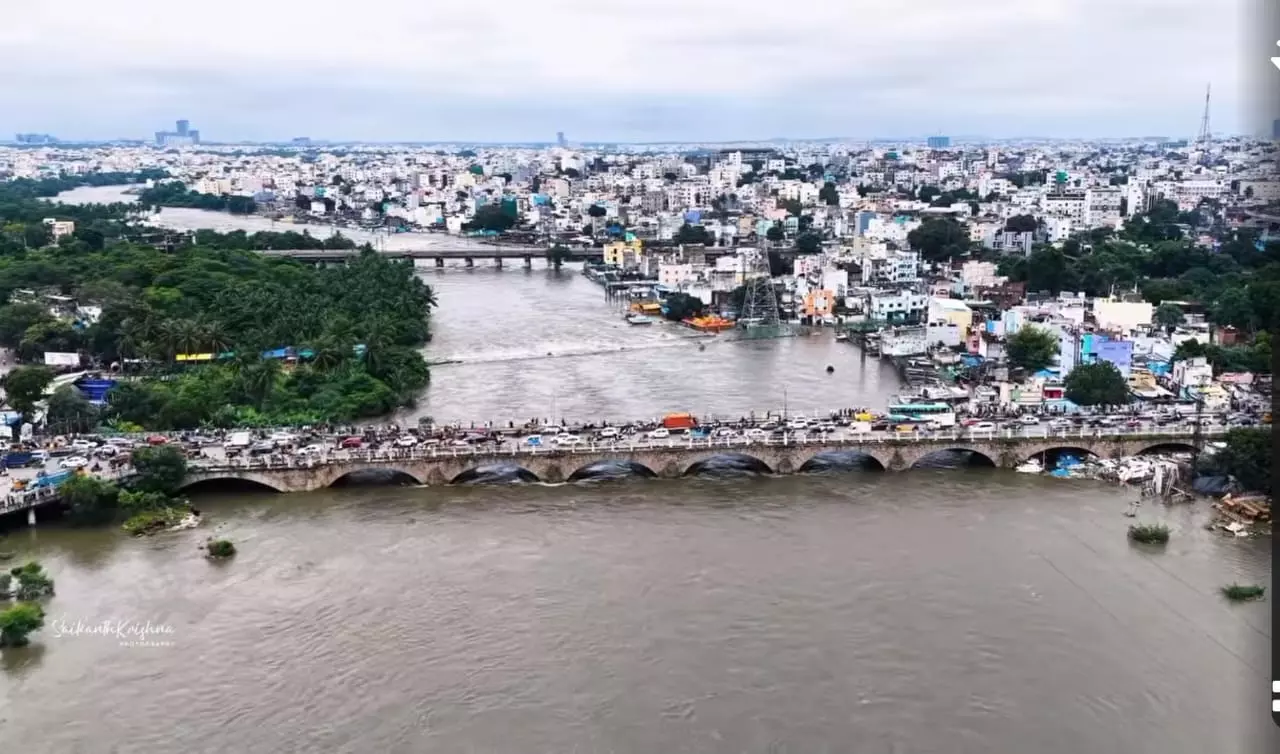
Hyderabad: The largest water discharge from Osmansagar and Himayatsagar in 60 years, amounting to 40,000 cusecs overnight, resulted in chaos across Hyderabad as the Musi River, swollen by the flood, cut off vast parts of the city, leaving thousands stranded in bumper-to-bumper traffic that stretched for nearly 10 km in some places and requiring the evacuation of over 1,000 people living on the riversides.
Bridges downstream of Chaderghat were forced shut, severing crucial road links between the eastern parts of the city and its core. The HMWS&SB announced later that the gates at the two reservoirs had been shut as the inflows were falling. Floodwaters entered the Phase-3 pump house at Peddapur, which supplies drinking water to Hyderabad under the Manjeera scheme.
Amid reports of some damage, GHMC commissioner R.V. Karnan stressed that the main structures of the new bridge across the Musi had not been damaged. The temporary centring work set up between piers P1 and P2 was washed away by the force of the current. The completed piers, including P2, remained intact.
With the closure of bridges from Chaderghat to Moosarambagh and beyond, movement from Malakpet, Dilsukhnagar and adjoining areas towards central Hyderabad came to a standstill. Except for the Chaderghat and Uppal-Nagole bridges, every other crossing turned inaccessible. The narrow Golnaka bridge remained unusable as floodwaters submerged its approach roads. The 12-km gap between Chaderghat and Uppal-Nagole created what commuters called a “nightmare blockade.”
Families with urgent medical needs bore the worst brunt, as several hospitals were located on the other side of the city. Long rows of vehicles choked the roads, with commuters stranded well past midnight. “I was stuck near Amberpet for more than three hours last night. The ambulance carrying my mother to NIMS couldn’t move forward, and we had to reroute all the way to Chaderghat,” said Ramesh, a resident of Moosarambagh. Another commuter, Sunita from Malakpet, broke down in frustration as floodwaters inundated her house in Shankar Nagar near the Chaderghat Causeway, washing away all their belongings.
Traffic police struggled as arterial stretches turned into sprawling parking lots. Commuters reported being stuck late into the night, with emergency services helpless in the gridlock.
Many questioned the administration’s sudden decision to release over 40,000 cusecs of water from Himayatsagar and Osmansagar in one go. “Why should people suffer every time there is a flood? We need more elevated bridges to connect across the Musi. Hyderabad deserves flood-proof infrastructure,” said Mohammed Javed, a shopkeeper from Chanchalguda.
As the city crawled through the crisis, angry residents warned that without strong planning, the Musi would continue to choke Hyderabad every single monsoon.
Relief operations moved quickly. At Amberpet Circle 16, the Golnaka Lanka Government High School was converted into a rehabilitation centre where displaced residents were provided meals and shelter. Commissioner Karnan visited the centre, spoke with families and directed staff to ensure food supply, health care and sanitation facilities. Similar shelters were set up in other low-lying parts of the city, as GHMC teams, disaster management units and volunteers worked through the day.
Civil society organisations including HRF, NAPM, Fridays for Future India and Climate Front Hyderabad wrote to the district administration demanding stronger institutional responses. Their appeal sought additional temporary shelters for nearly two hundred families, steady medical aid and sanitation drives, a full damage assessment with compensation for household losses and the revival of traditional early warning systems such as loudspeaker announcements. The groups argued that warnings issued by water supply authorities did not effectively reach residents and called for accountability in planning for such releases. A resident who joined the appeal said that families were caught off guard and woke up to find water at their doorsteps, leaving them little time to save belongings.
With the India Meteorological Department forecasting more rain through the week under the influence of a Bay of Bengal system, the administration remains on high alert.
At Hussainsagar, levels climbed to 513.65 metres by six in the morning, surpassing the full tank level of 513.41 metres and inching towards the maximum water level of 514.75 metres. Inflows were recorded at 925 cusecs while outflows stood at 1,620 cusecs, underlining the need to continuously discharge water downstream to prevent overtopping.
Medak’s Papannapet Lingaipalle recorded the highest rainfall at 103.8 mm. Hyderabad itself saw scattered but intense showers that fed directly into feeder channels draining into the Musi.