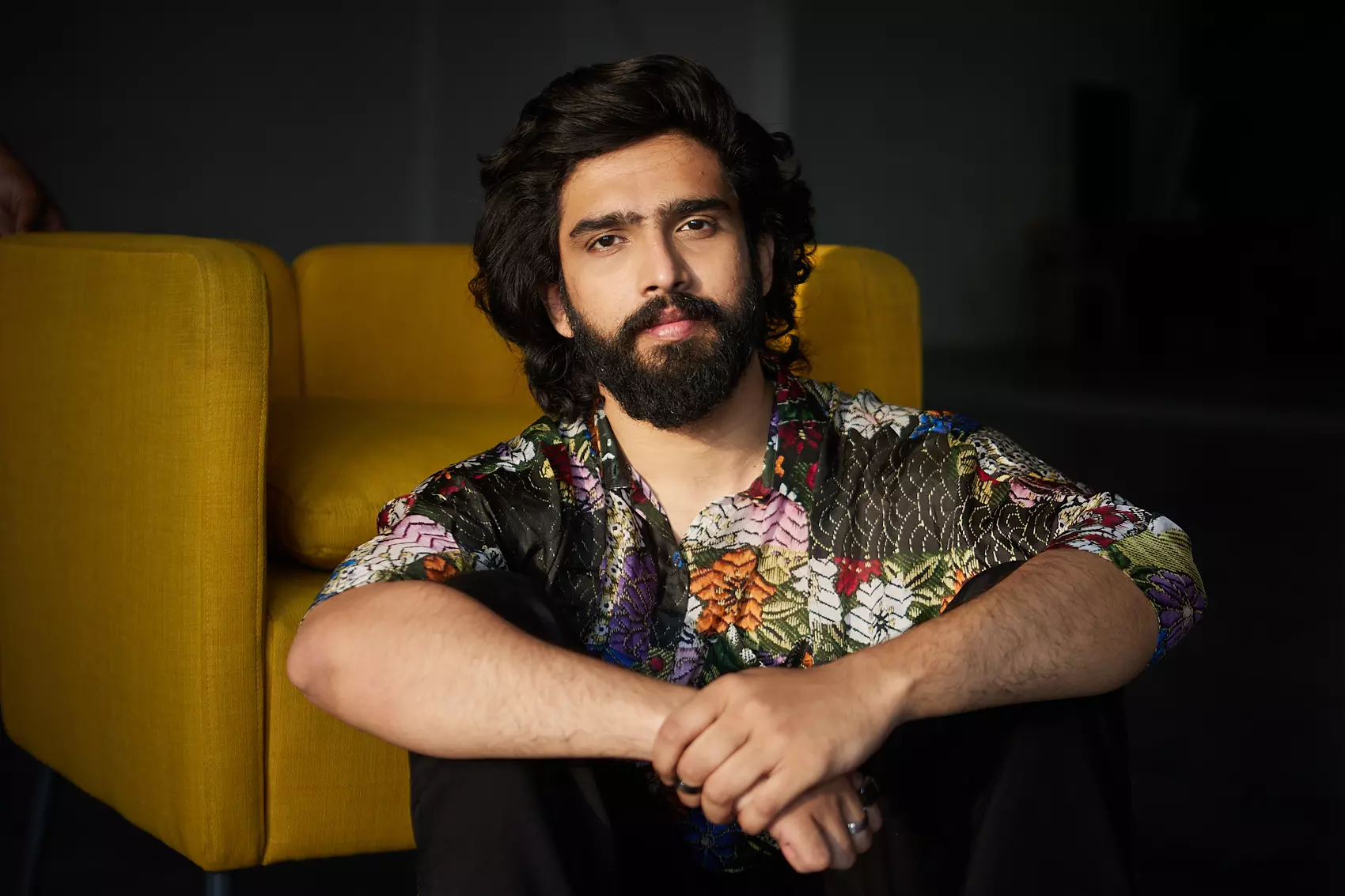
Amaal Malik opens up about his creative process, from reimagining classics like ‘Ami Je Tomar’ to collaborating with global icons like U2 and Dua Lipa. The talented composer shares his insights on originality, blending traditional and modern elements, and his recent concert in Bengaluru.
What’s your thought process when you reimagine a classic like Ami Je Tomar for a modern audience?
Whenever I create a song, my first priority is ensuring that it aligns with the film’s narrative and makes sense within that context. But beyond its cinematic purpose, I believe a song should emotionally connect with listeners even outside the film. Whether it’s the melody that stirs nostalgia or lyrics that feel relatable to someone’s personal journey, I always strive to embed that emotional value.
When Ami Je Tomar was presented to me for a reprise, I knew I had a monumental challenge ahead. The original, composed by Pritam da, was iconic—deeply intertwined with the legacy of Bhool Bhulaiyaa. So, reimagining such a classic meant carrying the weight of immense expectations. With originals, you begin from scratch, pouring in your artistry without comparisons. But recreations come with a built-in history—you’re dealing with a song that people already love and remember vividly. So there’s a responsibility to honour that memory while also bringing something new to the table.
Out of my 100+ song career I’ve barely done 5 6 recreations, but Whether it was Ghar Se Nikalte Hi, or now Ami Je Tomar, I’ve always tried to ensure that the recreation retains the soul of the original while also resonating with today’s generation. Sonically, you’ll notice that in both my versions - Ami Je Tomar 3.0 and Mere Dholna 3.0 have prominent rhythm and basslines—they’re bold and upfront. That’s because today’s youth respond to rhythm and bass in a powerful way.So while lyrics and melody remain crucial, the soundscape has to speak to the sensibilities of a younger audience….
Interestingly, kids have latched on to the lyrics too.You’ll find literally such young children, just 3 4 year olds are online singing the track with ease—and that acceptance is a dream come true. A song should outlive the film.Whether the movie succeeds or not, the music must find its own path and audience. Obviously the franchise the marketing the actors featuring all add to the overall success.
My most important goal is to make music that remains in people’s hearts for a long time and for that It’s important to keep the music simple.
Even though Ami Je Tomar is rooted heavily im Indian classical music the melody and lyric Bhola Bhala Tha which I reworked with Sameer sir, is very easy to sing and hum.
That accessibility is what helped it resonate across all age groups—from young children to seasoned classical musicians. The beauty lies in introducing Indian classical in a fresh, accessible manner, and the fact that it’s been accepted across generations makes me feel I’ve done justice to it…
I’m glad I could again make an original stanza in this one that speaks to the youngsters sonically, melodically and lyrically and stands the test of time.
What was it like working with legendary lyricist Sameer Anjaan on the remake of the song?
Working with Sameer sahab was an absolute honour. I’ve grown up listening to his work—his songs have defined multiple eras of Bollywood music. From the late ’80s to now, his repertoire spans over 5,000–6,000 songs. Despite such a vast and successful legacy, he has the heart and mindset of someone much younger. He understands what today’s generation wants to hear and writes accordingly—always rooted in the story yet so so relatable.
Initially, I was a bit hesitant due to the senior-junior dynamic. I wasn’t sure if I could suggest a word change or line revision.
I am at times difficult with my writers, and I suggest a lotta changes but he was incredibly open and welcoming. He never made me feel like a junior. He listened to every suggestion, and honestly, I’m in awe of his humility and brilliance. He’s done a phenomenal job, and I feel privileged to have collaborated with him.
Amaal Malik
Picture By Arrangement
How do your experiences working with global icons like U2 and Dua Lipa influence your approach to Indian film music?
Both U2 and Dua Lipa are independent artists, so their influence has been more prominent on my independent music rather than directly on my film work. That said, when global tracks become massive hits—like Dua’s New Rules or Don’t Start Now—they inevitably shape listener preferences in India too. Certain types of melodies just click with the Indian audience, and when they do, they become a point of reference.
Collaborating with legends like U2 and the young and dynamic Dua Lipa has been a tremendous honour. Dua is one of kind and a rare female global pop icons to emerge after a long gap—we had Madonna, Britney Spears, Beyonce,Rihanna, and now someone like Dua has come in and done so well for herself, and literally carved her space.
When I created the Indian remix of Levitating along with Roochay Shukla (A&R), and presented it, they absolutely loved it, and even the global audience with Indian roots responded with overwhelming love. My goal was to keep the essence simple while embedding elements of Indian culture into the mix.
If a filmmaker ever references one of their songs or seeks that global sonic quality, I have the creative tools and mindset to bring it into the Indian context authentically.
For U2, we re did their hit Beautiful Day, we added sitar into the mix, and even collaborated with a new Indian singer, Yash Narvekar, whose voice brought both a classical and pop sensibility. Hearing him sing alongside the legendary Bono was surreal. These collaborations have expanded my understanding of global soundscapes and audience expectations.
Both the songs were penned by Kunaal Vermaa who has killed itz
Tell us about your recent concert in Bengaluru? How do you prep for concerts?
It depends on how the vibe flows. It was a very special set. There were Bollywood hits, some independent music, retro classics, and even an acoustic piano set. I’m also experimenting with new-age Afro music, which featured in this festival.
We performed as part of Sunday Soul Sante—and that itself added a very relaxed, feel-good atmosphere. Fans enjoyed a carefully curated mix that celebrated nostalgia while embracing fresh sounds.
Can you share some insights on your composition process, particularly when blending traditional and modern elements as seen in songs like Ami Je Tomar and Mere Dholna?
With Ami Je Tomar, I had to blend Indian classical with western influences. But this is true for all my work—even in upbeat tracks like Aashiq Surrender Hua or Sooraj Dooba Hai, I aim for depth in lyrics and melody. My approach is simple: the melody must be hummable and memorable, and the lyrics should strike a chord emotionally.
Production is equally critical. That’s what today’s younger audience connects with most. You’ll often hear kids say, “This song has a vibe.” That “vibe” is created through sound design—piano, guitar, bass, rhythm layers, and more. It’s the invisible atmosphere behind the lyrics and vocals that makes a song immersive.
For instance, in Zaroorat Se Zyada from Veda, the composition has a very ’90s, Mahesh Bhatt-style feel, but the production includes chill trap and hip-hop elements. That blend keeps it current. So I always strive to stay updated with global and Indian trends, but at the heart of it all, I keep it simple. That’s been the key to my music-making process—simplicity rooted in emotion, with a sound that speaks to the present.