Idupu Kayitham Title Sparks Andhra-Telangana Social Media Row?

They termed the remarks an example of linguistic chauvinism and an insult to Telangana's native culture and vocabulary, arguing that regional dialects are an integral part of the Telugu language and deserve equal respect.
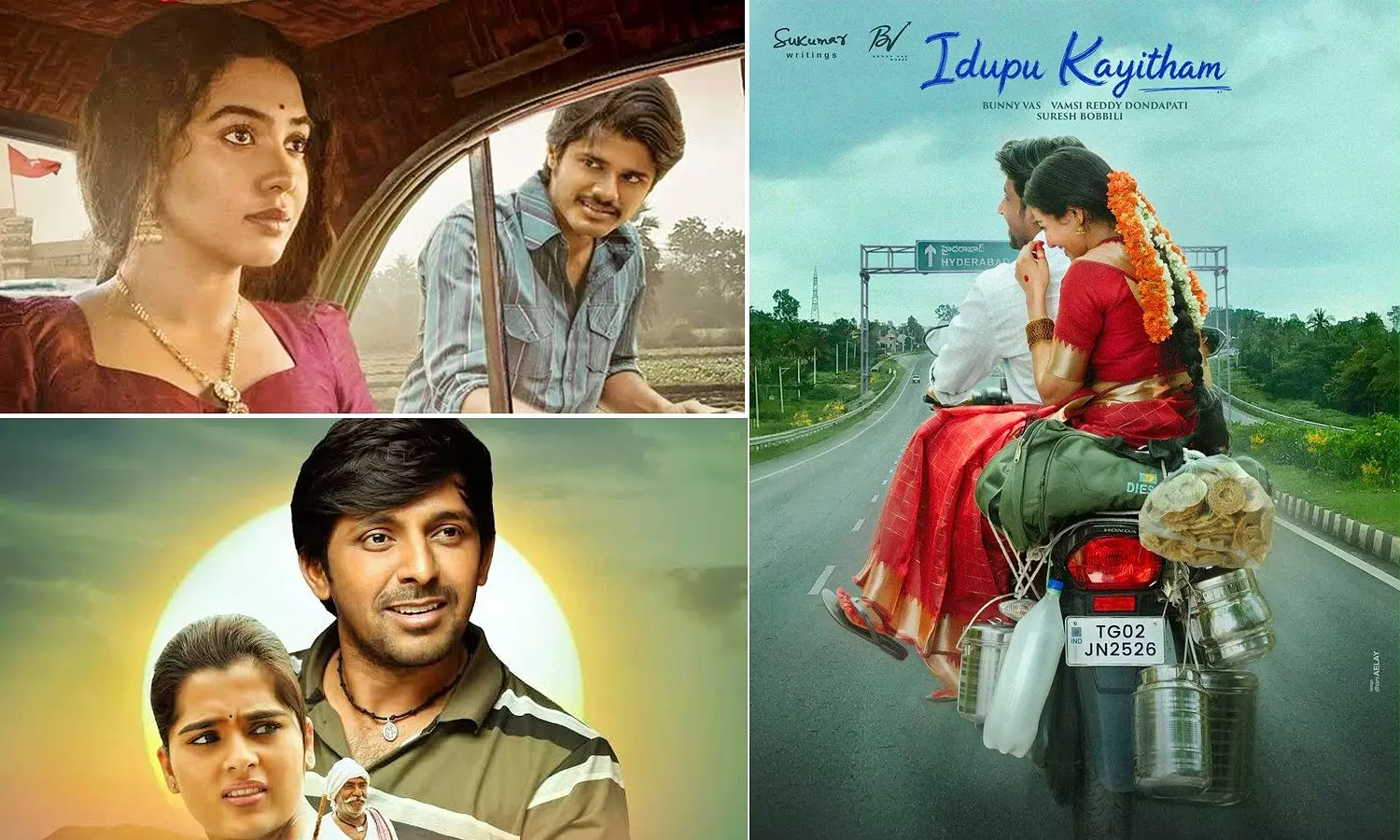
The announcement of Idupu Kayitham, starring Priyadarshi and Naga Durga and directed by Vamshi Reddy Dondapati, has unexpectedly snowballed into a debate over language and regional identity. Soon after the makers unveiled the film's first-look poster, a section of social media users mocked the Telangana-flavoured title, with some sarcastically asking whether the film would be "dubbed into the Andhra language." Others questioned whether the dialect could even be considered "proper Telugu," triggering a sharp backlash from Telangana netizens.
Responding strongly, many users pointed out that Telugu cinema has predominantly been driven by Coastal Andhra dialects for decades without inviting similar criticism. They termed the remarks an example of linguistic chauvinism and an insult to Telangana's native culture and vocabulary, arguing that regional dialects are an integral part of the Telugu language and deserve equal respect.
Producer Madhura Sreedhar Reddy admitted that the sarcastic comments over the title were disappointing and said the controversy unnecessarily snowballed into an Andhra-Telangana debate. "Idupu Kayitham means divorce papers and is a commonly used expression in Telangana. If people were unfamiliar with the meaning, they could have simply asked us instead of making snide remarks. It unnecessarily revived an old regional issue and led to comparisons that were completely avoidable," he said.
Recalling his earlier experience with Dorasani, Madhura Sreedhar said he had faced similar trolling because of the film's Telangana identity. "Even then, I was subjected to cheap comments on social media, but I ignored them because the title reflected the soul of the film. Authentic storytelling should never be compromised out of fear of criticism. It may only be a small section making such comments, but it reveals a certain mindset. Such remarks hurt people and inevitably invite a backlash. If the film itself had contained something objectionable, criticism would have been understandable. But mocking a native Telangana title is simply not right," he observed.
He said the success of Telangana-rooted films has already demonstrated that audiences are embracing authentic local stories and dialects. "Balagam, made on a budget of around ₹3 crore, went on to gross nearly ₹20 crore and became a cultural phenomenon. More recently, Raju Weds Rambhai, produced on a modest budget of around ₹2 crore, collected close to ₹10 crore at the box office. These films prove that rooted Telangana stories have both cultural and commercial appeal. If you explore Telangana folklore, you will discover immense depth and hundreds of untold stories waiting to be brought to the screen. Instead of ridiculing our native expressions, we should be encouraging more such films," he said.
Urging greater recognition for Telangana's cultural identity in cinema, Madhura Sreedhar appealed to the state government to consider measures to preserve and promote the region's dialect and storytelling traditions. "Just as Marathi, Punjabi and Bhojpuri cinema have built distinct identities while remaining part of Indian cinema, Telangana too deserves recognition for its unique language, culture and narratives. We need Telugu cinema, but we should also celebrate Telangana cinema as a distinct cultural identity," he concluded.
