Romanian Jazz Pianist Sorin Zlat: Emotion, Spontaneity Create Beautiful Music

Ahead of his NCPA masterclass in Mumbai, acclaimed Romanian pianist, clarinettist, and composer, recognised as one of the leading jazz musicians of his generation, Sorin Zlat reflects on jazz, storytelling, improvisation and why the most memorable music often emerges from vulnerability rather than perfection.
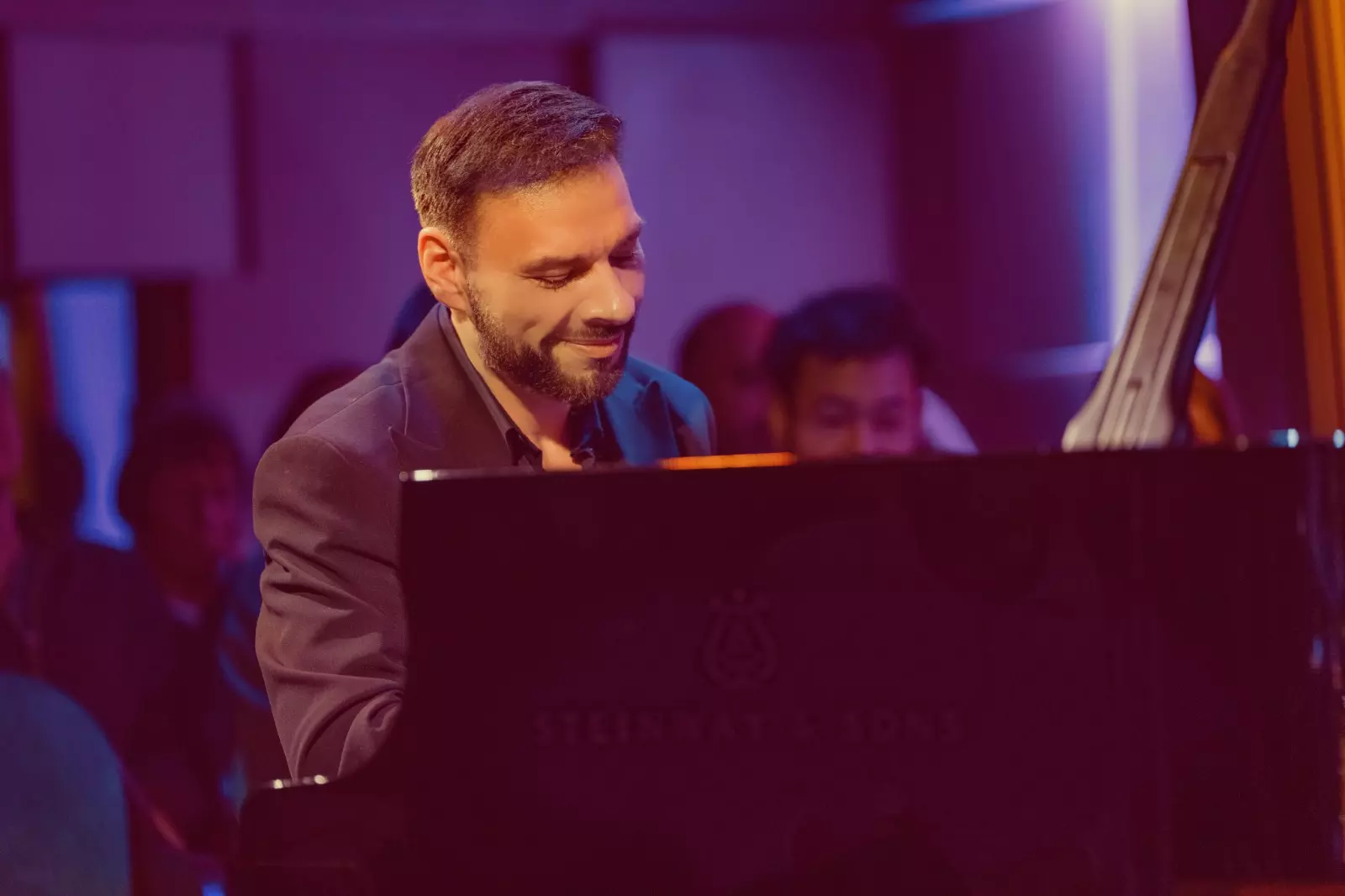
For Sorin Zlat, every performance begins with a story.
The Romanian pianist, composer and educator may be celebrated for his dazzling technique and genre-defying compositions, but when he speaks about music, he rarely talks about notes, scales or virtuosity. Instead, he talks about emotions, memories and the invisible thread that connects performer and listener.
“For me, music is not really about a single style. It’s about emotion and storytelling,” he says. “I am feeling that I am like a storyteller. When I begin to play, I want to say stories to the audience.”
It is a philosophy that has shaped an extraordinary musical journey, one that began in a family where music was less a profession and more a way of life.
“I grew up in a musician family,” Zlat says. “My father is a musician. He’s a saxophone player and clarinet player. My mother was a pianist. Also, my grandfathers. We are a big family of musicians.”
Music surrounded him from childhood. Yet the instrument that would eventually define him was not his first love. He began with the violin, an instrument he still admires for its expressive possibilities.
“It is a beautiful instrument, but I felt it was not for me,” he says.
Drawn to his father’s world, he switched to the clarinet and pursued formal classical training through high school and university. But somewhere along the way, another instrument quietly transformed his life.
“I remember that when I was in the third or fourth year of my university studies, I started to play piano. Since then, I fell in love with this instrument. It was another universe for me.”
The piano offered freedom. Unlike the clarinet, it allowed him to think beyond melody and enter the worlds of harmony, orchestration and composition.
“It opened my mind to arrange music, to orchestrate, to do more than just play a melody.”
That discovery would eventually take him from Romania to London's Royal College of Music, where he studied film music and screen composition. Today, his work often exists at the intersection of jazz and cinema, combining improvisation with sweeping, cinematic textures.
When asked how he moves so effortlessly between jazz, flamenco, gospel, funk and avant garde influences, Zlat shrugs off the idea of boundaries altogether.
“I never try to mix these genres intellectually. It's spontaneous and it's from the soul. I try to put the honest musical conversation in that moment.”
For him, genres are simply different dialects within the same language.
“What connects them is the rhythm, tension, groove, harmony and all this.”
The comparison he returns to repeatedly is cinema.
“Like when you see a movie and hear the soundtrack. All these musical styles come from deep human emotions.”
Jazz, he believes, provides the freedom to let those influences coexist naturally.
“Sometimes a gospel harmony can meet the cinematic atmosphere, or a funk groove can suddenly evolve into an avant garde improvisation.”
That freedom, however, comes with responsibility.
“I think both freedom and responsibility are inseparable in improvisation.”
Improvisation is often romanticised as complete artistic liberation, but Zlat sees it differently.
“Freedom is the possibility to create something unique that will never happen again. That’s the beauty of jazz.”
Yet every performance carries an obligation.
“There is a responsibility to listen deeply, to respect the musicians around you and to respect the audience.”
His respect for audiences is almost old-fashioned in its sincerity. He believes musicians owe listeners their full presence, regardless of what is happening in their personal lives.
“If you are feeling very sad and maybe something bad happened to you and you have a concert that day, you have somehow to leave that bad emotion home and connect with the audience because they paid to see you. You have a responsibility for them.”
That sense of connection has been reinforced throughout a career that has taken him to some of the world's most prestigious stages, including Birdland, Blue Note and Montreux.
Yet one memory stands above the rest.
“One very special moment for me was performing at the Jacksonville Jazz Festival after I won the Great American Jazz Piano Competition.”
The achievement was historic. Zlat became the first non-American musician to win the competition's grand prize.
“After receiving the award, I had the honour to perform at the festival as the opening act for Chick Corea, one of the musicians who influenced me deeply since I was a child.”
For Zlat, it was a moment where dreams and reality briefly became one.
“I felt like a bridge between my musical dreams and reality.”
But some of his most cherished memories have come after concerts, in conversations with strangers.
“I remember concerts where people came to me after the show, almost in tears, because the music reminded them of something personal in their lives.”
Those encounters continue to reaffirm his belief that music transcends geography, language and culture.
“I was deeply moved seeing audiences in places like Azerbaijan, London, Romania and the United States reacting emotionally in very similar ways.”
Then he smiles.
“Music is a universal language and connects people everywhere.”
Perhaps the most revealing part of Zlat's artistic philosophy emerges when he is asked what excites him more today: technical perfection or emotional unpredictability.
His answer is immediate.
“Definitely emotional unpredictability.”
Technique matters, he says, but only because it allows musicians to express themselves more freely.
“Technical perfection is important because it gives you freedom on the instrument, but technical perfection alone does not create magic.”
What creates magic, he believes, are the moments nobody can predict.
“So the emotions and the spontaneity create that magical spark.”
He pauses before elaborating.
“Some of the most beautiful moments in music happen when something unexpected appears, a fragile moment, or when you take a risk.”
For Zlat, risk is not something to avoid. It is essential to genuine artistic expression.
“Maybe I will play something that I've never played before, and maybe I will make a mistake.”
Far from fearing those mistakes, he embraces them.
“But this is the magic of humanity.”
The statement reveals a profound truth about his approach to jazz. In an age where perfection is often celebrated, Zlat remains fascinated by vulnerability.
Quoting one of his musical heroes, he adds, “Music is full of mistakes because we are humans. But that mistake, if it is very sincere and comes from here, it is perfect.”
It is perhaps the clearest explanation of why audiences connect so deeply with his performances. They are not witnessing perfection. They are witnessing authenticity.
That openness extends to collaboration. Zlat thrives on bringing together musicians from different generations, backgrounds and musical traditions.
“Different generations bring different energies, experiences and perspectives of music.”
Rather than smoothing out those differences, he actively seeks them.
“The most beautiful moments often happen when completely different musical worlds suddenly connect organically.”
Those encounters, he says, create something impossible to manufacture.
“These fusions make magic.”
It is also why he is particularly excited about his upcoming visit to India. While he will arrive as a teacher, he sees himself equally as a student.
“I am very excited when I come to Mumbai to hear Indian musicians because I want to take that culture and put it in my music.”
India’s rich musical traditions have long fascinated him.
“India has beautiful music, beautiful people. I am so excited to take a little bit of India here.”
At the NCPA masterclass, Zlat plans to discuss much more than improvisation and performance. He wants to help young musicians navigate the realities of professional life.
“It’s not only about jazz. It's about how to be a band leader.”
He intends to speak about leadership, communication, organisation and self-management, subjects often ignored in conservatories.
“There are a lot of talented musicians, but unfortunately they don't have a chance to play on big stages because they don't know exactly how to manage themselves.”
He also wants young artists to understand the importance of building relationships.
“It's not about winning the competition. It's about the connections.”
For Zlat, networking is not a corporate buzzword. It is an essential part of artistic growth.
“You will make, for sure, a connection with an agent, with a festival director or another artist.”
Equally important is developing an artistic voice.
“It is very important as a musician to have your own compositions because this gives you identity and you become original.”
Without that individuality, he warns, musicians risk disappearing into the background.
“If you play the music of somebody else, it's like you are a shadow musician.”
As jazz continues to evolve in the 21st century, absorbing influences from electronic music, hip-hop, classical traditions and countless other genres, Zlat remains optimistic.
“The soul of jazz has never been about preserving a fixed sound.”
The genre’s essence, he believes, lies elsewhere.
“The soul of jazz is freedom, individuality, risk, communication and transformation.”
That spirit has survived every musical revolution and will continue to survive future ones.
“As long as the music remains honest and sincere, the spirit of jazz will be eternal.”
Listening to Sorin Zlat, one gets the sense that he views music not as an achievement but as an ongoing conversation. A fragile, unpredictable, deeply human conversation where mistakes are welcomed, risks are celebrated and stories are shared between strangers.
And perhaps that is why, after all these years, jazz continues to resonate. Not because it is perfect, but because, as Zlat reminds us, the most beautiful moments often arrive when we least expect them.
