Purbayan Chatterjee Honours Guru-Shishya Parampara at PAAMF’s UMANG

The room itself was a heavy-hitting gallery of musical royalty, generating the kind of backstage gravitas rarely seen under one roof.
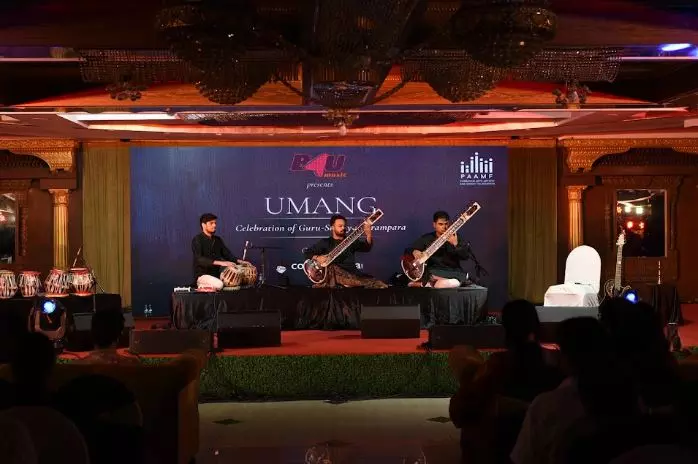
The sonic trajectory of the night was brilliantly curated, tracking the evolution of classical discipline from hungry, rising prodigies to seasoned masters. Following a ceremonial lamp lighting and a pair of sacred, atmospheric shlokas, the Mishra Brothers kicked off the live sets with a tightly synchronized sitar duet alongside Priyam Soni on tabla. The torch was then passed to the next wave of torchbearers, with Pratham Chatterjee delivering a commanding sitar solo flanked by young legacy-carrier Areen Talwalkar on tabla, followed by a fierce, technically precise sitar showcase from Megha Rawoot, backed by Shrutisheel Uddhav.
The energy shifted from promising to staggering in the night's second half. Rhythm maestro Ojas Adhiya executed a breathtaking, hyper-complex tabla solo that pushed the boundaries of speed and precision, supported by Siddhesh Bicholkar’s steady harmonium drone. That percussive fire cleared the path for a gorgeous, late-night comedown as vocalist Gayatri Asokan spellbound the room with a mesmeric ghazal recital, flanked by an elite, multi-instrumental ensemble featuring Adhiya, Deepak Marathe on harmonium, Abshar Ahmed on guitar, and Shivang Mishra on sitar.
Just as the night reached its scheduled climax, Purbayan Chatterjee himself blindsided the crowd, taking the stage for an unannounced, improvisational surprise performance that sent a jolt of pure electricity through the venue. It was a definitive, punctuation-mark moment that bridged ancient lineage with raw, contemporary spontaneity. Reflecting on the triumph, Chatterjee beautifully summed up the night’s ethos, noting that the guru-shishya parampara is not a static relic of the past, but a living, breathing ecosystem proving that India’s classical roots are thriving with immense modern vitality.
