The Golden Age of Telugu Cinema: Saroja Devi and Her Superstar Collaborations

Born on January 7, 1938, Saroja Devi acted in over 160 films across five languages, including Kannada, Tamil, Telugu, and Hindi.
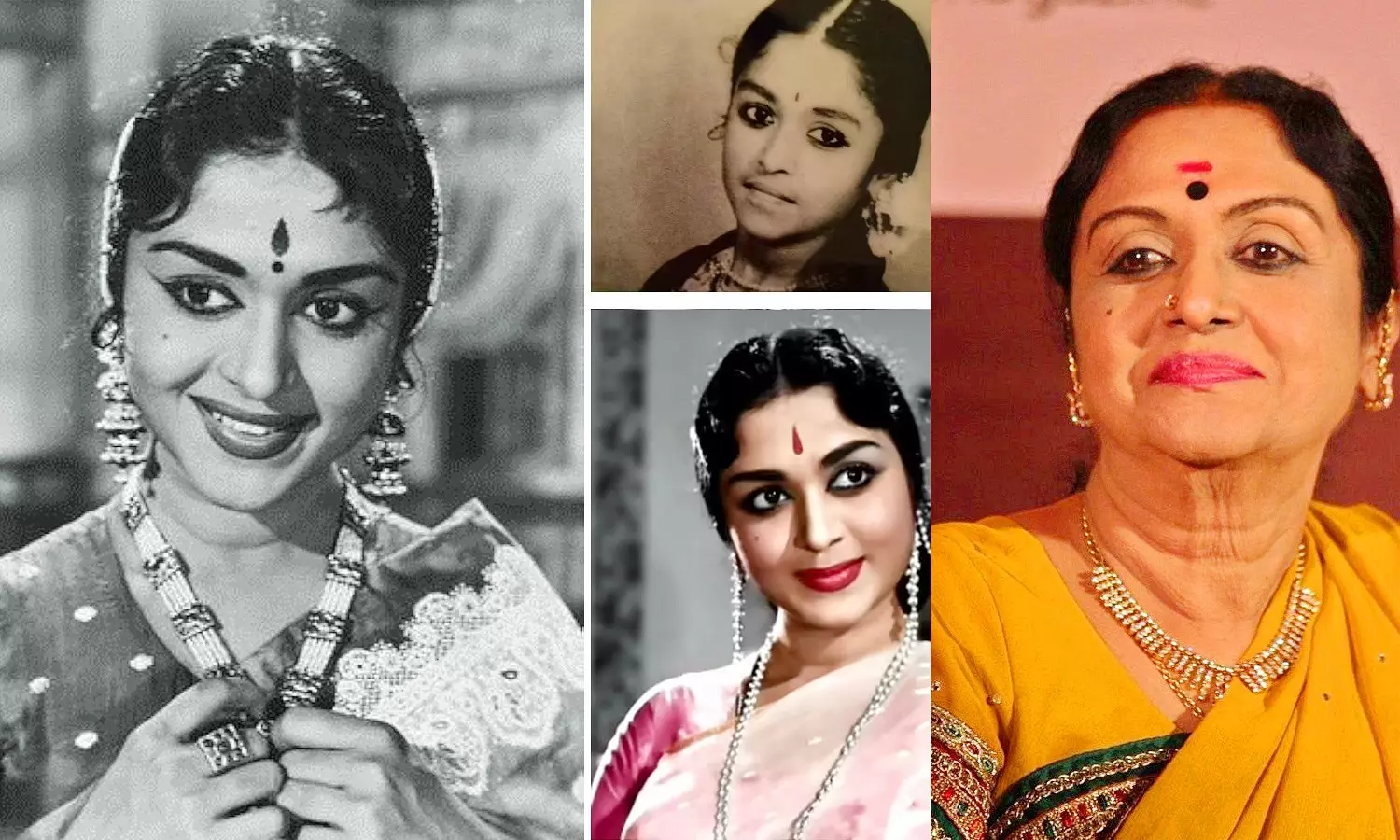
Renowned Kannada actress B Saroja Devi passed away on Monday, July 14, at the age of 87. She breathed her last at her residence in Malleswaram, Bengaluru, following age-related ailments.
“No doubt, Saroja Devi ruled the roost in Tollywood during the 1950s to the 1990s,” says veteran producer T Prasanna Kumar, recalling how she was one of the most sought-after actresses for yesteryear Telugu superstars. “She made her Telugu debut with Panduranga Mahatyam and went on to act in hits like Bhookailas, Pelli Sandadi, "Pelli Kanuka' and Jagadeka Veeruni Katha," and she never looked back,” he adds.
“She worked with legendary stars like NTR, ANR, and Krishna, and emerged as an A-lister of her time, even giving tough competition to the iconic Savithri during her heyday,” he observes.
Born on January 7, 1938, Saroja Devi acted in over 160 films across five languages, including Kannada, Tamil, Telugu, and Hindi. Revered as Abhinaya Saraswathi (Goddess of Acting), her illustrious career spanned over six decades. “She played the role of a goddess as effortlessly as she played a lover girl. From mythological and historical films to folklore and social dramas, she showcased her immense talent and good looks across all genres,” says Prasanna Kumar.
He also points out her versatility: “She even played a negative-shaded role in Alludu Didina Kapuram, where she took on her son-in-law, superstar Krishna, and Mohan Babu, and she performed brilliantly in that challenging character.”
Saroja Devi made her cinema debut with Mahakavi Kalidasa and went on to deliver several Kannada classics such as Kittur Chennamma, Anna Thamma, Bhakta Kanakadasa, Bale Bangaara, Naagakannike, Bettada Hoovu, and Kasturi Nivasa. “In those days, actresses were never confined to just one language. Thanks to studios being set up in Madras, they could easily shuttle between films in different languages,” he explains.
In recognition of her immense contribution to Indian cinema, she was honoured with several awards, including the Padma Shri in 1969 and the Padma Bhushan in 1992. She was also awarded an honorary doctorate by Bangalore University and received the Kalaimamani award from the Tamil Nadu government.
“She will always be remembered not just for her scintillanting performances but also for the grace and dignity she carried in her real life. Her last Telugu film ‘Devi Abbayam’ was released in 2005 and she gained a good following among Telugu viewers too for four decades,” Prasanna Kumar concludes.
