Rajamouli’s Old Karna Remark Resurfaces Amid Kalki Debate

Nag Ashwin urged people to read the Mahabharata carefully, but his remarks only intensified the discussion.
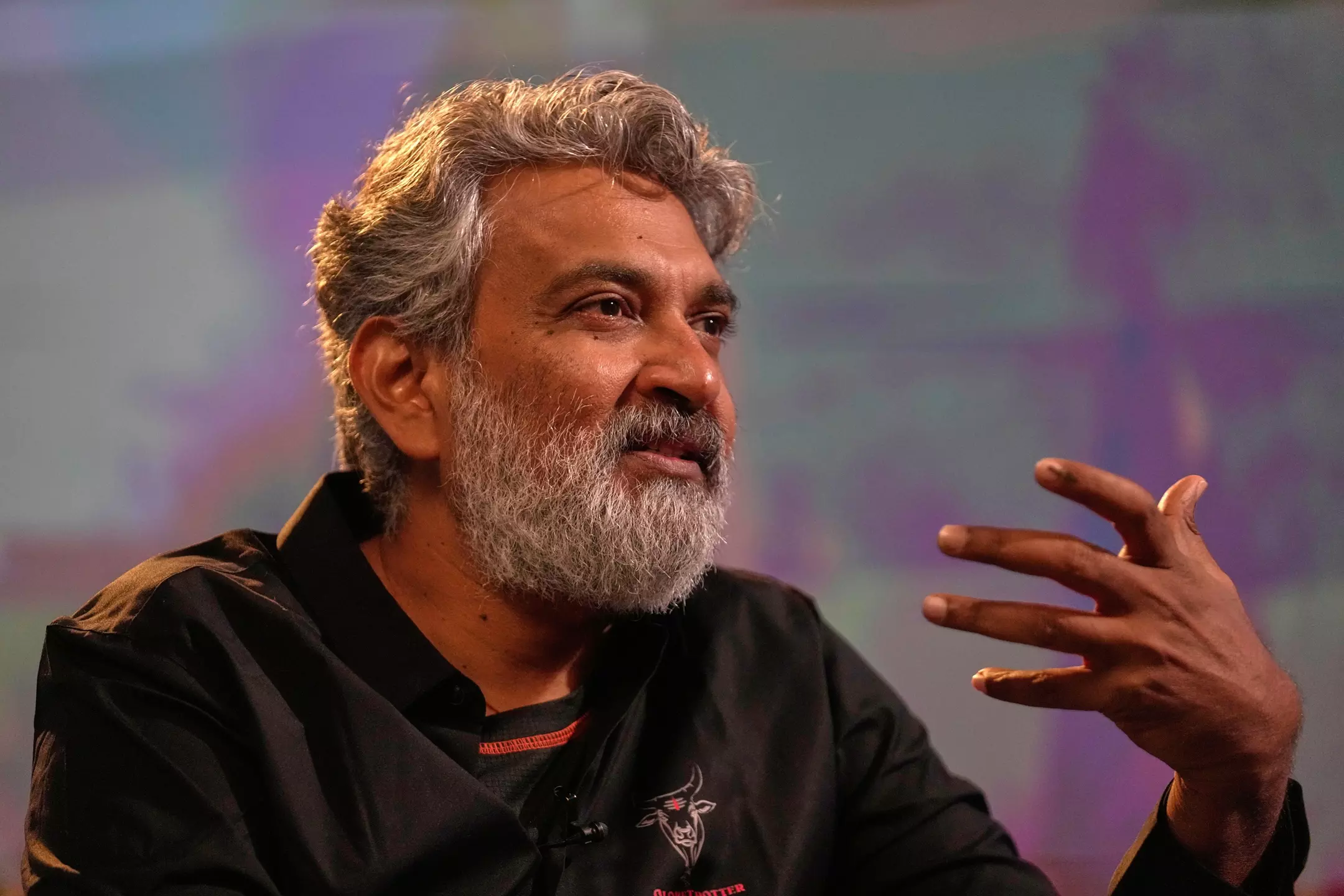
The controversy surrounding Kalki 2898 AD has taken a fresh turn after an old video clip of director S.S. Rajamouli resurfaced online. The debate began when some social media users accused director Nag Ashwin of portraying Karna in an overly heroic light, claiming it hurt Hindu sentiments by overlooking the warrior’s flaws. Responding to the criticism, Nag Ashwin urged people to read the Mahabharata carefully, but his remarks only intensified the discussion.
A section of users argued that Kalki emphasized Karna’s virtues while downplaying his darker actions, with many claiming the film’s climax created the impression that "Karna is greater than Arjuna," particularly among younger audiences whose understanding of the epic comes largely from films and social media.
The discussion has now expanded after Rajamouli’s old interview clip went viral. In it, the RRR director says, “Karna is a character I don’t think exists in real life. He never abandoned his philosophy of gratitude despite his personal suffering. That’s why he’s larger than life. If I make a movie on Karna, I’ll choose Prabhas.”
The clip has prompted fresh criticism from some social media users, who accuse Rajamouli of glorifying Karna as well.
However, film observers point out that Karna has always fascinated writers, filmmakers, and scholars because he is one of the Mahabharata’s most layered and tragic characters. Highlighting his loyalty, generosity, or emotional journey does not necessarily imply that he is morally superior to Krishna or Arjuna.
“Telugu cinema has celebrated Karna for decades because he is a complex, grey character with both admirable qualities and serious flaws. Long before Kalki, N.T. Rama Rao made classics like Daana Veera Soora Karna and Srimad Virata Parvam, where Karna was portrayed with great empathy and often overshadowed the Pandavas. Those films explored his emotional conflicts and continue to be regarded as classics,” says a film industry source.
“Some filmmakers may choose to tell Karna’s story, while others may focus on Arjuna, Bhima, Krishna, or other characters. These films are cinematic interpretations inspired by the Mahabharata, not the Mahabharata itself. Every filmmaker brings a different perspective, and audiences are equally free to agree, disagree, or debate those creative choices,” the source adds.
With Kalki 2 still a few years away, the debate over Karna’s portrayal shows no signs of slowing down. If even Rajamouli’s past comments are being revisited, Nag Ashwin can expect discussions surrounding mythology and cinematic interpretation to continue until the sequel’s release—and perhaps well beyond it.
