We Never Write for Memes, We Write for the Story: Pritam and Pedro Writers

Fresh off the success of ‘Pritam and Pedro’, writers Pranjal Saxena and Shashank Kunwar open up about working with Rajkumar Hirani, writing memorable dialogues, resisting the temptation of viral moments and why honesty in storytelling will always outlive internet trends.
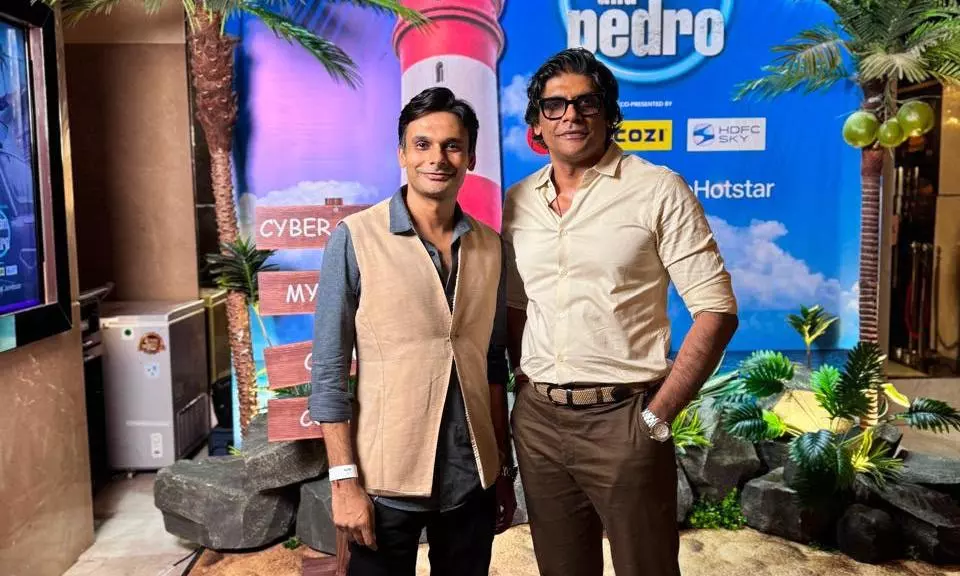
Success is often measured by numbers, but for writers Pranjal Saxena and Shashank Kunwar, the biggest reward after the release of ‘Pritam and Pedro’ came from something much simpler. People watched the series in one sitting.
“It was a very honest happy feeling,” says Pranjal. “Something that you have put out there with all your heart resonated with people. They found bits of themselves in it. The best compliment we got was when people said they binge-watched the entire series in one go because they simply couldn't stop.”
The duo always believed the show would strike a chord with audiences. What they did not anticipate was the overwhelming affection that followed.
“We were confident people would like it, but the way they embraced it surprised us,” recalls Shashank. “Even during the premiere, three episodes were screened and nobody left midway. That never happens. People came out genuinely excited. Later, even our parents sat down to watch and couldn’t stop until they had finished the series. That was incredibly satisfying.”
For two writers stepping into Rajkumar Hirani Films, working with one of India’s most celebrated filmmakers could easily have been intimidating. Instead, they found a collaborator who dissolved every barrier the moment they walked into his office.
“Raju sir makes you comfortable despite everything he has achieved,” says Pranjal. “You forget his legacy because he speaks to you like a friend.”
Shashank laughs while recalling their first meeting. “We spent almost twenty minutes discussing haircuts before we even got into work. That’s the kind of person he is. Warm, welcoming and genuinely interested in getting to know you.”
That atmosphere of trust naturally flowed into the writing process. While today’s entertainment landscape often celebrates dialogues that become memes overnight, neither writer believes that's something you can manufacture.
“We never think about making a line viral,” says Shashank. “We only think about what the character would say in that moment. Context makes a dialogue memorable. If you're trying too hard to create a punchline, chances are you will fail.”
Pranjal agrees. “You have to stay true to the characters and the situation. Of course, you write punchlines, but only if they belong there. The audience decides what stays with them.”
Their own writing partnership has also been built on trust rather than compromise. While they often think alike, they insist that their differences enrich every script.
“We jam, argue and keep adding our individual experiences,” says Pranjal. “It has never been a disadvantage. It has always made the writing stronger.”
Like every screenplay, ‘Pritam and Pedro’ went through countless drafts. Some scenes refused to find their place until the very end. One emotionally charged exchange between Pedro and Stacey travelled from one episode to another before finally making it into the finished series.
“It became like a football,” Shashank jokes. “It kept moving around from one draft to another. Every time we thought we would removed it, it somehow came back because all of us felt connected to it.”
Not every scene survived, though. One sequence that addressed people’s obsession with filming tragedies instead of helping those in need was ultimately dropped from the final version, despite both writers being fond of it.
The conversation eventually turns to what makes Rajkumar Hirani’s storytelling so enduring. Both writers believe the humour is never manufactured.
“No character is trying to be funny,” says Pranjal. “You laugh because you care about them. First, you have to make the audience think and emotionally invest in the people on screen. Once that happens, every emotion becomes stronger, whether it’s laughter, sadness or hope.”
Shashank echoes the thought. “You should never preach. Take the audience along with you. Let them experience the story instead of telling them what to think.”
If there is one line from ‘Pritam and Pedro’ they hope audiences remember years from now, it isn't because it sounds clever. It's because of what it represents.
“Every child has a father who is a Superman... the one who comes last and fixes everything,” says Pranjal.
Shashank smiles before adding another line from the show. “You have two choices. He’ll remember you as a murderer or as Batman. The one who comes last and fixes everything.”
For the writers, that emotional connection is what storytelling is ultimately about. Not viral moments. Not quotable lines. Just stories that quietly stay with people long after the credits roll.
